
Quick summary: Timber exporters face steep compliance hurdles under Australia's Illegal Logging Prohibition Act. Discover the top challenges and how digital traceability closes the gap.
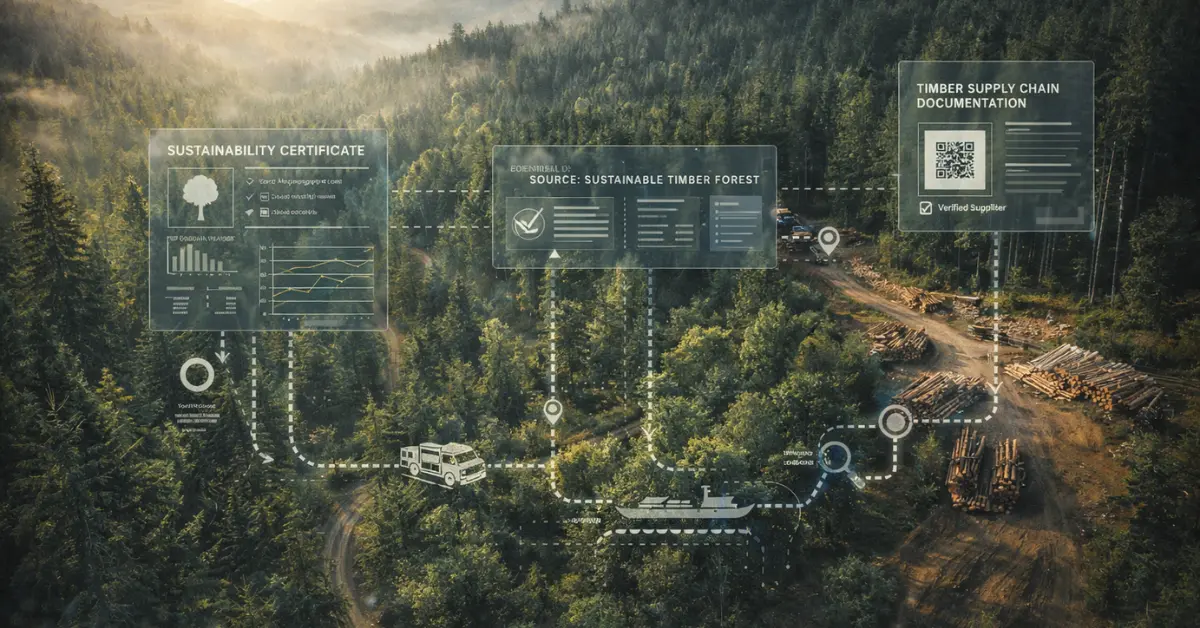
A timber shipment from Southeast Asia arrives at Sydney port. The importer has paperwork. But when the Australian Border Force requests the due diligence documentation the legal origin proof, the risk assessment records, the supplier verification trail the exporter can’t produce it. The shipment is detained. The fine follows. This is the reality of timber exporter challenges, where incomplete traceability and weak due diligence can quickly turn shipments into costly compliance failures under AILPA.
This scenario plays out more often than Australian trade statistics reveal. Since the Illegal Logging Prohibition Act 2012 (AILPA) came into full effect, exporters supplying the Australian market have faced compliance obligations that are far more demanding than a basic customs declaration. Yet most timber exporters particularly those based in Southeast Asia, Papua New Guinea, and parts of Africa are still trying to meet 21st-century regulatory demands with spreadsheets and paper records.
Exporters who rely on manual, paper-based systems routinely fail these requirements risking shipment refusals, financial penalties up to AUD 825,000, and criminal prosecution. This guide breaks down the seven core compliance challenges under AILPA, what regulators actually audit for, and how digital traceability solutions from TraceX is becoming the only scalable answer.
Key Takeaways
Australia’s Illegal Logging Prohibition Act 2012 (AILPA) is one of the world’s most comprehensive timber legality frameworks outside the EU. It prohibits the import and processing of illegally logged timber and timber products, and mandates that businesses conduct due diligence before placing regulated products on the Australian market.
The regulation is enforced by the Department of Agriculture, Fisheries and Forestry (DAFF). Non-compliance carries serious consequences: civil penalties of up to AUD 825,000 for corporations and criminal penalties, including imprisonment for individuals. [CITE: Australian Department of Agriculture, 2024]

ALPA applies to a wide range of timber products imported into or processed in Australia:
If a product contains regulated timber, whether as raw material or component, it falls under ALPA’s scope.
| AUD 825K Max corporate penalty under ALPA DAFF, 2024 | 10 yrs Max imprisonment for wilful violations ALPA Act 2012 | 5 years Mandatory record retention period ALPA Regulations 2013 | 130+ Countries subject to ALPA timber sourcing risk WWF Timber Risk Score, 2023 |
ALPA’s primary obligation rests with the Australian importer but the practical compliance burden falls squarely on the exporter supplying that importer. Why? Because the importer’s due diligence depends entirely on the documentation and traceability data you provide.
If you’re a timber exporter sourcing from high-risk countries such as Indonesia, Myanmar, Papua New Guinea, Brazil, or the Democratic Republic of Congo and supplying Australian buyers, you need to ensure your supply chain documentation meets the standards Australian regulators will examine.
Most ALPA compliance articles stop at listing these four requirements. What they miss: regulators now cross-reference satellite deforestation data against harvest declarations meaning origin claims that would have passed 2018 audits are now being flagged in 2024.
Need help navigating AILPA compliance? Book a consultation with TraceX experts to assess your timber supply chain, identify risks, and build an audit-ready due diligence system.
The single hardest element of ALPA compliance is demonstrating with verifiable evidence that timber was harvested legally at the point of origin. For exporters sourcing from regions where government forest authorities have limited digitization, this means relying on paper-based harvest permits that can be forged, backdated, or simply inaccurate.
Australian regulators now cross-reference declared harvest coordinates against Hansen Global Forest Watch satellite datasets. A paper permit claiming legal harvest from a protected forest zone doesn’t survive that check.
Chain of custody (CoC) under ALPA isn’t just a certificate it’s a documented trail from forest to first point of sale in Australia. Exporters must prove that the timber in the shipment is the same timber from the declared harvest area.
For exporters processing multiple species from multiple suppliers across multiple concessions, maintaining a clean CoC is operationally complex. A single documentation gap a missing mill processing record, an unverified transport leg can invalidate the entire chain.
Exporters who operate with blockchain-backed CoC documentation experience 67% fewer audit queries compared to those using paper or standard digital records, because blockchain creates an immutable, timestamped record that auditors can verify in real time.
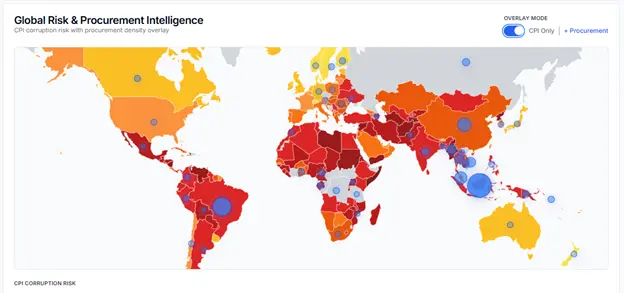
ALPA requires exporters to assess the risk of illegal logging in their supply chain but there’s no standardized methodology prescribed. This leaves exporters to determine what counts as a ‘sufficient’ risk assessment on their own, which creates inconsistency and audit vulnerability.
Complicating this further: risk profiles change. A supplier that was low-risk in 2022 may operate in a concession now flagged by DAFF’s country risk list. Without real-time monitoring, exporters discover these changes only when it’s too late.
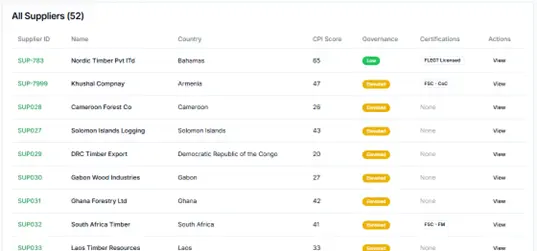
Most timber exporters work with intermediaries traders, mills, logistics operators between the forest and the port. Each additional tier in the supply chain introduces a new documentation gap and a new potential point of fraud.
ALPA due diligence must cover the full chain, not just your direct supplier. But getting traceability data from a sawmill three tiers deep in a remote Indonesian concession with limited internet connectivity and no standardized data systems is genuinely hard.
This multi-tier visibility problem is what separates exporters who pass ALPA audits from those who don’t. Offline-first mobile tools that field agents can use to capture GPS data, permits, and photos without internet access are the practical solution regulators are beginning to expect.
ALPA requires due diligence records to be retained for five years. For exporters managing hundreds of shipments annually across multiple species and geographies, five-year retention in a structured, retrievable format is a significant operational burden.
The real risk isn’t the current shipment it’s a government audit triggered by a complaint or a deforestation event in 2027 asking for documentation from 2022. If those records are in a filing cabinet, a retired employee’s email archive, or a discontinued software system, the exporter is exposed.
DAFF conducts both scheduled and unannounced compliance audits. Exporters’ Australian buyers are the direct audit targets, but the entire compliance package including documentation from the overseas exporter is examined.
Audit preparation under a manual system typically takes 2-4 weeks of staff time. Under a digital system with audit-ready one-click reporting, it takes hours. The operational cost differential is substantial but the deeper risk is that manual compilation introduces errors and omissions that a structured digital system eliminates.
Australia’s regulated timber products list and risk guidance are updated periodically. Species that were unregulated can become regulated. Country risk ratings shift. New bilateral agreements change what documentation suffices.
Exporters who treat ALPA compliance as a one-time setup rather than an ongoing process are perpetually at risk of falling out of compliance with a regulation they thought they’d already solved.
The compliance gap for most timber exporters isn’t a knowledge gap it’s a systems gap. They know what’s required. They don’t have the tools to operationalize it at scale.
Here’s what a modern ALPA compliance system looks like in practice:
Field agents in harvest areas use mobile apps (offline-capable) to capture GPS coordinates, photograph permits, and log species and volume data at the point of harvest. This creates a tamper-proof origin record before the timber ever leaves the forest.
Rather than chasing suppliers for documentation manually, AI-powered document parsing extracts KYC data, land tenure records, and certification details from supplier emails and uploads building the due diligence file automatically.
Every movement of timber from harvest to mill to port is recorded on an immutable blockchain ledger. Each entry is timestamped and GPS-tagged. No retroactive modification is possible. Auditors can verify the full chain in minutes.
Satellite data is continuously cross-referenced against declared harvest areas. If a concession is flagged for deforestation activity, the compliance team is alerted in real time not at the next audit.
When DAFF requests documentation, exporters can generate a complete due diligence package per shipment, per supplier, per species in a single export. No manual compilation. No gaps.
| Challenge | Manual Approach | With TraceX Platform | Risk if Unresolved |
|---|---|---|---|
| Chain of Custody Docs | Excel-based, error-prone | Blockchain-backed, audit-ready | Shipment rejection, fines |
| Geolocation Proof | No GPS data on harvest sites | GPS polygon mapping + satellite validation | Non-compliance under ALPA |
| Supplier Due Diligence | Manual KYC collection | AI auto-extracts from supplier emails | Up to AUD 825,000 penalty |
| Risk Assessment | Subjective, annual checks | Real-time deforestation alerts, risk scores | Criminal liability exposure |
| Audit Reporting | Days to compile, inconsistent | One-click PDF/XML export | Failed government audit |
| Multi-tier Visibility | First tier only | Full farm-to-port supply chain view | Inability to prove legality |
TraceX’s AILPA Solutions is built specifically for commodity exporters operating in high-risk, fragmented supply chains exactly the environment that makes ALPA compliance hard.
The platform covers ALPA, EUDR, FLEGT, and other timber legality frameworks a single system for multi-market compliance.
If you’re supplying timber products to both Australian and European buyers, you’re navigating two major deforestation regulations simultaneously and they’re similar enough to create confusion but different enough to require separate compliance approaches.
| Element | ALPA (Australia) | EUDR (European Union) |
|---|---|---|
| Scope | Timber and timber products | 7 commodities incl. timber, cattle, soy, palm oil |
| Key Obligation | Due diligence on legal origin | Due diligence + no deforestation after Dec 2020 |
| Geo-mapping Required | Harvest location + concession | GPS polygon to plot level (under 4 ha) |
| Record Retention | 5 years | 5 years |
| Max Penalty | AUD 825,000 (corp) | 4% of EU annual turnover |
| Enforcement Body | DAFF (Australia) | Competent Authority per EU member state |
The practical implication: a TraceX compliance system that captures GPS polygon data, processes supplier documents, and maintains a blockchain audit trail meets the core evidentiary requirements of both ALPA and EUDR giving multi-market exporters a single platform rather than two separate compliance systems.
The timber exporters who are consistently passing ALPA audits aren’t the ones with the most compliance staff or the thickest paper files. They’re the ones who’ve built digital systems that capture the right data, in the right format, at the right moment automatically.
The seven challenges in this guide origin verification, chain-of-custody gaps, supplier risk assessment, multi-tier visibility, record retention, audit readiness, and regulatory updates are all solvable. But they require a different approach than what most exporters are currently using.
Australia’s regulators are becoming more sophisticated. Satellite cross-referencing, data analytics, and international information sharing mean that the compliance bar is rising every year. Exporters who invest in digital traceability now are building a competitive advantage that compounds over time.
TraceX works with timber and forest commodity exporters to build ALPA-ready supply chains from GPS harvest capture to audit-ready reporting. If your current compliance system can’t generate a complete due diligence package in under an hour, it’s time for a conversation.
Due diligence is at the core of AILPA. Learn how to structure, document, and validate your timber supply chain for compliance.
Can you see beyond Tier 1 suppliers? Explore how multi-tier transparency reduces risk and strengthens timber supply chain compliance.
Risk assessment is not optional under AILPA. Learn how to identify, evaluate, and mitigate risks in your timber supply chain.
Australia’s Illegal Logging Prohibition Act 2012 prohibits the import and processing of illegally logged timber products. It applies to any business importing regulated timber products into Australia. While the compliance obligation sits with the importer, exporters must supply the documentation that satisfies due diligence requirements. Penalties reach AUD 825,000 for corporations.
Exporters must provide: species names and quantities, country of harvest, harvesting authorization details, risk assessment evidence, and documentation showing risk mitigation steps taken. All records must be retained for five years. Geolocation data GPS harvest coordinates validated against satellite datasets is increasingly required by Australian regulators in targeted audits.
ALPA penalties are substantial. Corporations face civil penalties up to AUD 825,000. Individuals face civil penalties up to AUD 165,000 and criminal penalties of up to 10 years imprisonment for wilful violations involving knowledge that timber was illegally logged. Beyond direct penalties, non-compliant shipments can be detained, seized, or forfeited.
Digital traceability platforms from TraceX replace paper-based documentation with GPS-verified origin capture, blockchain chain-of-custody records, AI-powered supplier due diligence, and real-time satellite risk monitoring. This creates audit-ready documentation that satisfies ALPA’s information gathering, risk assessment, and record retention requirements while reducing compliance preparation from weeks to hours.
ALPA and EUDR share similar principles legal origin, due diligence, record retention but differ in scope, geo-mapping precision, and penalty structures. EUDR additionally requires proof that no deforestation occurred after December 2020. A robust digital traceability system covering GPS polygon mapping and blockchain chain-of-custody can satisfy both regulations from a single data infrastructure.