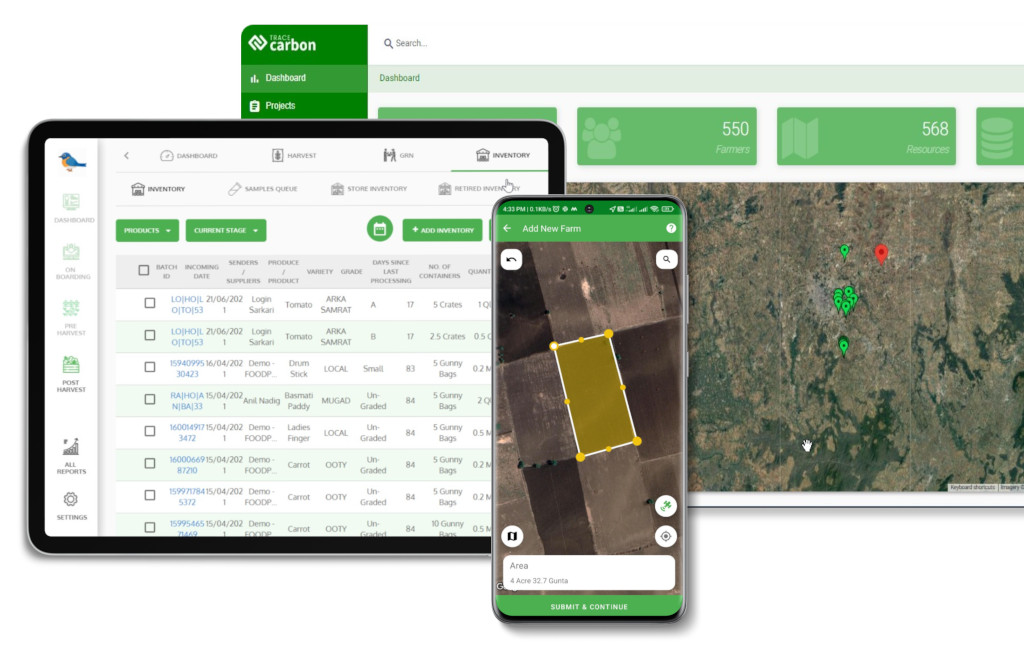
Quick summary: Discover how Source-Level Traceability & Supplier Data enable compliant Digital Product Passports (DPPs), support ESPR requirements, and ensure auditable upstream supply chain visibility.

Supply chain traceability begins at the source, not just at the product level. In today’s regulatory and sustainability-driven markets, Digital Product Passports (DPPs) are transforming how organizations track and disclose product information. Source-Level Traceability & Supplier Data for DPPs ensures every product can be traced back to its origin, suppliers, and production sites. By capturing standardized supplier identifiers, material provenance, certifications, and compliance claims, organizations create an auditable, verifiable upstream data trail.
Effective source-level traceability addresses gaps from missing or delayed supplier information through progressive data enrichment, risk-based prioritization, and confidence scoring. This approach underpins ESPR compliance, enables Digital Product Passports, supports sustainability claims, and provides regulators and consumers with trusted, end-to-end visibility, making Source-Level Traceability & Supplier Data a critical foundation for modern, compliant supply chains.
At the heart of effective DPPs lies source-level traceability, the ability to trace every product back to its suppliers, materials, and production sites. By capturing standardized supplier data, material provenance, and certifications, companies can ensure their DPPs are auditable, compliant, and trustworthy. This blog explores how to collect supplier data, manage incomplete upstream information, and maintain regulatory compliance, providing a step-by-step guide to building end-to-end traceable and ESPR-ready supply chains.
Key Takeaways
As the Ecodesign for Sustainable Products Regulation (ESPR) transforms from a policy draft into a market reality, the focus of the global manufacturing sector has shifted. We are no longer asking what a Digital Product Passport (DPP) is; we are asking how to populate it.
The challenge isn’t just about printing a QR code on a label. It’s about the “data journey” that happens thousands of miles upstream. For a DPP to be compliant, it must reflect the Source-Level Traceability of every component.
Here is a deep dive into how brands can master supplier data capture to build a robust, audit-ready DPP ecosystem.
For decades, most brands operated on a “Tier 1” visibility model. You knew your garment factory or your battery assembler. But under the ESPR, the “Product Passport” requires the history of the molecules, fibers, and minerals.
Source-level traceability requires moving deep into the supply chain:
The Interoperability Challenge: Each of these tiers likely uses different software (or no software at all). To achieve source-level visibility, your DPP platform must be able to ingest data from disparate sources moving away from static PDFs and toward structured data exchange.
The journey of a DPP begins at the source. When a raw material is harvested or extracted, it needs a Digital Identity.
| Data Category | What Needs to be Captured at the Source |
| Origin Data | Precise geocoordinates of the farm, forest, or mine. |
| Material Composition | Purity levels, recycled vs. virgin content ratios ($%$). |
| Social Proof | Certifications (Fair Trade, SA8000) and labor condition audits. |
| Environmental Impact | Primary energy usage and water consumption at the facility level. |
By capturing this data at the “moment of creation,” you avoid the “Post-Production Scramble” the frantic effort to find material origins months after the product has been shipped.
Learn how supply chain traceability powers Digital Product Passports →
Learn when and why batch-level traceability is used in DPPs →
Under the Ecodesign for Sustainable Products Regulation (ESPR), Digital Product Passports (DPPs) must be supported by verifiable, source-level supplier data. Capturing this data accurately and consistently is essential to prove product origin, substantiate sustainability claims, and remain audit-ready.
To meet ESPR requirements, organizations must collect and maintain several categories of upstream data:
This information ensures regulators can trace products back to the exact entities and locations involved in production.
Tracking material origin and attributes enables ESPR-required disclosures on sustainability, circularity, and environmental impact.
These claims must be verifiable and linked to specific suppliers and materials, not stored as standalone documents.
Standardized identifiers are critical to ensuring supplier data is consistent, interoperable, and auditable:
Using standardized identifiers prevents duplication, reduces manual reconciliation, and ensures supplier data can be shared seamlessly across systems, partners, and regulators. Without them, traceability breaks occur, undermining DPP reliability.
To capture supplier data at scale, organizations should adopt the following best practices:
Accurate supplier data is the foundation of ESPR-compliant Digital Product Passports. By capturing standardized, verifiable information at the source and automating how it flows across the supply chain organizations can maintain continuous compliance, substantiate sustainability claims, and build trustworthy, audit-ready DPPs that scale across products and regions.
Download our free checklist to capture supplier data for DPP compliance →
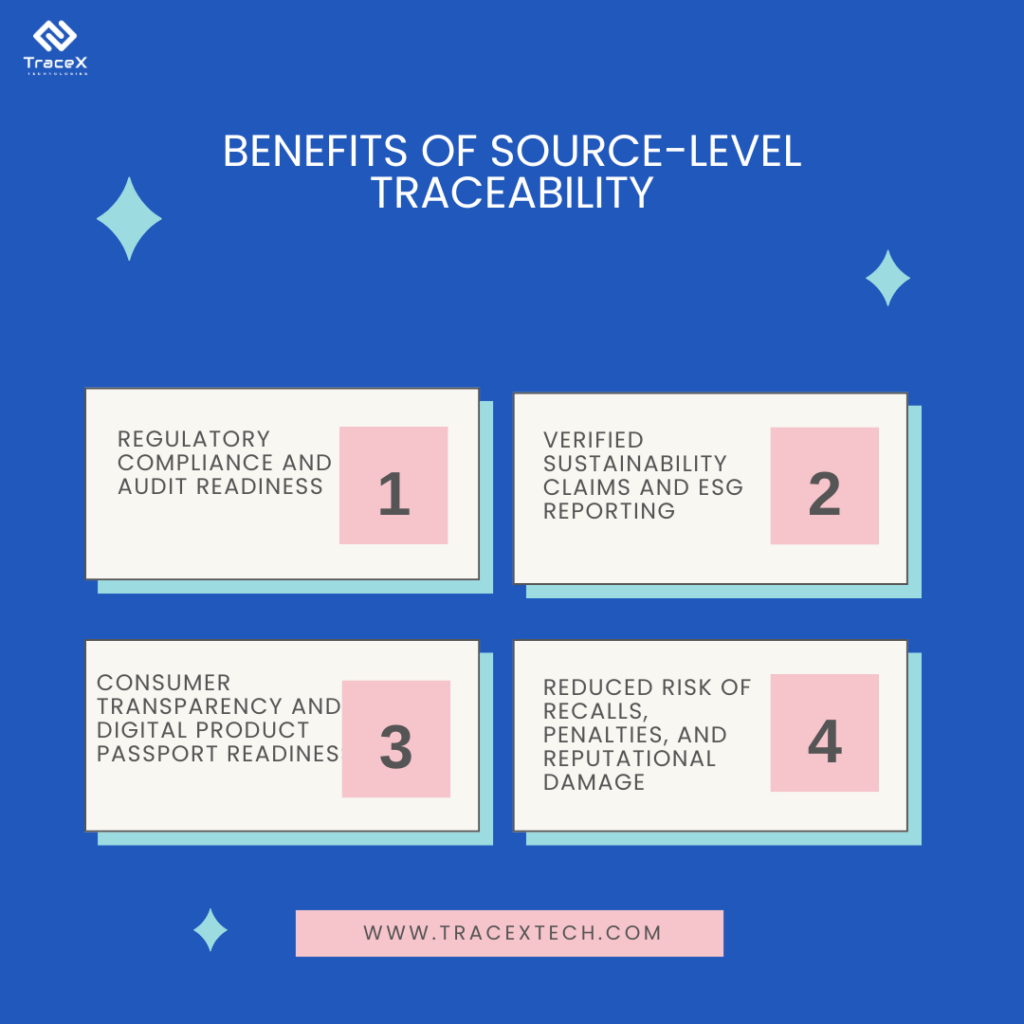
Incomplete upstream data is one of the most common and practical challenges in implementing Digital Product Passports (DPPs). Global, multi-tier supply chains rarely provide perfect data from day one, yet ESPR requires traceability to remain continuous and verifiable. Managing these gaps effectively is critical to maintaining compliance without disrupting operations.
Organizations frequently encounter:
Left unmanaged, these gaps create traceability breaks that weaken DPP credibility, increase audit risk, and delay regulatory compliance.
1. Progressive Data Enrichment
Instead of blocking DPP creation until all data is available, organizations can:
This approach ensures DPPs remain functional while upstream data maturity improves.
2. Risk-Based Supplier Prioritization
Not all suppliers carry equal compliance risk. Best practice includes:
3. Data Confidence and Completeness Indicators
To support audits and regulatory reviews:
This creates audit-ready DPPs that acknowledge real-world constraints.
A Traceability Platform acts as the “orchestrator” for your DPP. It doesn’t just store data; it actively pulls it from the supply chain.
One of the biggest hurdles to source-level traceability is Supplier Fatigue. A single factory might receive DPP data requests from 50 different brands, all in different formats.
The Solution: Standardized Data Models. By using global standards like GS1 Digital Link and JSON-LD, brands can ensure that their data requests are interoperable. When we speak the same “digital language,” the burden on the supplier decreases, and the quality of the data increases.
If your DPP strategy relies on manual spreadsheets, it will fail at scale. A medium-sized brand with 1,000 SKUs and 3 tiers of suppliers is managing millions of data points.
The “Clean” Data Architecture:
This automated flow creates a Single Source of Truth that is audit-ready 24/7. When a regulator scans your product in 2027, they aren’t looking at a snapshot from 2025; they are looking at a verified, real-time record of that product’s specific journey.
Digital traceability platforms from TraceX automate these strategies by:
By embedding these capabilities into the DPP architecture, platforms like TraceX transform incomplete upstream data from a compliance blocker into a managed, auditable process.
Source-Level Traceability & Supplier Data for DPPs is the cornerstone of effective Digital Product Passports and ESPR compliance. By linking products to verified suppliers, material origins, and production sites, organizations create a continuous, auditable data trail across the value chain. When supported by standardized identifiers, progressive data enrichment, and digital traceability platforms, source-level traceability transforms incomplete upstream data into managed, compliant insight. This approach not only reduces regulatory risk but also enables credible sustainability claims, operational resilience, and long-term trust with regulators and customers.
Explore the core architecture behind scalable Digital Product Passports →
Learn why interoperability is critical for Digital Product Passports →
Dive into the technology stack powering modern DPPs →
Source-level traceability is the ability to trace products back to their suppliers, materials, and production locations, providing verifiable upstream data required for ESPR-compliant DPPs.
Supplier data validates material origin, certifications, and sustainability claims. Without it, DPPs cannot meet regulatory requirements or withstand audits.
By using progressive data enrichment, risk-based supplier prioritization, and data confidence indicators often automated through digital traceability platforms companies can maintain compliance despite data gaps.