Quick summary: Product Traceability in supply chains enables end-to-end visibility, reduces risk, ensures regulatory compliance, and supports sustainability and circular economy goals.
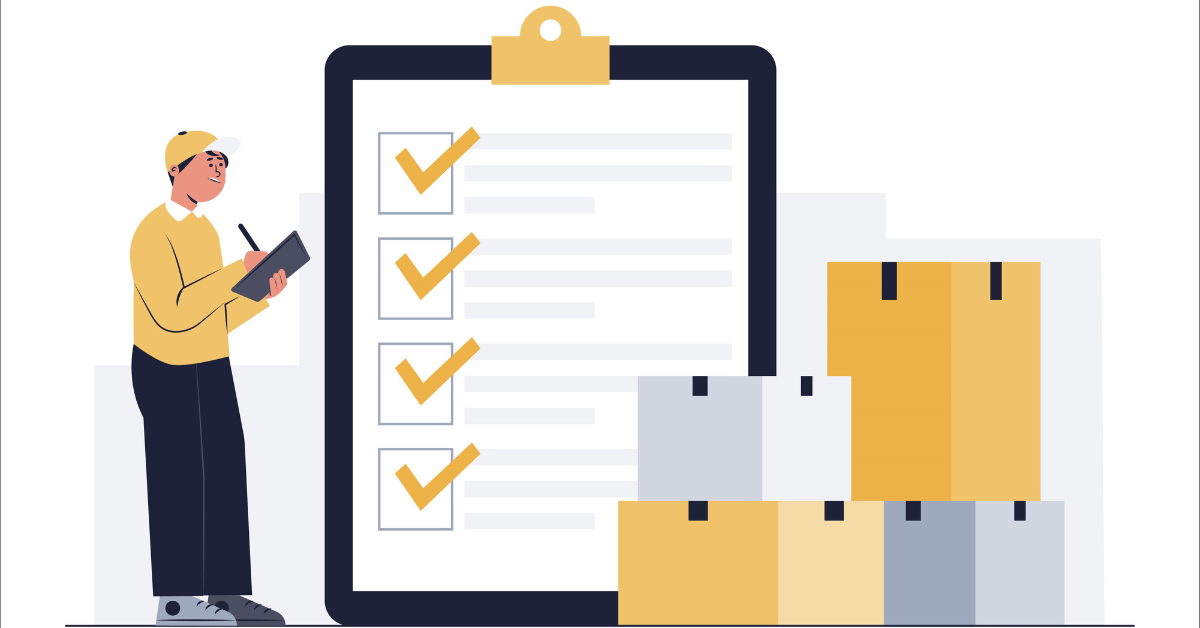
Product traceability enables companies to track products from raw materials to end customers, ensuring regulatory compliance, circular economy readiness, and supply chain transparency.
Product Traceability in Supply Chains is now essential as regulators, buyers, and investors demand full visibility into how products are sourced, processed, and distributed. End-to-end Product Traceability enables companies to track goods from raw material origin through manufacturing, logistics, and final delivery, ensuring compliance with sustainability, safety, and due-diligence regulations. It reduces fraud, mitigates supply chain risk, supports recalls, and strengthens ESG reporting. As global regulations tighten and transparency expectations rise, Product Traceability has become a foundational requirement for resilient, compliant, and future-ready supply chains.
The days when a product’s journey ended at the point of sale are over. Today, every item from the coffee bean in your mug to the microchip in your phone—is under scrutiny. Businesses operating globally face a monumental shift, where product origin, ethics, and destiny are as important as cost and quality.
At the heart of this revolution is Product Traceability.
No longer a niche quality control function, traceability has become the non-negotiable operational and compliance requirement for accessing major markets. It is the core mechanism enabling the European Union’s ambitious Circular Economy agenda and the foundational proof needed for sustainability claims.
This guide provides a comprehensive breakdown of product traceability, explaining why it is critical, how it works, and how businesses can leverage it to gain a competitive edge.
Key Takeaways
Product traceability is the ability to track the movement, location, and characteristics of a product and its component materials forward through the supply chain (from origin to consumer) and backward from the consumer to the raw material source.
Definition of Product Traceability in Simple, Regulatory-Aligned Terms
In simple, regulatory terms, product traceability is the digital capacity to prove the identity, origin, and history of a product at any point in time. This proof must be immediate, verifiable, and comprehensive enough to satisfy a regulator or a discerning buyer.
| Feature | Basic Tracking | End-to-End Traceability |
| Scope | Internal business operations (Warehouse to Distribution Center). | Farm/Mine to Consumer/Recycler (Multi-tier visibility). |
| Data Focus | Location and status (When did it arrive? Where is it now?). | Identity, Origin, Events, and Attributes (Who made it? How was it processed? What is its carbon footprint?). |
| Goal | Logistics and inventory management. | Compliance, Risk Mitigation, and Circularity. |
End-to-end traceability is the ability to connect all points in the chain, establishing a complete, verifiable Chain-of-Custody.
Traceability can be applied at different granularities depending on industry risk and regulatory requirements:
Learn how verified chain-of-custody systems prevent fraud, ensure compliance, and build trust across complex global supply chains.
Explore Chain of Custody in Supply Chains
Discover how tracking materials from source to end-of-life enables circularity, reduces risk, and supports regulatory readiness.
Understand Material Traceability in Supply Chains
Traceability has moved from a “nice-to-have” to a “must-have” due to intense external pressure from regulations, the market, and climate science.
Global regulatory bodies, particularly the European Union, are embedding mandatory traceability into market access rules:
Consumers, investors, and governments demand proof of sustainability. Traceability validates claims like:
Investors (ESG metrics) and institutional buyers increasingly use supply chain transparency as a risk screening tool. Buyers are actively seeking suppliers who can provide granular data, not just certificates.
Failure to implement robust traceability carries massive penalties:
The Circular Economy cannot function without traceability. It is the operational mechanism that allows value to be recovered.
Traceability provides the design team with feedback on where materials end up and why products fail, allowing them to redesign for durability and recyclability. Closed-loop systems rely on knowing the exact composition and history of a returned product before it can be safely reused or remanufactured.
By preventing the destruction of products (by mandating repair) and maximizing the recovery of materials (by informing recyclers), traceability directly leads to less waste and a lower reliance on virgin resources.
The DPP is the ultimate output of a fully traceable supply chain. The traceability system collects and verifies the data; the DPP is the standardized, public/permissioned digital envelope that holds and shares that verifiable data throughout the product’s life.
Traceability is not about submitting forms; it’s about providing instant, auditable proof.
| Regulation | Traceability Requirement |
| EUDR | Geolocation Traceability: Proof of origin back to the plot level to verify no deforestation after December 31, 2020. |
| ESPR / DPP | Lifecycle Traceability: Item-level data collection for reparability, durability, and end-of-life material content. |
| CEAP (General) | Material Traceability: Essential for calculating mandatory recycled content percentages. |
Regulators no longer accept simple paper certificates. They expect auditable, verifiable records that confirm:
Verifiability is key. Traceability records must be immutable (tamper-proof) and instantly accessible by market surveillance authorities upon request. This often points toward the use of decentralized technologies like blockchain.
Instead of manually gathering data for every regulation (CSRD, EUDR, DPP), a unified traceability system centralizes all the necessary information, enabling automated reporting and simplified audit responses.
Building a robust traceability system requires technology, governance, and supply chain collaboration.
The system must easily onboard Tier 1, 2, and 3 suppliers, often including smallholder farmers. Data must be standardized (e.g., using UN/CEFACT standards or industry-specific schemas) to ensure interoperability across different business systems.
At every processing node (e.g., refining, assembly, blending), the system must record a Chain-of-Custody event, confirming:
How an Agri Exporter Simplified Product Traceability & Compliance
See how digital traceability eliminated data errors, ensured certification accuracy, and protected export timelines.
For commodity compliance (EUDR), the system must utilize GPS coordinates and geospatial mapping to verify the physical location of the raw material source against deforestation maps.
The system acts as a digital ledger for all associated documents (Certificates of Origin, Fair Trade certificates, Quality control reports), linking them immutably to the specific batch or item.
Modern traceability is digital, relying on sophisticated tools to manage complexity and provide trust.
Blockchain provides a shared, append-only ledger that cryptographically secures event data. This immutability is crucial for establishing the trust and verifiability that regulators demand. It ensures no party can unilaterally alter the historical record of a product’s origin or processing.
AI algorithms constantly monitor the data stream, flagging suspicious gaps (e.g., a batch number skipped a processing stage) or anomalies (e.g., a sudden change in yield), which accelerates risk mitigation.
Centralized, secure cloud-based traceability platforms are essential for connecting disparate parties (farmers, processors, distributors, recyclers) and providing necessary multi-tier visibility that spans global supply networks.
While often used interchangeably, the two differ by their level of focus.
This tracks the final manufactured item (e.g., a laptop, a shirt). It’s sufficient when the primary focus is on assembly, safety, and brand warranty.
This tracks the raw, constituent components deep into the supply chain (e.g., the cobalt in the battery, the cotton fiber in the shirt). It is mandatory under regulations like EUDR and is essential for validating recycled content and carbon footprint claims.
An effective system connects both:

TraceX solutions provide the unified digital platform necessary for navigating the complex landscape of global traceability and compliance.
We provide a single, integrated platform that handles both the deep, multi-tier material traceability (crucial for EUDR) and the product lifecycle tracking (essential for DPP/ESPR).
Our solution leverages decentralized technology to ensure that all transactional and event data is immutable, verifiable, and secure, providing the trust foundation demanded by regulators and global buyers.
We automate the process of gathering and mapping supply chain data against key regulatory schemas, simplifying the generation of due diligence reports and DPP content.
Our platform is designed to integrate seamlessly with existing ERP/LCA tools, ensuring your traceability system directly feeds into your sustainability reporting, circular design, and waste reduction strategies.
The time to act is now. The deadlines are approaching rapidly.
The future of commerce is traceable. Ensure your business is ready for the revolution.
Product Traceability Is Now a Business Imperative
End-to-end Product Traceability is no longer just about compliance it is foundational to resilient, transparent, and future-ready supply chains. As regulations tighten and buyers demand proof of origin, sustainability, and ethical sourcing, companies that invest in digital traceability gain stronger risk control, faster response to disruptions, and long-term competitive advantage. Those that delay face growing exposure to recalls, penalties, and market exclusion.
Understand how end-to-end visibility reduces risk, ensures compliance, and strengthens supply chain resilience.
Read the Complete Guide to Supply Chain Traceability
Learn how immutable records improve food safety, transparency, and regulatory trust from farm to fork.
Explore How Blockchain Is Transforming Food Traceability
Uncover how data, automation, and traceability platforms help companies meet sustainability and ESG goals.
How Digital Transformation Is Powering Sustainable Supply Chains
Product traceability is the ability to track a product’s origin, movement, and transformation across the entire supply chain using verified data.
Regulations, sustainability requirements, and supply chain risks require companies to prove where products come from, how they’re made, and where they go.
It enables accurate emissions reporting, deforestation-free sourcing, responsible material use, and compliance with circular economy and ESG regulations.