
Quick summary: A single missing document can halt a timber shipment at customs, and one unverifiable origin claim can expose your business to regulatory penalties and brand damage. As global regulations tighten and buyers demand proof of responsible sourcing, forest-product companies must move beyond paperwork and adopt systems that ensure legality, traceability, and audit readiness across their […]
A single missing document can halt a timber shipment at customs, and one unverifiable origin claim can expose your business to regulatory penalties and brand damage. As global regulations tighten and buyers demand proof of responsible sourcing, forest-product companies must move beyond paperwork and adopt systems that ensure legality, traceability, and audit readiness across their supply chains.
Yet compliance on the ground is far from simple:
TraceX EUDR Solutions help timber importers, manufacturers, and retailers digitize traceability, automate legality verification, and build audit-ready chain-of-custody systems for confident, regulation-ready sourcing.
Forest compliance has shifted from a niche sustainability concern to a core business requirement for companies handling timber and wood-based products. Regulatory scrutiny, trade controls, and buyer expectations now demand verifiable proof that forest resources are legally harvested and responsibly sourced.
Illegal logging risk is one of the biggest drivers. Illegally harvested timber distorts markets, damages ecosystems, and exposes companies to severe legal consequences. Businesses linked even indirectly to illegal logging can face shipment seizures, heavy fines, and long-term reputational harm.
Trade restrictions are tightening worldwide. Countries are introducing regulations that prohibit the import of illegally sourced wood and forest-risk commodities. Non-compliant shipments can be denied entry at ports, disrupting supply chains and causing costly delays.
Market access increasingly depends on proof of legality and traceability. Major markets such as the EU, US, and UK require documented due diligence before products can be sold. Without verifiable compliance, companies risk losing access to high-value customers and regions.
Buyer due diligence expectations are also rising. Global brands and retailers now require suppliers to provide chain-of-custody records, origin documentation, and sustainability assurances. Compliance is becoming a prerequisite for commercial partnerships.
A major catalyst behind this shift is the EU Deforestation Regulation (EUDR). The regulation mandates plot-level traceability, legality verification, and deforestation-free proof for forest-risk commodities transforming compliance from paperwork into a data-driven, audit-ready discipline.
Effective forest compliance requires a combination of digital systems, verification tools, and operational workflows working together as an integrated stack.
Digital platforms that track timber from forest source to finished product. These systems preserve material identity across harvesting, transport, processing, and export stages.
GIS platforms and satellite mapping technologies that verify forest plot origins, detect land-use change, and confirm deforestation-free status.
Tools that onboard suppliers, collect legality documents, assess sourcing risk, and maintain structured compliance records.
QR codes, RFID tags, digital batch IDs, and lot-tracking tools that maintain identity preservation and prevent material commingling.
Automated systems that generate due diligence statements, audit trails, shipment documentation, and regulatory reports.
Satellite monitoring, forest-risk databases, and alert systems that flag high-risk sourcing regions and suppliers.
Want to know why illegal logging is a global enforcement priority?
Read our in-depth guide on Illegal Logging and how they impact timber trade, sourcing obligations, and market access.
Unsure what the EU Deforestation Regulation actually requires?
Read our complete breakdown of EUDR Requirements covering traceability, due diligence, geolocation, and shipment-level compliance.
Forest compliance requires a coordinated set of digital systems that work together to ensure timber is legally sourced, traceable, and audit-ready. Each tool category plays a distinct role in building a defensible, regulation-ready supply chain.
These platforms provide end-to-end visibility of timber movement across the supply chain. They track material flow from the point of harvest in the forest through transport, milling, processing, manufacturing, and final product distribution. By assigning digital identities to logs and batches, traceability platforms create a continuous record of custody linking finished goods back to their forest origin. This is essential for proving legality, preventing illegal substitution, and meeting regulations that require origin-level transparency.
Chain-of-custody systems ensure that timber maintains its verified origin status as it passes through multiple processing and handling stages. They preserve the integrity of certified or compliant materials by preventing mixing with unknown or non-compliant sources. These systems document every transfer of ownership and transformation step such as sawing, pulping, laminating, or assembly so that origin claims remain intact. This is critical for certifications and regulations that demand identity-preserved supply chains.
These tools verify where timber was harvested and whether the sourcing area complies with environmental regulations. Using GPS mapping, GIS platforms, and satellite monitoring, companies can pinpoint forest plots, detect land-use changes, and identify deforestation risks. Forest monitoring tools provide objective, time-stamped evidence that wood originates from approved and legally harvested areas—supporting deforestation-free and legality claims.
Legality systems validate the documentation required to prove lawful harvesting and trade. They help companies collect, review, and authenticate permits, harvesting licenses, concession records, transport documents, and export clearances. By digitizing and organizing legal paperwork, these systems reduce compliance gaps, streamline audits, and ensure that timber meets national and international legal frameworks.
Due diligence platforms manage supplier compliance and regulatory reporting. They help organizations assess sourcing risks, onboard suppliers, collect compliance declarations, and maintain structured audit trails. These tools also support risk classification, mitigation planning, and automated reporting ensuring companies can demonstrate proactive compliance with global timber regulations.
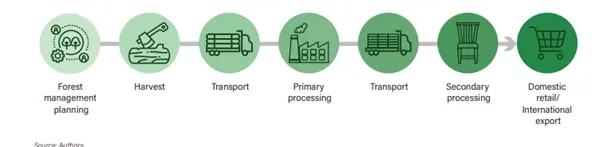
Traceability in the timber industry refers to the ability to track timber through all stages of its life cycle from the forest where it was harvested to the point of sale. This ensures that every step in the timber supply chain is transparent, legal, and sustainable. With the EUDR in effect, traceability becomes even more critical.
When addressing traceability for timber products, the fundamental inquiries are generally focused upstream:
To effectively respond to these inquiries, both internal (e.g., tracking materials and products within a company’s operations) and external (e.g., tracking materials and products between different organizations) traceability processes are essential.
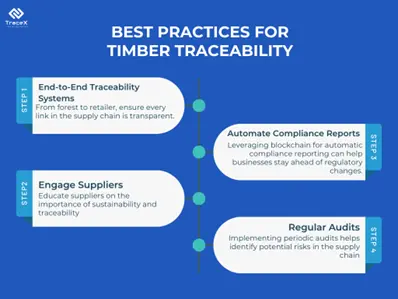
The EU Deforestation Regulation (EUDR) raises the bar for forest-risk commodity compliance by requiring companies to prove that products placed on the EU market are deforestation-free, legally produced, and fully traceable to origin. Meeting these obligations at scale is difficult without specialized forest compliance tools that digitize data, preserve material identity, and automate due diligence workflows.
EUDR requires geolocation data for every plot of land where raw materials are produced. Forest compliance tools capture GPS coordinates and polygon maps of harvesting areas, linking timber to precise forest plots. This creates a verifiable origin record that regulators can validate against satellite deforestation datasets.
As timber moves through harvesting, transport, milling, processing, and manufacturing, its origin must remain identifiable. Chain-of-custody systems prevent mixing compliant and non-compliant materials by preserving batch identity across every transformation stage supporting EUDR’s requirement for traceable material flows.
Satellite monitoring and geospatial analytics tools help companies screen sourcing areas for forest cover loss after the regulatory cut-off date. Automated alerts and historical land-use overlays provide objective evidence that timber is sourced from deforestation-free zones.
Legality verification platforms digitize permits, concessions, harvesting licenses, and transport documentation. These systems help operators demonstrate compliance with producer-country laws one of the core EUDR due diligence pillars.
EUDR requires operators to submit formal Due Diligence Statements (DDS) before placing products on the EU market. Compliance platforms compile traceability data, risk assessments, legality records, and supplier documentation into structured, audit-ready reports reducing manual effort and reporting errors.
Due diligence tools classify suppliers by deforestation exposure, governance quality, and traceability maturity. Higher-risk suppliers can be flagged for enhanced monitoring, audits, or mitigation plans supporting EUDR’s risk-based compliance model.
Forest compliance tools maintain time-stamped, tamper-resistant records across sourcing, processing, and shipment workflows. These digital audit trails make it easier to respond to inspections and demonstrate regulatory readiness.
In essence, forest compliance tools transform EUDR from a paperwork burden into a structured, technology-enabled compliance process making traceability scalable, defensible, and operationally practical.
The TraceX EUDR Compliance solutions is a robust, blockchain-based solution designed to help agribusinesses and timber companies comply with the EU Deforestation Regulation (EUDR). It enables seamless tracking and verification of products across the entire supply chain, ensuring transparency and sustainability. Leveraging blockchain, it provides immutable records of sourcing, processing, and distribution, guaranteeing that timber products meet deforestation-free requirements. Additionally, the platform integrates with existing systems, allowing businesses to manage due diligence, minimize risks, and maintain compliance with evolving regulations.
Choosing the right forest compliance tools is critical for building a supply chain that is legal, traceable, and ready for tightening global regulations like EUDR, Lacey Act, and UKTR. Not all solutions offer the depth and interoperability required for real-world operations, so decision-makers should evaluate platforms against practical, compliance-driven criteria.
The tool should track material from forest source to finished product. Look for systems that support log-level or batch-level tracking across harvesting, transport, milling, processing, manufacturing, and export. Gaps between stages weaken origin proof and create audit risk.
Modern regulations require precise origin verification. Tools should capture GPS coordinates and polygon mapping of forest plots and link them directly to harvested material. Native GIS integration and map-based dashboards are strong indicators of capability.
The platform must preserve material identity through transformations. Look for identity-preserved workflows, batch genealogy tracking, and safeguards that prevent mixing compliant and non-compliant timber.
Satellite data integration and automated land-use change detection are essential for deforestation-free claims. Tools should support historical forest cover analysis and ongoing monitoring alerts.
The system should digitize and validate permits, licenses, concessions, transport documents, and export clearances. Built-in document management and verification workflows reduce compliance gaps.
Look for platforms that generate structured due diligence statements, shipment documentation, and regulatory reports automatically. Manual compilation increases error risk and slows operations.
A strong tool evaluates supplier risk based on geography, governance, traceability maturity, and sourcing complexity. Risk scoring and mitigation tracking support regulatory expectations.
Forest compliance tools should connect with existing ERP, procurement, and inventory systems via APIs. Seamless data flow avoids duplicate entry and operational friction.
Time-stamped, tamper-resistant records with secure storage are essential. Tools should maintain digital audit trails that meet multi-year retention requirements.
Solutions must support multi-country sourcing, high supplier volumes, and complex processing networks without performance or data bottlenecks.
The right forest compliance tool should not just store data it should operationalize compliance, reduce risk, and scale with your supply chain.
Selecting the right forest compliance system is a strategic decision that affects regulatory readiness, supply chain continuity, and long-term operational efficiency. With evolving global requirements around timber legality, traceability, and deforestation-free sourcing, companies need solutions that go beyond basic recordkeeping.
Clarify which regulations and markets you must comply with such as EUDR, Lacey Act, UKTR, or other due diligence laws. Your system should directly support the specific data, traceability depth, and reporting formats these regulations require.
Evaluate how your materials move from forest to finished product:
Complex, multi-tier supply chains require systems with strong chain-of-custody controls and batch genealogy tracking.
Some businesses need shipment-level traceability, while others require plot-level origin tracking. If regulations demand geolocation and deforestation verification, choose platforms with built-in GIS mapping and satellite monitoring integration.
Your compliance system should connect easily with existing ERP, procurement, inventory, and supplier management platforms. API-ready systems reduce manual work and ensure real-time data flow across operations.
Look for tools that:
Risk intelligence and reporting automation are essential for regulatory confidence.
Systems should be practical for on-ground data collection as well as enterprise reporting. Mobile-friendly field tools, intuitive dashboards, and multilingual support improve adoption.
Choose solutions that can scale across suppliers, geographies, and product lines. Regulations are evolving your system should adapt to new compliance requirements without costly reimplementation.
Strong onboarding, training, and ongoing support reduce deployment risk. Vendors with domain expertise in forestry and sustainability compliance add significant value.
Forest compliance is no longer a paperwork exercise it is a strategic capability that protects market access, brand reputation, and supply chain resilience. As global regulations tighten and buyers demand verifiable proof of legality and traceability, companies handling timber and wood products must adopt systems that preserve origin integrity from forest to finished goods. The right mix of traceability tools, chain-of-custody controls, geolocation technologies, legality verification workflows, and due diligence platforms transforms compliance from reactive documentation into proactive risk management. By investing in practical, digital forest compliance tools, organizations can reduce regulatory exposure, streamline audits, and build deforestation-free supply chains with confidence and credibility.
Struggling to digitize your compliance workflows?
Explore our guide on Digital Traceability for EUDR and learn how technology enables plot-to-product visibility and audit-ready records.
Unsure what geolocation data EUDR actually requires?
Read our detailed guide on EUDR Geolocation Requirements covering GPS points, polygon mapping, and satellite verification.
Worried about material mixing breaking compliance?
Discover how Chain of Custody for EUDR preserves origin integrity from forest and farm to finished goods.
Yes. Regulations apply to all operators placing timber products on regulated markets, regardless of company size.
Not reliably. Manual systems increase error risk and lack the audit-grade chain-of-custody controls regulators expect.
Yes. Certificates support compliance but do not replace plot-level traceability, risk assessment, and due diligence workflows.
No. Modern platforms integrate via APIs and extend existing systems without replacing core infrastructure.
Costs vary, but digital tools are far less expensive than shipment seizures, penalties, and lost market access.