
Quick summary: Discover the 5 main objectives of farm management, including profit maximization, sustainability, resource optimization, risk management, and improving farmer livelihoods, and how modern digital tools support smarter farm operations.

Farm management is not just about running a farm—it’s about maximizing efficiency, ensuring sustainability, and improving livelihoods. In agribusiness, farm management plays a crucial role in addressing modern challenges, from resource scarcity to profitability.
According to recent agricultural statistics, the global demand for food is expected to surge by 50% by 2050 to feed an estimated population of 9.7 billion people
With evolving technologies and market demands, how do farmers balance productivity with sustainable practices? To do so, agribusinesses need to focus on key objectives that can guide them through this complex landscape. Let’s dive into the five main objectives of effective farm management that every agribusiness should prioritize.
Key takeaways
India is ranked 2nd in terms of volumes of production, with a 54.6% workforce engaged in agriculture and a whopping 90 million plus farmers across the country. How do you manage such a large group of farmers, and how are decisions taken collectively? Let’s understand what farm management is and how it’s practiced.
An area cultivated by a farmer, or a group of farmer,s is a farm. It is the land devoted to the raising of crops for food production or for pasture. The management refers to the planning required for implementing production activities so as to yield maximum returns.
Modern farm management isn’t just about planning and execution it’s about real-time visibility, data accuracy, and compliance readiness. As supply chains become more complex and regulated (EUDR, sustainability commitments, export standards), digital farm management is no longer an optional add-on, they’re the infrastructure that makes objectives achievable and defensible.
Farm management used to focus primarily on optimizing yields, controlling costs, and coordinating field operations. Today, that’s no longer enough. Modern farm management must also address compliance, traceability, sustainability reporting, export readiness, and buyer transparency all of which depend on accurate, structured, and verifiable data.
Spreadsheets, paper records, and manual surveys cannot keep pace with these new demands. Regulatory frameworks like EUDR, rising ESG expectations, stricter food safety standards, and export documentation requirements now require farm-level geolocation, batch linkage, input tracking, and continuous data validation. Without digitization, collecting and verifying this information becomes slow, error-prone, and operationally disruptive.
Digitization transforms farm management from reactive documentation to structured control. Mobile data capture replaces paper registers. GPS-based polygon mapping replaces approximate location records. Automated validation reduces compliance gaps. Integrated dashboards provide real-time visibility across productivity, sustainability, and risk indicators.
More importantly, digitization connects farm data directly to procurement systems, export workflows, and sustainability reporting. This ensures that information collected in the field flows seamlessly into compliance documentation and buyer audits without last-minute reconstruction.
In short, digitization is no longer an enhancement to farm management. It is the infrastructure that makes modern farm operations scalable, compliant, export-ready, and strategically competitive.
Still managing farms with spreadsheets and manual surveys?
Discover how digital tools transform traceability, compliance, and procurement workflows.
Read the Complete Guide to Digital Farm Management
Want to strengthen productivity, compliance, and sustainability at the farm level?
Learn the Best Farm Management Practices used by leading agribusinesses.
Explore Best Farm Management Practices
At the core of farm management objectives lies the pursuit of profit maximization, a fundamental goal that ensures the economic viability of agricultural operations. Farmers strategically navigate market dynamics, input costs, and crop choices to optimize their financial returns. Through efficient resource allocation, innovative technologies, and sound financial planning, they aim not only to sustain their livelihoods but also to invest in the longevity and growth of their farms. Profit maximization serves as the cornerstone, enabling farmers to weather economic uncertainties, reinvest in sustainable practices, and contribute to the overall resilience of the agricultural sector.
With digital farm management solutions from TraceX, productivity moves beyond manual planning. Real-time mobile data capture reduces dependence on manual surveys, ensuring that field data is recorded accurately at the source. Automated field logs improve timeliness and consistency, eliminating errors that impact yield analysis and cost control. Visual dashboards reveal productivity trends instantly, enabling farm managers to identify inefficiencies, monitor crop performance, and make faster, evidence-based decisions.
Instead of waiting for weekly spreadsheets or retrospective reports, insights become automatic and continuous. This shift from reactive tracking to proactive control allows farmers to optimize resource allocation, reduce waste, and improve yield outcomes directly strengthening profitability. Ultimately, profit maximization is no longer just about managing inputs and outputs; it is about leveraging real-time data to drive smarter, more resilient farm operations.
Sustainable agriculture practices stand as a paramount objective in modern farm management, reflecting a conscientious approach to farming that balances productivity with environmental responsibility. By implementing techniques such as crop rotation, organic farming, and precision agriculture, farmers aim to reduce ecological impact, conserve natural resources, and foster biodiversity. Traditionally, sustainability relied on standardized practices across fields to maintain uniformity and control.
Today, improving quality and consistency requires more than guidelines it requires verifiable data. With digital farm management solutions from TraceX, GPS-verified plot data ensures consistent agronomic tracking across all fields, reducing variability and strengthening oversight. Automated alerts flag outliers in moisture levels, pesticide usage, or input application, allowing corrective action before issues escalate. This structured, real-time monitoring helps maintain both environmental compliance and crop quality standards.
Beyond internal management, structured digital data supports quality guarantees for buyers, providing credible evidence of responsible farming practices. Sustainability is no longer a claim it becomes measurable and auditable.
No more guesswork. No more inconsistent records. Just quality evidence you can prove.
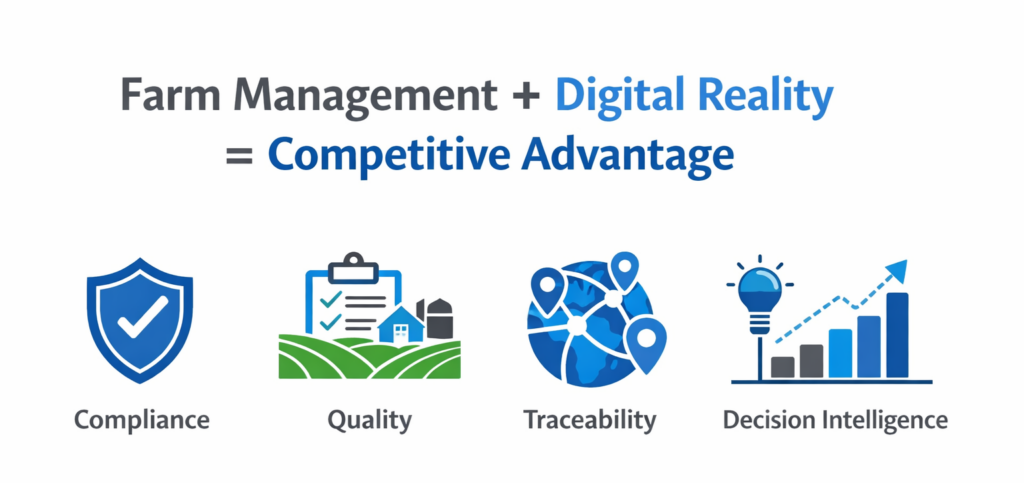
Resource optimization stands as a pivotal objective in farm management, emphasizing the efficient use of land, labor, and capital to enhance overall productivity. Through precision farming techniques, strategic planning, and careful allocation of inputs, farmers strive to maximize output while minimizing waste. This not only improves operational efficiency but also strengthens environmental sustainability, as optimized resource use reduces unnecessary input application, lowers costs, and limits ecological impact. In a world facing rising food demand and tightening compliance requirements, resource optimization is essential for building resilient and responsible agricultural systems.
Traditionally, however, resource decisions were often based on delayed reports, fragmented records, or incomplete field data. This made it difficult to accurately assess performance, forecast risks, or justify investment choices.
With digital farm management solutions from TraceX, resource optimization evolves into data-driven strategic decision-making. Integrated dashboards bring together productivity, compliance, and sustainability metrics in one unified view, enabling managers to evaluate trade-offs in real time. API integrations with ERP and procurement systems ensure that farm-level insights directly inform purchasing, contracting, and supply chain decisions.
The result is smarter allocation of resources backed by structured, verifiable data. You no longer rely on assumptions or intuition you make decisions you can defend with data.
In farming, risk management emerges as a critical objective in farm management. Farmers navigate a wide range of uncertainties from weather fluctuations and pest outbreaks to market volatility and regulatory shifts. Through proactive planning, insurance mechanisms, diversified cropping, and contingency strategies, they aim to mitigate potential disruptions and protect both revenue and long-term viability. Effective risk management strengthens the resilience of individual farms and contributes to broader agricultural stability.
Traditionally, managing regulatory and compliance risk depended heavily on manual records prepared for audits and inspections. Documentation was often reconstructed at the last minute, creating stress, errors, and exposure to penalties.
With digital farm management solutions from TraceX, risk management becomes structured and proactive. Centralized compliance data ensures that all records are auditable and export-ready at any time, eliminating fragmented documentation. Automated generation of food safety, ESG, and traceability reports reduces manual effort and improves accuracy. Built-in risk scoring and early warning systems highlight regulatory gaps, incomplete data, or potential non-compliance before they escalate into shipment delays or audit findings.
This shift from reactive documentation to continuous oversight significantly reduces compliance exposure. Instead of preparing for inspections under pressure, farms remain inspection-ready every day. Reduced audit anxiety. Greater operational confidence. Stronger long-term resilience.
Ajith Pai, Founder and CEO, Green Earth Fresh Produce, says, “TraceX has been critical in helping us to accomplish comprehensive traceability across our supply chain and effectively monitor the inputs and practices in our farms which helps us in ensuring adherence to good agricultural practices that are so important in the minds of our consumers.”
Improving farmer livelihoods stands as a paramount objective in farm management, recognizing the integral role smallholder farmers play in sustaining communities and global food security. Beyond financial returns, this objective focuses on enhancing overall quality of life through fair trade practices, access to markets, social responsibility initiatives, and meaningful community engagement. It reflects a holistic approach that values dignity, stability, and long-term sustainability for farming communities.
Traditionally, coordination between buyers, aggregators, and farmers relied on phone calls, emails, and fragmented records. This often led to delays, unclear accountability, and limited visibility into who was supplying what restricting farmers’ ability to participate in structured, premium supply chains.
With digital farm management solutions from TraceX, strengthening the supplier and farm network becomes systematic and transparent. Structured supplier onboarding ensures verified farmer identities and organized documentation, improving credibility and market access. Real-time traceability networks link farms directly to batches and shipments, ensuring that farmer contributions are visible and recognized throughout the supply chain. Integrated collaboration tools reduce data friction, enabling smoother communication, clearer expectations, and faster issue resolution.
By connecting the network with transparent, authenticated data, digital systems empower farmers with stronger buyer relationships, fairer participation in value chains, and improved access to compliant, export-ready markets. This not only enhances operational efficiency but also supports sustainable livelihood growth across farming communities.
Goals of farm management constitute the guiding framework that shapes the decisions and actions of agricultural enterprises. These principles encapsulate the fundamental tenets governing the effective and sustainable operation of farms. From profit maximization and resource optimization to risk management and sustainable practices, these principles serve as the cornerstone of strategic planning in agriculture. By adhering to these principles, farmers can navigate the complexities of modern farming, fostering resilience, environmental responsibility, and community well-being. Grounded in a holistic understanding of the agricultural ecosystem, the principles of farm management provide a roadmap for farmers to achieve economic viability, environmental sustainability, and improved livelihoods.
The scope of farm management extends far beyond day-to-day operations. It involves strategic planning, resource allocation, and decision-making that optimize productivity, sustainability, and profitability. In recent times farming decisions are based on numerous factors relating to productivity and profits. Here are the top five factors that affect the same.
Farm management involves lots of planning, analysis and decision-making. Decisions taken by the farm managers will affect the entire farm. They have to make sure the right number of inputs at the right time is combined with the optimal utilization of resources. Therefore, farm managers must consider the level of importance at which their tasks rank to allocate and run tasks accordingly.
Many procedures and stages must be performed during farming, some of which are repeated, to handle both the growing of crops and the management of livestock. When handling such routine activities, a farm manager should give them importance. Frequency must be maintained in all aspects of animal feeding, and crop care, including irrigation, fertilizer inputs, etc.
Farming activities heavily rely on timing. Activities like seed sowing, crop input treatment, harvest, grazing, etc. should be carried out when the results will be greatest. The option a farm manager makes will depend on how important the chores are for which he or she must choose whether to act quickly or slowly. While a manager must act swiftly in response to changes in the weather or customer demand, there are times when he must maintain composure so that he may act with conviction.
While many elements influence the growth of the product, there are a few potential uncertainties for which the farm manager must find a practical and affordable response. The viability of a regular agricultural plan can be affected by variables such as weather change, animal sickness, water scarcity, changes in trends, and client desire, among others.
Advancement in the field of agriculture is at an astronomically rapid rate. Every day new technologies emerge providing solutions and improvements in farming practices, procedures, safety, quantity and quality. With this increasing number, it makes it difficult for the farm manager to opt for the best alternative while keeping cost and time in mind.
Technology plays a pivotal role in revolutionizing farm management practices. Advanced technologies offer a suite of solutions aimed at optimizing agricultural operations, enhancing efficiency, and promoting sustainability. Farm management software integrates data from various sources, providing comprehensive insights into crop cycles, resource utilization, and financial performance. Precision agriculture technologies, including GPS-guided tractors and drones, enable precise and targeted farming, minimizing resource wastage. Internet of Things (IoT) devices facilitate real-time monitoring of soil conditions, crop health, and equipment performance. Cloud computing ensures seamless data accessibility and collaboration among stakeholders, even in remote locations. Additionally, artificial intelligence and machine learning algorithms analyze vast datasets, offering predictive analytics for better decision-making. These technological solutions not only streamline day-to-day farm activities but also contribute to sustainable practices by optimizing resource use, reducing environmental impact, and improving overall farm productivity. Embracing these innovations empowers farmers to navigate challenges effectively and build resilient, future-ready agricultural enterprises.
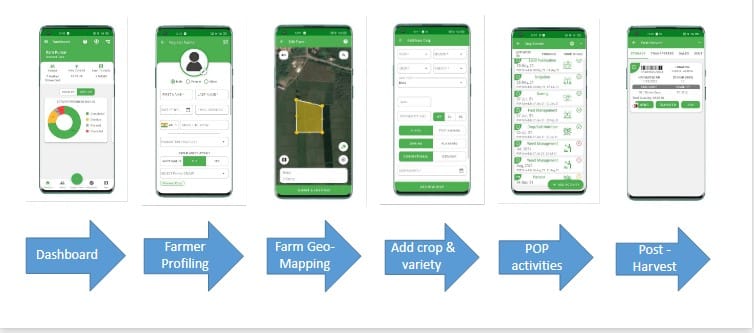
TraceX Farm Management Solutions are designed to transform traditional farm operations into structured, digital, and compliance-ready ecosystems. Instead of relying on fragmented spreadsheets, paper registers, and manual surveys, TraceX provides a unified digital platform that connects farm-level data to traceability, sustainability, procurement, and export workflows.
At its core, TraceX enables end-to-end farm digitization. Farmers and field teams can capture real-time data through mobile applications, including farmer identity details, plot-level GPS polygon mapping, crop cycles, input usage, harvest volumes, and transaction records. This ensures that farm data is recorded accurately at the source and remains verifiable.
The platform strengthens traceability and compliance by linking farms directly to batches, shipments, and export documentation. It supports regulatory requirements such as EUDR, sustainability certifications, food safety standards, and ESG reporting by centralizing data into audit-ready formats. Built-in risk scoring and validation tools help identify compliance gaps early, reducing audit anxiety and shipment delays.
TraceX also enhances supplier network management through structured onboarding, verified farmer identities, and transparent data sharing. This improves accountability, strengthens buyer trust, and ensures that farm contributions are visible throughout the supply chain.
From a strategic perspective, integrated dashboards provide insights into productivity, risk exposure, sustainability metrics, and procurement performance. API integrations connect farm data with ERP and procurement systems, ensuring that decisions across the supply chain are informed by real-time field intelligence.
In conclusion, the pursuit of the five main objectives of farm management forms the cornerstone of sustainable and prosperous agriculture. By emphasizing sustainable practices, optimizing resources, maximizing profits, mitigating risks, and improving farmer livelihoods, farm management becomes a dynamic force shaping the future of agriculture. The intricate balance of these objectives not only ensures the economic success of farming enterprises but also fosters environmental stewardship, social well-being, and resilience in the face of challenges. As the agricultural landscape continues to evolve, the integration of innovative technologies and a commitment to these objectives will undoubtedly lead to a more resilient, efficient, and socially responsible farming industry. Through strategic farm management practices, farmers can navigate complexities, contribute to global sustainability goals, and secure a thriving future for agriculture.
Want to connect farm data directly to batches and exports?
Explore our guide on Farm Management for Traceability and learn how to build end-to-end visibility from plot to shipment.
Struggling with audits, DDS submissions, or regulatory documentation?
Read our deep dive on Farm Management for Compliance to see how structured farm data reduces risk and keeps you inspection-ready.
Preparing for organic, fair trade, or ESG audits?
Discover how Farm Management for Sustainability Certifications simplifies documentation, validates claims, and strengthens buyer trust.
The five main objectives of farm management are profit maximization, sustainable agriculture practices, resource optimization, risk management, and improving farmer livelihoods. Together, these objectives guide strategic and operational decisions in agriculture.
Profit maximization ensures the economic viability of farms. It allows farmers to cover costs, reinvest in operations, adopt new technologies, and remain resilient in the face of market volatility and environmental uncertainty.
Sustainable agriculture balances productivity with environmental responsibility. It focuses on conserving resources, reducing ecological impact, maintaining soil health, and meeting growing demand for responsibly produced food.
Risk management helps farmers address uncertainties such as climate variability, price fluctuations, pests, and regulatory changes. Proactive planning, diversification, and compliance readiness protect long-term stability.
Digital farm management solutions improve data accuracy, enable real-time monitoring, enhance traceability, automate compliance documentation, and support better decision-making helping farmers achieve profitability, sustainability, and operational resilience more effectively.