
Quick summary: Australian timber importers risk fines and market exclusion daily from avoidable AILPA compliance gaps. Discover 7 critical mistakes and how technology eliminates them.
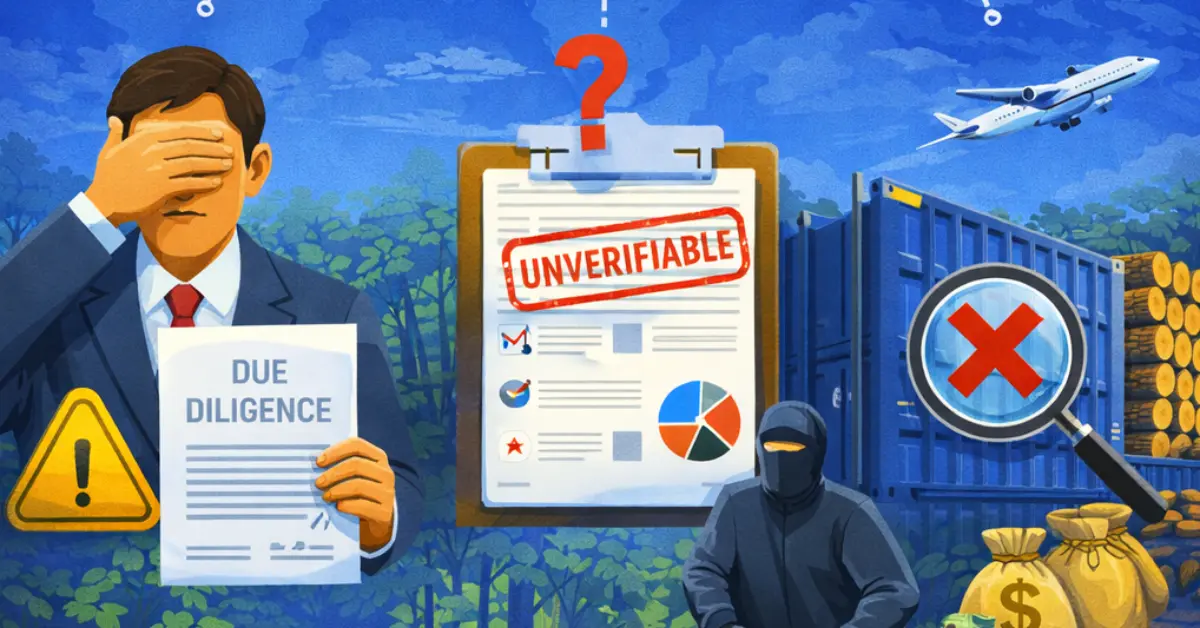
Australia is one of only a handful of countries with dedicated criminal legislation against illegal timber imports. Since 2012, the Illegal Logging Prohibition Act (AILPA) has made it an offence to knowingly, intentionally, or recklessly import or process illegally logged timber. Most operators know this. What they don’t always know is how forensically DAFF, the Department of Agriculture, Fisheries and Forestry, now scrutinises due diligence systems. The most common due diligence mistakes in timber supply chains under Australia’s Illegal Logging Prohibition Act are: operating without a written due diligence system, gathering incomplete supply chain information, applying inadequate risk assessments, misapplying certification pathways, failing to document risk mitigation, maintaining insufficient records, and lacking audit-ready documentation.
Together, these failures expose importers and processors to civil penalties, market access suspension, and DAFF enforcement action under the Act and the Illegal Logging Prohibition Rules 2024. The March 2025 reform changed the compliance landscape materially. The new Illegal Logging Prohibition Rules 2024 replaced a decade-old regulation, introduced two distinct due diligence pathways, tightened record-keeping obligations, and gave DAFF expanded powers to audit, sample, and test timber using species identification technologies.
And yet, DAFF’s own compliance monitoring reports reveal that operators are still getting the basics wrong. No written due diligence system. Incomplete information gathering. Certification claims that don’t hold up. Risk assessments that wouldn’t survive an audit notice. This article maps the seven most common AILPA due diligence failures, explains why each one keeps happening, and shows exactly how technology eliminates them before DAFF knocks.
• Australia’s reformed Illegal Logging Prohibition Act (AILPA 2012 + Rules 2024, effective 3 March 2025) requires every importer and domestic processor of regulated timber to operate a written due diligence system or face civil penalties under the Act.
• The seven most common failures, no written DDS system, inadequate information gathering, flawed risk assessment, poor certification verification, absent risk mitigation, weak record-keeping, and unreadiness for DAFF audits are all addressable with the right traceability platform.
• TraceX’s compliance platform automates the entire AILPA due diligence workflow from written system documentation and supplier data capture to risk assessment, mitigation records, and audit-ready export, reducing preparation time by up to 70%.
| ~15–30% Estimated share of global timber trade that is illegally logged UNODC World Wildlife Crime Report, 2024 | AU$330 Value of each penalty unit under AILPA (effective Nov 2024) DAFF / Crimes Act 1914 | March 2025 Date the reformed AILPA Rules 2024 came into force — replacing prior Regulation DAFF Federal Register, 2025 |
The Illegal Logging Prohibition Act 2012 applies to two categories of operators: importers of regulated timber products and domestic processors of Australian-grown raw logs. If your business falls into either category, AILPA applies to you with no size exemption.
Regulated timber products are defined by tariff classification and include raw and sawn timber, paper, pulp, plywood, veneers, mouldings, joinery, and furniture with timber components. There are limited exemptions, for example, products made entirely from recycled material, or consignments below AU$1,000 customs value, but these are narrow and specific.
The Act creates both criminal offences (for knowingly importing or processing illegally logged timber) and civil due diligence obligations (for any regulated importer or processor). It’s the civil due diligence requirements where most operators are being found non-compliant, not because they’re dealing in illegal timber, but because their documentation systems can’t prove they aren’t.
Understand how to comply with AILPA requirements.
Learn the steps to ensure legal timber sourcing and avoid import risks.
The March 2025 reform was the most significant update to Australia’s illegal logging framework since the original Act was passed in 2012. It’s not a minor tweak. The new Rules replace the entire Regulation and restructure how due diligence is performed.
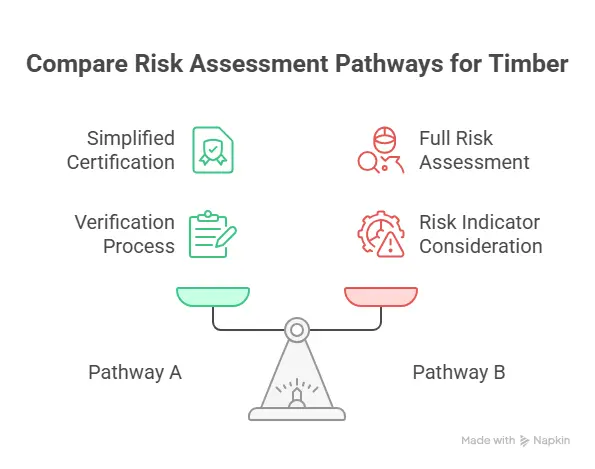
The previous regulation had three risk assessment methods. The new Rules replaced them with two distinct pathways:
The certification pathway sounds simpler, and it is, if executed correctly. But DAFF’s own published case studies show it’s also a frequent source of failure: operators assume certification by a supplier extends to their specific product when it doesn’t.
Operators can now rely on a previous risk assessment for an identical product from the same supplier within a 12-month window, but only for risk assessment and mitigation. Information-gathering obligations apply every time. This exception doesn’t reduce data-capture requirements; it reduces repetitive analytical work for stable, known supply chains.
From March 2025, DAFF can use timber testing technologies to verify species and origin claims, introducing forensic-level verification into compliance audits. Operators who have been using unverified species descriptions in their documentation are newly exposed. The department can also issue injunctions and enforceable undertakings as flexible enforcement tools.
The species verification provision is the most under-discussed aspect of the 2025 reform. Timber testing technologies, such as DNA barcoding, stable isotope analysis, and wood anatomy analysis, can identify species and harvest origin with high accuracy. Operators who have relied on supplier-stated species declarations without independent verification should review their information-gathering processes now. This is not a future risk; DAFF has the powers today
AILPA’s due diligence framework looks straightforward on paper: gather information, assess risk, mitigate risk, and keep records. But the practical execution is genuinely complex for several reasons.
Supply chains are long and fragmented. A single shipment of plywood might travel from the harvesting site to the primary mill, secondary processing, export port, and importer across multiple countries, each with different documentation standards and language barriers. The information AILPA requires (country and area of harvest, species, quantity, supply chain entities) can be genuinely difficult to obtain from tier-2 and tier-3 suppliers.
Certification complexity adds another layer. FSC and PEFC certification is held at the company level but applies to specific products, species, and production facilities. An operator can receive a valid-looking certificate from a certified supplier for a product that isn’t actually covered by that certification and not know it.
And then there’s the documentation burden. DAFF expects a written due diligence system that is documented, followed, and demonstrable. For businesses that manage dozens or hundreds of timber product imports per year, building and maintaining that system manually is operationally unsustainable.
Explore how supply chain traceability enables AILPA compliance.
Learn how to track timber sourcing and prove legality with confidence.
| 1 | No Written Due Diligence System THE PROBLEM: The most fundamental requirement under AILPA Rules 2024 (s.7) is a written due diligence system that documents the importer’s process for meeting compliance obligations including the name and contact details of the responsible person, ABN, and the specific steps to be followed. DAFF compliance assessments have found operators using chain of custody manuals or verbal procedures as substitutes. These don’t satisfy the requirement. THE FIX: A formal, documented due diligence system that is maintained, version-controlled, and available for DAFF review at any time. TraceX generates and maintains a structured digital due diligence system for each importer, mapping each step to the relevant section of the Rules 2024. |
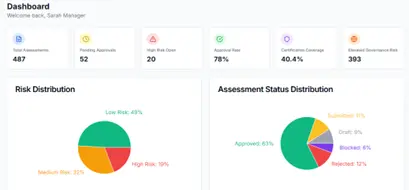
| 2 | Incomplete Supply Chain Information Gathering THE PROBLEM: AILPA requires operators to collect prescribed information for every shipment: product description, country and area of harvest, quantity, entity names in the supply chain, and documentation confirming legal harvest. Many operators collect partial information on the country of origin on the invoice, but not the specific harvest area or the entities between harvesting and export. THE FIX: Digital supplier onboarding workflows that capture all prescribed data fields at the point of purchase order, not retrospectively before a shipment arrives. Automated reminders flag missing fields before DAFF obligations crystallise. |
The harvest ‘area’ requirement is where most information-gathering failures occur. ‘Country of origin: Vietnam’ doesn’t satisfy the Rules. Operators need to document the specific region or province of harvest information that requires supplier engagement, not just invoice review. For high-risk source countries, DAFF expects this level of granularity
Understand what information you need for AILPA compliance.
Learn how to collect, verify, and manage supplier data effectively.
| 3 | Misapplication of the Certified Products Pathway THE PROBLEM: Operators assume that if their supplier holds an FSC or PEFC certificate, they can use the simplified Pathway A. But the certification must be current, cover the specific product type and species in the shipment, and critically appear as a claim on the invoice or accompanying documentation. Receiving uncertified product from a certified supplier doesn’t activate Pathway A. THE FIX: Automated certification verification at the point of purchase: cross-referencing the supplier’s certificate against the FSC or PEFC public database, confirming scope coverage for the specific product, and flagging invoice-level certification claims. If Pathway A can’t be confirmed, the system routes the shipment to Pathway B automatically. |
| 4 | Inadequate Risk Assessment for Non-Certified Products THE PROBLEM: For Pathway B (non-certified) products, operators often conduct a generic country-level risk assessment (‘Vietnam is medium risk’) without addressing species-specific risk, the specific harvest area, or the extent of illegal logging among supply chain entities. DAFF’s assessment notices specifically ask operators to demonstrate how they applied the risk assessment to the specific shipment not country averages. THE FIX: Shipment-specific risk profiles that incorporate country and state-specific guidelines, species risk data, supply chain entity profiles, and real-time deforestation intelligence. The system generates a documented risk assessment for each shipment, linked to the specific information gathered. [CITE: AILPA Rules 2024, Sections 12–14] |
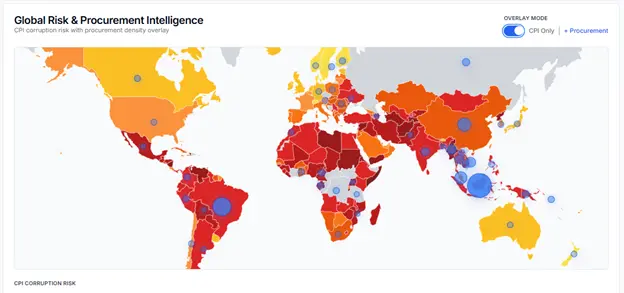
| 5 | Undocumented Risk Mitigation Decisions THE PROBLEM: Even when operators identify elevated risk and take mitigation steps, requesting additional documentation from suppliers, adjusting purchase volumes from high-risk sources, or requiring independent verification, these decisions are rarely documented in a form that DAFF can assess. Risk mitigation without a paper trail doesn’t satisfy the Rules. THE FIX: Every risk mitigation action logged against the relevant shipment record: what action was taken, when, by whom, and what outcome it achieved. This creates a documented decision trail that satisfies DAFF’s requirement to demonstrate how the mitigation was applied. |
| 6 | Inadequate Record-Keeping (5-Year Retention Requirement) THE PROBLEM: AILPA requires operators to retain records of their due diligence, the written system, information gathered, risk assessments, and mitigation measures for at least five years. Many operators rely on email threads, shared folders, and spreadsheets. These degrade, get reorganised, or are lost when staff changes. When DAFF issues a Requirement to Give Information notice with a short response window, fragmented records become a critical exposure. THE FIX: Blockchain-backed record storage that is tamper-proof, timestamped, and structured by shipment. Every document, supplier certificates, harvest declarations, risk assessments, and mitigation records is linked to the relevant shipment and searchable by date, supplier, species, or product. |
| 7 | Unreadiness for DAFF Audit Notices THE PROBLEM: When DAFF issues a Requirement to Give Information and Produce Documents notice, operators must provide: their written due diligence system and records demonstrating how it was applied to specific shipments. DAFF sets a response deadline on the notice. Operators who have to reconstruct records from emails and shared drives often can’t meet it, or produce incomplete responses that trigger further scrutiny. THE FIX: One-click export of a complete, structured compliance record for any selected shipment or time period: written DDS, information gathered, risk assessment, mitigation actions, and supporting documents all in DAFF-friendly PDF or CSV format. Response time: minutes, not days. |
Not all technology solutions address all AILPA obligations. Before evaluating platforms, map your specific regulatory exposure against each requirement.
| AILPA Requirement | Manual Process | Basic Software | TraceX Platform | AILPA Reference |
| Written due diligence system (s.13A of Act) | ❌ No formal doc | ⚠️ Template only | ✅ Auto-generated + maintained | Rules 2024 s.7 |
| Supply chain information gathering | ❌ Emails & spreadsheets | ⚠️ Digital forms | ✅ Agentic AI document parsing | Rules 2024 s.8 |
| Risk assessment — certified pathway | ❌ Manual cert check | ⚠️ Checklist | ✅ Auto-cert verification + risk score | Rules 2024 s.9-11 |
| Risk assessment — non-certified pathway | ❌ Country research burden | ⚠️ Static PDF | ✅ Real-time satellite + country data | Rules 2024 s.12-14 |
| Risk mitigation documentation | ❌ Undocumented decisions | ⚠️ Ad hoc notes | ✅ Linked to every shipment record | Rules 2024 s.15 |
| Record keeping (5-year retention) | ❌ Email folders | ⚠️ Shared drive | ✅ Blockchain-backed audit trail | Act s.13A; Rules s.16 |
| DAFF audit response readiness | ❌ Days to compile | ⚠️ Partial export | ✅ One-click PDF/CSV export | Act s.13B; Rules s.17 |
| Repeat due diligence exception tracking | ❌ Manual memory | ⚠️ Spreadsheet flag | ✅ Auto-applied within 12-month window | Rules 2024 s.18 |
Understand AILPA due diligence requirements step by step.
Learn how to assess risk, validate suppliers, and ensure compliant timber sourcing.
TraceX is a full-stack regulatory compliance and sustainable sourcing platform built for commodities, including timber, rubber, palm oil, and cocoa, spanning AILPA, EUDR, the US Lacey Act, and UK FRC obligations in a single platform. Its architecture was designed specifically for the complexity of fragmented supply chains: remote sourcing geographies, offline field conditions, and multi-tier supplier networks.
TraceX generates a structured written due diligence system for each operator mapped to the AILPA Rules 2024 section-by-section including responsible person details, ABN, and step-by-step process documentation. The system is version-controlled and updated automatically when regulatory requirements change.
Rather than scrambling for harvest area data before a shipment arrives, TraceX captures all prescribed information fields at the point of supplier onboarding and purchase order creation. Automated workflows prompt suppliers to provide harvest country and area, species, quantity, and supply chain entity details — with escalation flags for missing or incomplete responses.
The platform applies the correct AILPA risk assessment pathway automatically based on certification status. For certified products, it verifies the certificate against public FSC/PEFC databases and confirms invoice-level claims. For non-certified products, it generates a shipment-specific risk profile using country guidelines, species risk data, and entity-level supply chain intelligence.
Every mitigation action, additional documentation request, volume adjustment, and independent verification is logged against the relevant shipment with timestamp, responsible person, and outcome. This creates the documented decision trail DAFF’s audit notices require.
All due diligence records are stored with blockchain integrity, immutable, timestamped, and structured by shipment. The platform automatically manages the 5-year retention requirement and alerts operators when records approach expiry.
When a DAFF assessment notice arrives, operators export a complete compliance package for the nominated shipment in minutes: written DDS, information gathered, pathway used, risk assessment, mitigation actions, and supporting documents structured for DAFF review. Response time shrinks from days to minutes.
TraceX customers managing timber supply chains have reported reducing due diligence preparation time by up to 70% and eliminating the majority of supplier data follow-up cycles after deploying the platform’s structured information-gathering workflows. The biggest time saving comes not from the audit export but from capturing the right data the first time, at the right stage of the purchase cycle.
Before your next timber import or processing run, verify you can answer yes to each of the following:
| 1. Written due diligence system documented, maintained, and available for DAFF review |
| 2. Responsible person details (name, address, ABN) recorded in the written system |
| 3. Supply chain information gathered for every shipment before arrival: species, harvest country and area, quantity, supply chain entities |
| 4. Correct risk assessment pathway applied: Pathway A (certified) or Pathway B (non-certified) |
| 5. For certified products: certificate verified as current, scope-appropriate, and claimed on invoice |
| 6. For non-certified products: country/area-specific risk factors assessed at shipment level |
| 6. For non-certified products: country/area-specific risk factors assessed at the shipment level |
| 7. Risk mitigation actions documented where elevated risk was identified |
| 9. DAFF audit-ready export available within the response window of a Requirement notice |
| 10. Repeat due diligence exception tracked and applied correctly within 12-month window |
Avoiding due diligence mistakes under the Illegal Logging Prohibition Act is no longer just about staying compliant; it’s about safeguarding market access and building resilient supply chains. Timber importers that move beyond fragmented documentation and adopt structured, traceable, and risk-based due diligence processes are better positioned to prevent disruptions, pass audits, and maintain trust with buyers. In an environment where regulatory scrutiny is increasing, getting due diligence right is not just a legal requirement; it’s a strategic advantage that differentiates responsible businesses from the rest.
AILPA applies to importers of regulated timber products into Australia and to domestic processors of Australian-grown raw logs. Regulated products are defined by tariff classification and include sawn timber, plywood, paper, pulp, furniture with timber components, and other wood-based products. Limited exemptions apply for recycled-material products and low-value consignments under AU$1,000.
The Rules 2024, effective 3 March 2025, replaced the previous Regulation entirely. Key changes include: two new risk assessment pathways (certified vs. non-certified products), a repeat due diligence exception for identical products from the same supplier within 12 months, expanded DAFF enforcement powers, including timber testing technologies for species and origin verification, and new injunction and enforceable undertaking powers
No. Certification activates the simplified Pathway A, but only if the certificate is current, covers the specific product type and species in the shipment, and is claimed on the invoice or shipping documentation. Receiving timber from a certified supplier without these conditions met means the shipment falls under the more demanding Pathway B (non-certified) risk assessment. DAFF’s compliance cases specifically flag this as a common failure.
DAFF issues a Requirement to Give Information and Produce Documents notice requesting: (1) a copy of the operator’s written due diligence system, and (2) records demonstrating how the system was applied to the specific shipment selected for assessment, including information gathered, risk assessment, mitigation measures, and supporting documents—operators who cannot produce complete, structured records by the deadline risk further enforcement action.
Yes. Platforms from TraceX automate the full AILPA due diligence workflow: generating and maintaining the written due diligence system, capturing prescribed supply chain information at purchase order stage, applying the correct risk assessment pathway, documenting mitigation actions, and producing DAFF-ready audit exports on demand. This reduces compliance preparation time by up to 70% compared to manual processes.