

A coffee supply chain refers to the journey coffee takes from the moment it’s harvested on the farm to when it’s brewed in your cup. The process starts at the farm, where coffee plants are cultivated, and farmers pick ripe cherries. These cherries undergo processing (either wet, dry, or honey method) to extract the beans. After processing, the beans are exported to roasters who transform the raw green beans into the roasted coffee you recognize. From there, the coffee is packaged, distributed to retailers or cafes, and finally reaches the consumer. Each of these steps is part of a broader coffee supply chain that relies on farmers, processors, exporters, roasters, and distributors working together.
According to Mordor Intelligence, coffee is cultivated in over 50 developing nations across South America, Africa, and Asia, serving as a crucial income source for approximately 20-25 million families globally.
Understanding the coffee supply chain is crucial for several reasons. First, it helps consumers make informed choices about the coffee they buy. With rising consumer demand for ethical sourcing and sustainability, knowing where your coffee comes from and how it’s produced builds trust. More people are now interested in how their coffee is grown—whether farmers are paid fairly, whether sustainable farming practices are in place, and how climate change is affecting coffee-growing regions. By understanding the coffee supply chain, consumers can support brands that align with their values.
For businesses, a transparent and traceable supply chain also ensures compliance with sustainability standards and helps them stay ahead of changing regulations. Whether it’s meeting Fair Trade or Rainforest Alliance certifications or adhering to emerging regulations like the EU Deforestation Regulation (EUDR), knowing your coffee supply chain inside and out is essential for compliance and long-term success.
This guide aims to offer a comprehensive overview of coffee supply chains, focusing on the key challenges, opportunities, and emerging trends in this sector. We’ll look at how technology is revolutionizing coffee traceability, the importance of sustainability and compliance, and the evolving demands from consumers for ethical sourcing. Whether you’re a consumer who wants to know more about your coffee’s journey or a business trying to optimize your supply chain for transparency and sustainability, this guide has something for you.
Key Takeaways
At the heart of every coffee supply chain are the farmers, many of whom are smallholder farmers. These farmers typically work on small plots of land and cultivate coffee beans alongside other crops. In fact, smallholder farmers grow about 60-70% of the world’s coffee, often in regions with challenging climates like Central and South America, Africa, and Asia.
Cultivation Practices:
The way coffee is grown plays a significant role in the overall quality and sustainability of the coffee supply chain. Farmers often use a variety of cultivation practices, from organic farming methods to conventional techniques. In recent years, there’s been a strong push toward sustainable farming practices like shade-grown coffee and agroforestry. These methods help preserve the environment by preventing soil erosion, improving water retention, and enhancing biodiversity. However, these practices can sometimes be costly and require knowledge that many small farmers lack.
Supply Chain Entry Points:
Smallholder farmers are often at the first point of entry in the supply chain. They harvest coffee cherries and then sell them to local cooperatives or processing stations. In some cases, farmers may have direct relationships with exporters, especially when they are part of larger fair trade or organic certification systems. The transparency and traceability of coffee’s journey from farm to cup have become increasingly important, both for sustainability and regulatory reasons.
After coffee cherries are harvested, they must be processed to extract the beans, which requires several methods, including:
The choice of processing method significantly impacts the flavor profile and quality of the coffee beans, making this a critical step in the coffee supply chain.
Once processed, the coffee beans are ready for export, which brings its own set of challenges, especially with international trade. Navigating trade regulations is vital, as each country has its own import and export rules. For instance, the European Union and the U.S. have specific regulations regarding the quality and certification of coffee, such as organic certification, fair trade certification, and compliance with food safety standards.
The export process includes packaging, labeling, and ensuring the beans are up to the required quality assurance standards. Quality assurance is especially important because a coffee shipment that doesn’t meet the import requirements can be rejected or delayed, costing both time and money. Additionally, fair trade-certified coffee or organic coffee often requires separate certifications to prove that ethical and environmental standards were met throughout the supply chain.
Once coffee beans reach their destination, they undergo roasting, which is where they really start to develop their flavor profile. Roasting involves applying heat to the green beans, which causes chemical changes and brings out the flavors unique to that specific variety of coffee. Roasters use different techniques depending on the desired flavor, such as light, medium, or dark roasting.
Packaging is just as important as roasting. Coffee needs to be packaged in a way that keeps it fresh and preserves the flavors. Many companies are now turning to eco-friendly packaging to reduce waste and support sustainability. Packaging is also where branding comes into play, with many consumers opting for coffee brands that align with their values, including ethical sourcing and environmental impact.
Finally, coffee makes its way to the consumer through distribution and retail. Traditionally, coffee was sold through supermarkets and cafes, but recent years have seen the rise of direct-to-consumer models, with companies selling coffee online. This trend is empowering consumers to choose specific brands that align with their sustainability and ethical standards, allowing for a more personalized experience.
Retail partnerships are also evolving, with more cafes and retail chains focusing on sustainability in their sourcing practices. They are increasingly choosing to offer fair trade and organic certified coffees, responding to consumer demand for ethical products.
This growing demand for sustainable coffee has led to the rise of subscription models and partnerships between roasters and producers that emphasize transparency. Consumers want to know the origins of their coffee, and retailers are responding by providing more information about how and where their coffee is sourced.
The coffee supply chain is complex, but understanding its different stages—from the farm to the cup—helps consumers and businesses make more informed, ethical choices. Whether it’s supporting smallholder farmers, ensuring quality through processing, or choosing sustainable packaging, each link in the chain has a critical role in delivering the coffee we love, responsibly.
In the coffee supply chain, compliance is crucial for ensuring that coffee meets the quality, safety, and ethical standards required by international trade regulations. Coffee companies must navigate various legal and environmental regulations that govern not just the quality of the beans but also the sustainability of their production. This includes ensuring the beans are ethically sourced, free from harmful chemicals, and produced under fair working conditions. For businesses, compliance with these standards is not just a matter of adhering to regulations but also about meeting consumer demand for transparency, sustainability, and ethically sourced products.
Several globally recognized certifications set the benchmarks for coffee supply chains, ensuring that the beans you buy are produced with environmental and social responsibility. Some of the most important include:
These certifications are crucial for building consumer trust, as they provide assurance that the coffee is grown sustainably and with respect for farmers’ rights. For businesses, obtaining such certifications helps differentiate their product in a competitive market and align with consumer preferences for ethical consumption.
As consumer demand for sustainability grows, so does the regulatory landscape surrounding the coffee industry. One significant regulation gaining traction is the EU Deforestation Regulation (EUDR), which impacts sectors like coffee by requiring companies to ensure that their products do not contribute to deforestation. The EUDR mandates that companies selling coffee in the European Union must prove that their products have not been sourced from land that has been illegally deforested or converted for agricultural purposes.
For coffee producers and exporters, this regulation presents both a challenge and an opportunity. It requires them to implement traceability systems that track the journey of coffee beans from farm to cup, ensuring that they comply with environmental standards. The EUDR represents a growing trend of laws aimed at reducing the environmental impact of global supply chains.
While the benefits of compliance are clear, there are several challenges that companies face in meeting these standards:
Fortunately, technology is emerging as a powerful tool to help coffee producers meet compliance requirements and streamline reporting. One of the most promising solutions is blockchain technology. Blockchain can create a transparent and immutable record of every transaction and movement of coffee beans, from farm to consumer. This ensures that every step of the supply chain is traceable and verifiable.
Platforms that utilize blockchain technology allow farmers, processors, exporters, and retailers to share real-time data about the coffee’s journey, ensuring that sustainability claims can be backed up with verifiable evidence. This not only helps businesses meet certification requirements but also provides consumers with the transparency they increasingly demand.
By using digital solutions like blockchain, companies can significantly reduce the risk of fraud, minimize human error in data entry, and ensure compliance with evolving regulations like the EUDR. The ability to track coffee’s origins and verify its sustainability credentials quickly is becoming a critical advantage in an increasingly regulated and competitive market.
Sustainability in the coffee industry is more important than ever as consumers demand transparency and ethical practices in the products they purchase. Coffee supply chains face unique challenges, but with the right strategies, sustainability can thrive from farm to cup.
Climate-smart agriculture (CSA) is a set of practices that helps farmers adapt to climate change while also reducing their carbon footprint. In coffee cultivation, this often includes agroforestry and shade-grown coffee practices, which not only improve the resilience of crops but also enhance biodiversity and help combat climate change. Agroforestry involves growing coffee alongside trees, which offer shade, improve soil quality, and protect against extreme weather events, such as heavy rainfall and droughts.
Additionally, shade-grown coffee minimizes the need for deforestation by allowing coffee to be grown in harmony with the natural environment, preserving habitats for wildlife and preventing soil erosion. These practices can lead to healthier ecosystems and more sustainable coffee production in the long term.
Sustainability Certifications like Fair Trade, Rainforest Alliance, and UTZ help ensure that coffee is grown under socially and environmentally responsible conditions. These certifications offer farmers fair pricing for their products, promote safer working conditions, and ensure better income for communities. For instance, Fair Trade guarantees farmers a minimum price for their coffee, as well as an additional premium to invest in community projects. This reduces vulnerability to market fluctuations and helps improve the quality of life for farmers.
Rainforest Alliance certification, on the other hand, focuses on environmental sustainability, ensuring that farmers adopt practices that protect the environment while fostering social and economic progress. By supporting these certifications, companies can ensure they are sourcing coffee that meets high environmental and social standards, and consumers can have confidence that their purchase supports fair trade practices.
As climate change becomes an urgent global issue, carbon neutrality is a growing priority for coffee producers. This means taking steps to reduce greenhouse gas emissions across the supply chain, from coffee cultivation to transportation and roasting. For example, coffee companies may reduce emissions by investing in renewable energy for roasting plants, optimizing transportation to reduce fuel consumption, or implementing waste reduction practices.
At the farm level, coffee growers may adopt regenerative farming practices such as no-till farming and cover cropping to capture carbon in the soil. Additionally, companies may engage in carbon offset programs, such as planting trees, to neutralize the emissions they cannot eliminate. By becoming carbon neutral, coffee businesses can help combat climate change and appeal to consumers who prioritize sustainability in their purchasing decisions.
The coffee supply chain is a complex system that involves many stakeholders, from farmers to roasters to retailers. However, as with any intricate supply chain, it faces a variety of challenges that can affect both the quality and sustainability of coffee production.
Climate change is one of the most pressing challenges facing the coffee industry. Coffee plants are highly sensitive to temperature and rainfall fluctuations, and changing climate patterns have led to unpredictable weather, including droughts, floods, and rising temperatures. These conditions can directly impact coffee yields, quality, and the ability to grow coffee in traditional regions. As a result, farmers are forced to adapt, sometimes by shifting to new locations or adjusting their farming practices, which can lead to instability and increased costs.
Water usage is another critical environmental issue. Coffee cultivation requires a significant amount of water, and many coffee-growing regions are facing water scarcity due to climate change and over-extraction. This strains local water resources, affecting both farmers’ ability to grow coffee and local communities that depend on the same water sources for drinking and irrigation.
Moreover, soil degradation is a growing concern. Unsustainable farming practices, such as over-farming and the use of harmful chemicals, can deplete the soil, making it harder for coffee plants to thrive. Poor soil health leads to lower yields, reduced quality, and more reliance on synthetic fertilizers, which can harm the environment further.
The coffee supply chain also faces significant economic inequities. One of the most prominent issues is the volatility of coffee prices. Coffee farmers are highly vulnerable to market fluctuations, and they often face a price that is too low to sustain their livelihood. The price of coffee is determined by global commodity markets, and when the price drops, it directly impacts smallholder farmers who rely on coffee as their primary income source.
Additionally, inequitable distribution of profits within the supply chain means that farmers, who are at the bottom of the chain, receive only a small fraction of the final retail price of coffee. Many times, farmers are left with little to no margin to reinvest in their farms or improve their practices. This economic disparity is further compounded by the fact that farmers often face limited access to financing, modern technologies, and markets that can offer them better prices.
Another significant challenge in the coffee supply chain is the lack of traceability. Coffee is grown in many regions around the world, processed in various ways, and traded through multiple intermediaries. As a result, traceability—the ability to track coffee from farm to cup—becomes a complex task. In fragmented supply chains, where many actors are involved, it is difficult to ensure that the coffee being sold meets the required standards for quality, sustainability, and ethical sourcing.
This lack of visibility creates barriers for both consumers and businesses. Consumers increasingly want to know where their coffee comes from and whether it has been sourced ethically, but tracking the journey of each batch of coffee can be nearly impossible without the right systems in place. Additionally, businesses, particularly those aiming for certifications or regulatory compliance (such as the EU Deforestation Regulation), face challenges in verifying claims of sustainability or ethical sourcing without reliable traceability data.
The “Sustainable Livelihoods for Smallholder Farmers” program, implemented by TechnoServe, leveraged TraceX’s traceability platform to enhance the coffee supply chain. The collaboration focused on promoting sustainable farming practices, ensuring consistency in coffee quality, and improving socio-economic and environmental outcomes. By enabling better market linkages and tracking farming activities, the initiative significantly boosted farmer incomes while fostering sustainability and transparency in operations.
This partnership demonstrates how technology can transform agricultural value chains, benefiting smallholder farmers and aligning with global sustainability goals.
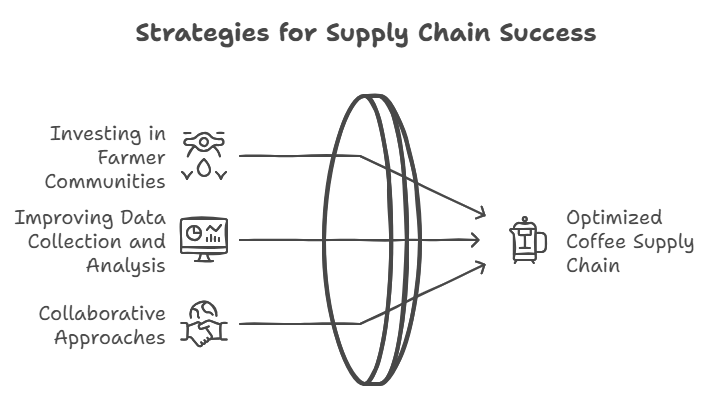
The coffee supply chain is rapidly evolving thanks to new technologies that improve efficiency, transparency, and sustainability. From blockchain to Internet of Things (IoT) devices, technology is helping businesses and farmers address challenges, streamline operations, and meet consumer demands for transparency and ethical sourcing.
Blockchain technology is becoming increasingly important in the coffee industry, especially when it comes to ensuring traceability across the supply chain. This technology allows every step in the journey of coffee—from farm to cup—to be securely recorded in an immutable ledger. By doing so, blockchain enhances transparency and reduces the potential for fraud or unethical practices, such as mislabeling or unfair sourcing.
For example, with blockchain, coffee brands can track the exact farm where their beans were grown, the processing methods used, and the journey they took before reaching consumers. This provides buyers with verified, real-time data about the sustainability and ethical standards of the coffee they purchase. Consumers are increasingly looking for brands that can prove their products are responsibly sourced, and blockchain is an effective solution for meeting this demand. It also ensures compliance with regulations like the EU Deforestation Regulation (EUDR) and certifications such as Fair Trade and Rainforest Alliance.
The Internet of Things (IoT) is transforming coffee production by enabling real-time monitoring at both the farming and logistics stages. In coffee farming, IoT devices such as soil moisture sensors, weather stations, and temperature monitors allow farmers to collect valuable data about crop conditions and environmental factors. This data helps farmers make informed decisions, such as when to irrigate or apply fertilizers, ultimately leading to better quality coffee and reduced waste.
On the logistics side, IoT technology is used to track coffee beans during transport and storage, ensuring they maintain optimal quality. For instance, temperature and humidity sensors can help prevent beans from being damaged during shipping, reducing the risk of spoilage and losses. By integrating IoT solutions across the supply chain, businesses can optimize processes, cut down on waste, and improve overall supply chain efficiency.
Digital farmer profiling is another groundbreaking innovation that is transforming coffee supply chains. By collecting data on individual farmers, their land holdings, and their agricultural practices, businesses can create comprehensive farmer profiles that help tailor support and improve procurement strategies. This data is often gathered using mobile apps, sensors, and other digital tools that make it easier for farmers to share their information.
For example, companies can use digital farmer profiles to offer targeted training, provide access to better financing options, or introduce more sustainable farming techniques. By collecting this data, businesses can also make more informed purchasing decisions based on the specific needs and practices of individual farmers. This improves farmer support, encourages the adoption of best practices, and helps create more sustainable procurement systems. Moreover, it strengthens supplier relationships and improves the overall quality of coffee being produced.
The TraceX Food Traceability Platform is a comprehensive solution designed to enhance transparency and traceability in the food supply chain. Leveraging blockchain technology, it enables businesses to track products from farm to fork, providing real-time, verifiable data on the origin, quality, and sustainability of food items. This platform helps companies ensure compliance with global regulations, such as the EU Deforestation Regulation (EUDR), by providing a secure and transparent record of every transaction and movement in the supply chain.
With features like digital farmer profiling, satellite integration, and automated reporting tools, TraceX supports sustainable sourcing, improves operational efficiency, and ensures quality assurance at every stage of the food journey. It is especially beneficial for sectors requiring strict adherence to sustainability standards, including agriculture, coffee, and other food sectors.
By fostering accountability and collaboration among farmers, producers, suppliers, and retailers, TraceX plays a crucial role in promoting ethical sourcing, reducing fraud, and enhancing consumer trust.
The coffee supply chain is a complex network that involves multiple stages, from farming to retail. As consumers increasingly demand transparency, ethical sourcing, and sustainability, businesses must adapt by embracing technologies like blockchain, IoT, and digital profiling. These innovations enable traceability, reduce inefficiencies, and ensure compliance with global standards, contributing to a more sustainable coffee industry. Understanding these dynamics, coupled with the industry’s commitment to improving farmer livelihoods and environmental practices, will be key to driving positive change in the future of coffee production and consumption.
The coffee supply chain includes several stages: cultivation by farmers, post-harvest processing, export and import, roasting, packaging, and retail. Each stage plays a crucial role in ensuring the quality and sustainability of the final product.
Technologies like blockchain and IoT help track every step of the coffee’s journey, from farm to cup. They provide transparency, prevent fraud, and ensure compliance with sustainability standards, making it easier to monitor and verify the ethical sourcing of coffee.
Common sustainability certifications for coffee include Fair Trade, Rainforest Alliance, and UTZ. These certifications ensure that coffee is grown using environmentally friendly practices, supports fair wages for farmers, and meets ethical sourcing standards.




We use cookies on our website to give you the most relevant experience by remembering your preferences and repeat visits. By clicking “Accept All”, you consent to the use of ALL the cookies. However, you may visit "Cookie Settings" to provide a controlled consent.
| Cookie | Duration | Description |
|---|---|---|
| cookielawinfo-checkbox-analytics | 11 months | This cookie is set by GDPR Cookie Consent plugin. The cookie is used to store the user consent for the cookies in the category "Analytics". |
| cookielawinfo-checkbox-functional | 11 months | The cookie is set by GDPR cookie consent to record the user consent for the cookies in the category "Functional". |
| cookielawinfo-checkbox-necessary | 11 months | This cookie is set by GDPR Cookie Consent plugin. The cookies is used to store the user consent for the cookies in the category "Necessary". |
| cookielawinfo-checkbox-others | 11 months | This cookie is set by GDPR Cookie Consent plugin. The cookie is used to store the user consent for the cookies in the category "Other. |
| cookielawinfo-checkbox-performance | 11 months | This cookie is set by GDPR Cookie Consent plugin. The cookie is used to store the user consent for the cookies in the category "Performance". |
| viewed_cookie_policy | 11 months | The cookie is set by the GDPR Cookie Consent plugin and is used to store whether or not user has consented to the use of cookies. It does not store any personal data. |
WhatsApp us

Get the free TraceX Playbook — 10 traceability failures to fix before your next audit, a 10-point maturity scorecard.

Don’t miss out on your chance to grab access to our early bird offer!

Your essential compliance guide