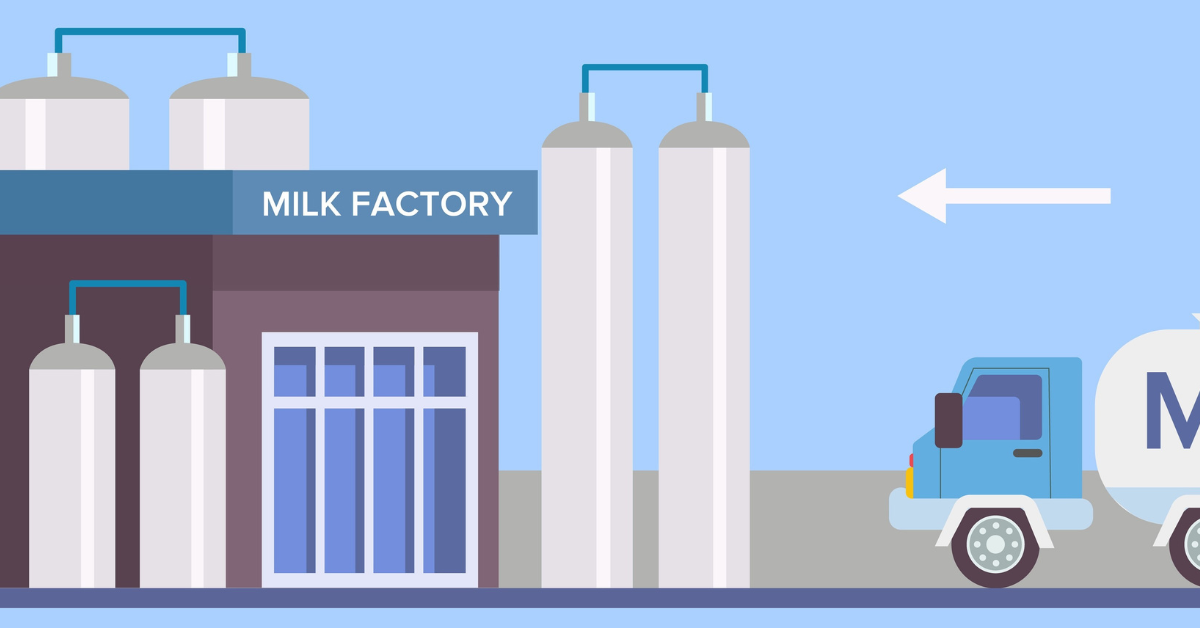
One contaminated milk tanker, One antibiotic residue above threshold, One delayed export certification. That’s all it takes to trigger a multi-million-dollar disruption in today’s dairy ecosystem. Dairy supply chain issues have become increasingly complex as regulatory scrutiny intensifies, export markets tighten compliance standards, and aggregation models introduce higher contamination and traceability risks
From farm collection centers to processors, distributors, and international buyers, the dairy value chain operates under constant pressure to ensure food safety, quality integrity, and regulatory compliance.
In modern supply chains, reactive quality checks are no longer enough. Structured, end-to-end traceability is now essential for preventing contamination events, protecting brand reputation, and maintaining uninterrupted market access.
Four Critical Pain Points Driving Dairy Supply Chain Issues
- Milk Aggregation & Contamination Risk (ICP – Incoming Collection Point Risk)
Milk from multiple farms is pooled at collection centers, increasing the risk that one contaminated batch (antibiotics, aflatoxins, adulterants) compromises the entire tanker load. - Antibiotic & Residue Compliance Failures
Failure to monitor withdrawal periods and residue thresholds can lead to regulatory rejection, export bans, and costly recalls. - Fragmented Quality Testing & Documentation
Manual testing logs and siloed data systems create traceability gaps, making it difficult to isolate contamination sources quickly. - Export & Regulatory Non-Compliance
Increasing global standards require documented traceability, quality validation, and audit-ready reporting failure leads to shipment rejections and reputational damage.
TraceX digital traceability solutions enable end-to-end visibility from farm collection to processing and distribution, digitizing aggregation data, residue testing records, batch traceability, and compliance documentation to proactively mitigate dairy supply chain issues and strengthen regulatory defensibility.
Key Takeaways
- Modern dairy supply chain issues stem primarily from aggregation risks, antibiotic residue contamination, recall inefficiencies, and tightening export compliance standards.
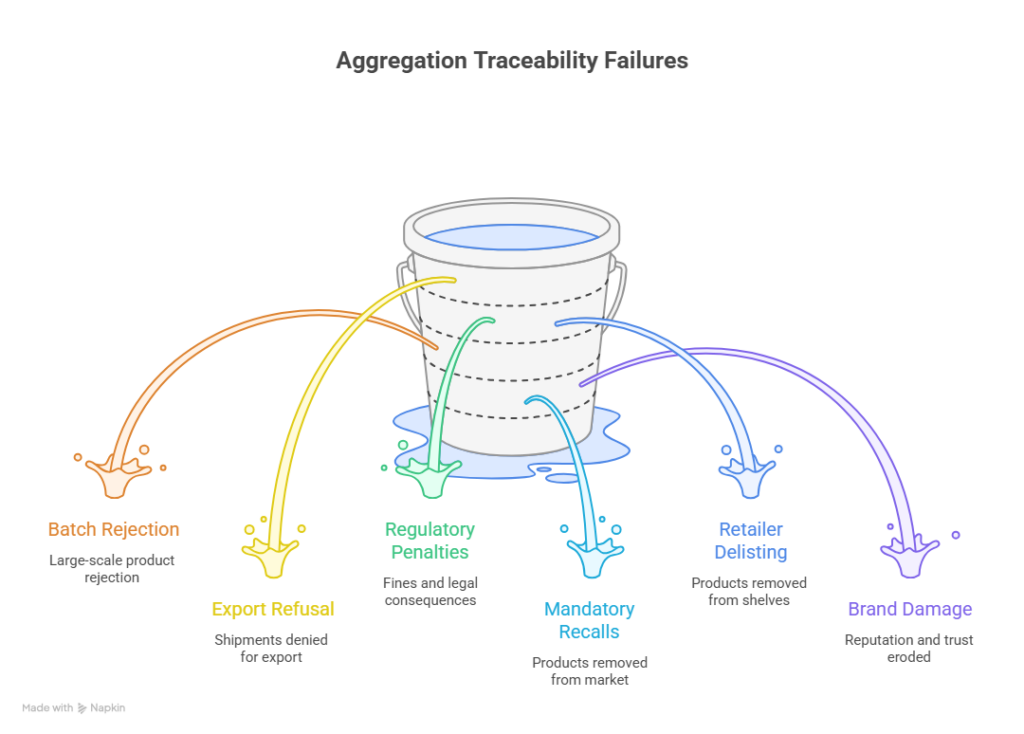
- When milk from multiple farmers is pooled at BMC centers, a single contamination incident such as antibiotic-positive milk can compromise entire batches, leading to shipment rejection, regulatory penalties, and brand damage.
- Effective mitigation requires farm-level screening, digital test recording, threshold alerts, and batch-level traceability integration.
- Digital traceability significantly reduces recall losses by enabling rapid root cause identification and targeted product withdrawals instead of broad recalls.
- To meet export standards, dairy companies must implement structured documentation, real-time monitoring, batch reconciliation, and audit-ready reporting.
- Integrated digital solutions like TraceX connect aggregation visibility, residue control, cold chain tracking, ERP integration, and executive dashboards into one unified compliance framework transforming reactive risk management into proactive, data-driven governance.
Why Aggregation Traceability Matters in Dairy Supply Chains
Aggregation traceability is critical in dairy supply chains because milk from multiple farmers is pooled at collection and Bulk Milk Cooling (BMC) centers, increasing the risk that contamination from a single source can compromise an entire batch. Without batch-level digital traceability, it becomes difficult to isolate affected suppliers, prevent large-scale recalls, or avoid export rejections leading to significant financial and reputational losses.
Why Aggregation Is the Highest-Risk Point in Dairy Supply Chains
In modern dairy supply chains, aggregation is operationally efficient but risk-intensive.
Milk collected from dozens or even hundreds of farmers is pooled at Bulk Milk Cooling (BMC) centers, where it is chilled and consolidated before transport to processing plants. While this improves logistics and cost efficiency, it also creates a critical control point where:
- Source identity can be diluted
- Contamination risk multiplies
- Traceability becomes more complex
BMC centers represent the highest-risk control point in the value chain because once milk is pooled, isolating the origin of contamination becomes significantly more difficult.
Milk Pooling and Loss of Source Identity
When individual farmer milk is combined:
- Batch-level visibility may be lost
- Paper-based logs may not link farmers to tanker loads
- Quality testing may occur only after pooling
If traceability systems are weak, processors cannot quickly determine:
- Which farmer contributed to the contamination
- Which collection routes are affected
- Which downstream products are exposed
This delay increases recall scope and compliance risk.
Impact of One Farmer’s Contamination on the Entire Batch
In pooled systems, a single contamination incident can affect thousands of liters.
Examples include:
- Antibiotic residues above regulatory thresholds
- Aflatoxin-contaminated feed exposure
- Adulteration or dilution
- Poor hygiene during milking
Because milk is blended, the entire tanker load may be considered non-compliant — even if only one farmer’s supply was contaminated.
This multiplies:
- Product loss
- Testing costs
- Operational disruption
Financial and Reputational Consequences
Why Batch-Level Digital Tracking Is Essential
To mitigate dairy supply chain issues, enterprises must implement:
- Farmer-level digital registration
- Real-time milk quality testing capture
- Batch tagging at BMC centers
- Tanker-to-factory traceability linkage
- Rapid recall identification systems
Digital traceability ensures that:
- Contaminated milk can be isolated quickly
- Affected farmers can be identified
- Unaffected batches can continue to market
- Compliance documentation is audit-ready
Without digital batch-level tracking, aggregation remains the weakest link in dairy risk management.
If one contaminated batch enters your system, can you isolate it within minutes?
Explore: End-to-End Dairy Supply Chain Traceability Explained
Pooling milk without granular tracking increases recall scope and financial exposure. Read: Why Batch-Level Traceability Matters in Dairy Supply Chains
High-Risk Scenarios in Aggregated Dairy Systems
1. Antibiotic-Positive Milk Entering a Pooled Tank
If one farmer fails to observe antibiotic withdrawal periods and milk is pooled before testing, the entire batch may exceed maximum residue limits (MRLs).
Result: Batch disposal or export rejection.
2. Inability to Isolate Affected Farmers
Without granular traceability, processors cannot quickly identify which supplier caused contamination.
Result: Broader recall scope and longer operational downtime.
3. Export Shipment Rejection
Export markets often conduct strict residue and quality testing at destination ports.
If contamination is detected and source traceability is weak:
- Shipment may be rejected
- Contracts may be suspended
- Regulatory scrutiny may increase
What Are the Risks of Antibiotic Residues in Milk?
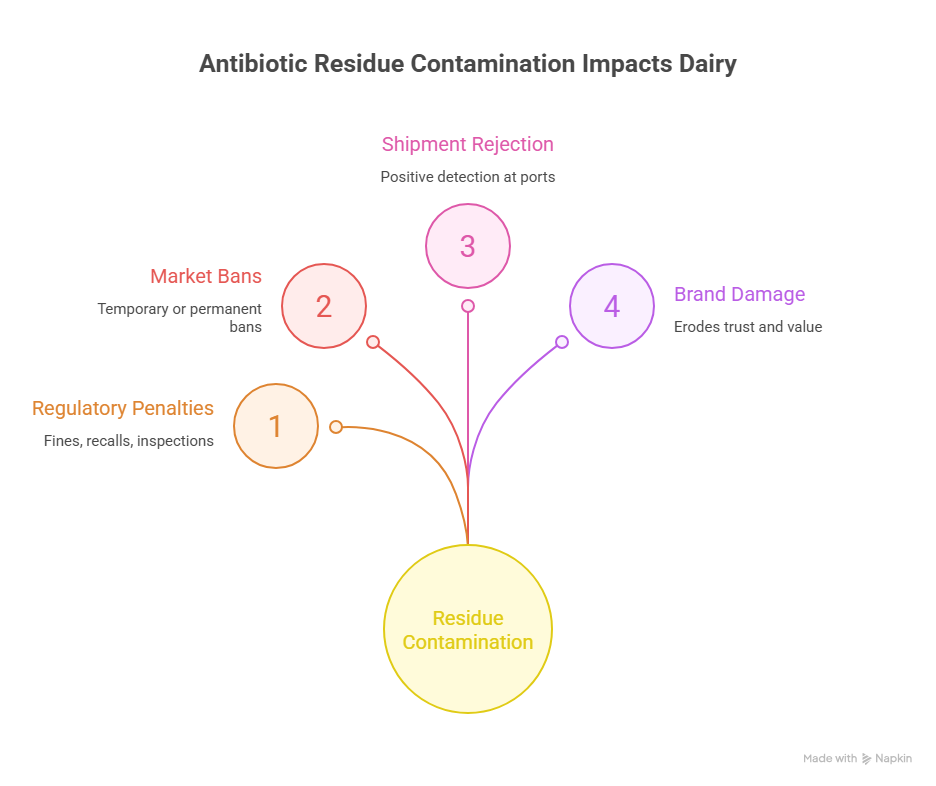
Antibiotic residues in milk pose serious food safety and regulatory risks because milk from treated animals may enter collection systems before proper withdrawal periods are completed. When contaminated milk is pooled at aggregation points such as BMC centers, residues can spread across entire batches, leading to regulatory penalties, export shipment rejection, and significant brand damage.
Why Antibiotic Residue Is a Critical Dairy Supply Chain Risk
In modern dairy supply chains, milk moves rapidly from farm to collection centers to processors. While this ensures freshness and efficiency, it also increases vulnerability to contamination if withdrawal protocols are not strictly followed.
Antibiotic residues typically enter the supply chain due to:
- Improper or unmonitored treatment of dairy cattle
- Failure to observe required withdrawal periods
- Lack of farmer awareness or training
- Weak monitoring systems at collection points
Once contaminated milk is pooled, the impact multiplies.
Core Risk Drivers in Milk Collection Systems
1. Improper Withdrawal Periods
When dairy cattle are treated with antibiotics, farmers must wait a prescribed period before selling milk. Failure to observe this window results in residue levels exceeding Maximum Residue Limits (MRLs).
Even a single violation can contaminate thousands of liters once milk is aggregated.
2. Limited On-Farm Testing
In many dairy systems, routine antibiotic testing is not conducted at the farm level. Milk may be delivered to collection centers before screening occurs.
If testing only happens post-aggregation, contaminated milk may already be mixed with compliant supply.
3. Aggregation Contamination Spread
Bulk Milk Cooling (BMC) centers pool milk from multiple farmers. If antibiotic-positive milk enters the tank:
- The entire batch may exceed regulatory thresholds
- All contributing farmers may be temporarily affected
- Downstream processors may reject the tanker
Aggregation transforms a single-farm issue into a supply chain crisis.
Mitigation Measures to Reduce Antibiotic Residue Risk
Effective mitigation requires proactive controls at multiple points in the supply chain.
1. Farm-Level Screening
Rapid antibiotic test kits at farm collection points help detect contamination before pooling.
Early detection prevents cross-contamination at aggregation centers.
2. Digital Recording of Test Results
Digitizing test outcomes ensures:
- Real-time monitoring
- Audit-ready documentation
- Identification of repeat non-compliance
- Transparency across supply chain stakeholders
Manual logbooks increase the risk of data loss or manipulation.
3. Threshold Alert Systems
Automated systems can flag:
- Elevated residue levels
- Repeated non-compliance patterns
- High-risk suppliers
Alerts enable immediate intervention before milk enters pooled tanks.
4. Traceability Integration at BMC Level
Linking farmer-level data to batch-level aggregation tracking ensures:
- Isolation of contaminated supply
- Faster recall response
- Reduced financial loss
- Protection of unaffected batches
Digital traceability at the BMC stage is critical to containing contamination impact.
How Does Traceability Reduce Dairy Recall Losses?
Traceability reduces dairy recall losses by enabling rapid batch identification, precise root cause analysis, and targeted product withdrawals. Instead of recalling entire production volumes, digital traceability allows processors to isolate affected batches, minimize financial damage, protect brand reputation, and respond quickly to regulators and customers.
Why Dairy Recalls Are High-Risk Events
Dairy products are highly perishable and widely distributed across retail, foodservice, and export markets. When contamination occurs whether due to antibiotic residues, microbiological issues, adulteration, or labeling errors companies must act immediately.
Without structured traceability, recalls can become:
- Broad and expensive
- Operationally disruptive
- Legally complex
- Damaging to brand credibility
Effective recall management depends on how quickly and accurately a company can trace affected product back through the supply chain.
Common Recall Challenges in Dairy Supply Chains
1. Batch Identification Delays
When milk from multiple farmers is pooled and processed into multiple SKUs, identifying the affected batch can take days if records are manual or fragmented.
Delays increase:
- Product already sold
- Consumer exposure risk
- Regulatory penalties
2. Incomplete Documentation
Paper-based logs or siloed systems may lack:
- Farm-level linkage
- BMC batch references
- Processing timestamps
- Distribution mapping
Incomplete documentation slows investigations and weakens regulatory defensibility.
3. Manual Record Dependency
Many dairy processors rely on:
- Physical registers
- Excel sheets
- Decentralized quality logs
Manual systems increase the risk of:
- Data errors
- Missing records
- Inconsistent batch references
This complexity expands recall scope unnecessarily.
4. Broad Product Withdrawal
Without precise traceability, companies may recall entire production days or even weeks instead of isolating specific batches.
This leads to:
- Higher financial loss
- Wasted compliant product
- Supply shortages
- Retailer dissatisfaction
How Digital Traceability Reduces Recall Losses
Digital traceability transforms recall management from reactive crisis handling to structured risk containment.
1. Farm-to-Plant Batch Linking
Digital systems link:
- Farmer ID
- BMC collection batch
- Tanker shipment
- Processing batch
- Finished product SKU
This enables backward and forward traceability within minutes.
2. Rapid Root Cause Identification
When contamination is detected, digital traceability allows processors to:
- Identify affected collection center
- Pinpoint contributing farms
- Isolate contaminated tanker loads
- Determine production runs impacted
Root cause analysis becomes data-driven rather than investigative guesswork.
3. Targeted Recall Execution
With granular traceability:
- Only affected SKUs are recalled
- Specific lot numbers are withdrawn
- Retail partners receive precise instructions
Targeted recalls protect unaffected inventory and reduce product waste.
4. Reduced Financial Exposure
Precise batch isolation minimizes:
- Disposal volume
- Reverse logistics costs
- Legal exposure
- Insurance claims
Instead of recalling 100% of output, companies may limit recall to a small percentage.
Case Study: Structuring Multi-State Dairy Operations with TraceX
Operating across Tamil Nadu, Maharashtra, and Uttar Pradesh, TechnoServe partnered with dairy stakeholders to improve milk quality, streamline supply chain operations, and enhance farmer livelihoods. However, managing a complex, multi-tiered network spanning state, district, taluk, Bulk Milk Chilling Centers (BMC/MCC), and village-level collection points created significant challenges in data consistency, operational visibility, traceability, and compliance oversight. Fragmented reporting systems and limited real-time supervision made it difficult to monitor quality parameters, ensure accountability, and maintain structured documentation across thousands of collection points. To overcome these challenges, TechnoServe implemented TraceX’s Role & Hierarchy-Based Feature, enabling centralized data capture aligned to administrative levels, real-time monitoring across the dairy ecosystem, and controlled access based on user roles. This structured governance framework improved transparency, strengthened traceability from village to processing plant, enhanced coordination between field teams and management, and significantly improved compliance readiness across the multi-state dairy network.
How Can Dairy Companies Meet Export Compliance Standards?
Dairy companies can meet export compliance standards by implementing strict residue monitoring, aflatoxin control, hygiene enforcement, and structured documentation systems. Digital traceability, real-time quality testing, and audit-ready reporting ensure that products meet importing country regulations and reduce the risk of shipment rejection or export license suspension.
Why Export Compliance Is Critical in Dairy Supply Chains
Dairy is one of the most heavily regulated food categories globally. Export markets enforce strict thresholds for contaminants, quality standards, and documentation accuracy. Even minor deviations can result in shipment rejection or trade restrictions.
Meeting export standards requires proactive risk control across the entire value chain from farm collection to processing and final shipment.
Key Regulatory Focus Areas
1. Antibiotic Thresholds
Importing countries enforce Maximum Residue Limits (MRLs) for antibiotics. Exceeding these thresholds can immediately disqualify shipments and trigger investigations.
Strict withdrawal period monitoring and routine screening are essential.
2. Aflatoxin Limits
Contaminated cattle feed can introduce aflatoxin residues into milk. Many export markets impose very low tolerance levels, requiring rigorous testing and feed monitoring systems.
3. Hygiene Protocols
Sanitation practices at farms, collection centers, and processing plants must meet food safety standards such as HACCP and ISO guidelines. Poor hygiene increases microbiological contamination risk.
4. Documentation Retention
Export compliance requires complete documentation, including:
- Batch traceability records
- Quality test results
- Supplier information
- Transport logs
Records must be accurate, accessible, and retained for regulatory review.
Export-Specific Risks
Shipment Rejection
If contamination or documentation errors are detected at destination ports, entire consignments may be rejected, leading to financial loss and disposal costs.
Suspension of Export License
Repeated compliance failures can result in temporary or permanent suspension of export privileges.
Importing Country Audits
Regulators may conduct inspections or audits to verify production standards and traceability systems, increasing scrutiny on exporters.
Compliance Best Practices
Structured Digital Documentation
Digitizing quality tests, supplier data, and shipment records improves transparency and audit readiness.
Real-Time Monitoring
Continuous monitoring of residue levels, hygiene compliance, and batch integrity reduces risk before shipment.
Batch Reconciliation Systems
Linking farm collection data to processing batches ensures traceability integrity and quick isolation of non-compliant supply.
Audit-Ready Reporting
Automated reporting tools enable exporters to demonstrate compliance quickly during inspections or trade audits.
How TraceX Digital Traceability Solutions Link It All Together
Modern dairy supply chains face interconnected risks contamination at aggregation points, antibiotic residues, cold chain breakdowns, and export compliance failures. Managing these risks in isolation creates blind spots. An integrated risk management framework ensures visibility, control, and accountability across the entire value chain.
TraceX digital traceability solutions unify these risk layers into a single, enterprise-ready compliance infrastructure.
Aggregation Visibility – Controlling the Highest-Risk Node
Bulk Milk Cooling (BMC) centers are the most critical control points in dairy supply chains. Milk pooling increases contamination spread risk and dilutes source identity.
How TraceX helps:
- Digitizes farmer-level milk collection data
- Links each farmer to BMC batch IDs
- Enables real-time batch tagging and tanker reconciliation
- Preserves traceability from farm to processing plant
This prevents contamination from escalating into large-scale recall events.
Residue Monitoring – Proactive Compliance Control
Antibiotic residues and aflatoxin exposure are major regulatory risks. Traditional paper-based testing logs delay detection and weaken audit defensibility.
How TraceX helps:
- Captures farm-level test results digitally
- Integrates threshold alert systems for residue exceedance
- Flags high-risk suppliers in real time
- Maintains audit-ready residue documentation
This shifts residue management from reactive response to preventive control.
Cold Chain Traceability – Protecting Product Integrity
Temperature deviations during transport and storage can compromise milk quality and food safety.
How TraceX helps:
- Integrates IoT-based temperature monitoring (where applicable)
- Links cold chain data to batch IDs
- Provides deviation alerts and compliance logs
- Enables end-to-end visibility from BMC to plant to distribution
Cold chain traceability reduces spoilage, rejection rates, and regulatory non-compliance.
ERP Integration – Eliminating Data Silos
Dairy enterprises often operate fragmented systems across procurement, quality, and logistics.
How TraceX helps:
- Integrates with ERP systems for seamless data flow
- Connects procurement, quality testing, and dispatch data
- Automates batch reconciliation across departments
- Creates a unified compliance database
ERP integration ensures operational efficiency and eliminates manual data duplication.
Executive Compliance Dashboards – Governance at the Top
Risk visibility should not remain confined to quality teams. Executive oversight is essential.
How TraceX helps:
- Provides real-time risk heatmaps
- Displays supplier risk scores
- Tracks residue compliance trends
- Monitors recall readiness KPIs
- Offers export compliance status snapshots
Executive dashboards transform compliance from a reactive operational function into a strategic governance capability.
Building Resilient, Compliant Dairy Supply Chains Through Digital Control
Dairy supply chain issues are no longer isolated operational challenges they are systemic risks that span aggregation, residue monitoring, cold chain integrity, recall readiness, and export compliance. In a sector where one contamination incident can disrupt thousands of liters and trigger cross-border trade consequences, reactive quality control is insufficient.
Modern dairy enterprises must move toward integrated, digital risk management frameworks that provide farm-to-plant traceability, real-time residue monitoring, structured documentation, and executive-level visibility. Companies that institutionalize digital traceability reduce recall scope, protect export licenses, strengthen audit readiness, and preserve brand credibility. Those that rely on fragmented manual systems risk financial loss, regulatory penalties, and long-term reputational damage.
In today’s regulatory environment, resilience in dairy supply chains is built on visibility, data integrity, and proactive compliance governance.
Fragmented systems create compliance blind spots and recall risks.
Read: How Digital Traceability Systems Transform Modern Food Supply Chains
Blockchain enables tamper-proof records, supplier accountability, and enhanced consumer trust.
Read: Blockchain for Food Traceability – Benefits, Challenges & Real-World Use Cases
In today’s high-risk dairy ecosystem, delays in visibility can cost millions.
Read: Real-Time Milk Tracking – How to Reduce Contamination & Recall Risk
Frequently Asked Questions (FAQ’s)
Are dairy supply chain issues mainly a farm-level problem?
No. While contamination often originates at the farm level, aggregation, processing, and documentation gaps can amplify risk across the entire supply chain.
Can periodic quality testing alone ensure compliance?
No. Periodic testing without structured traceability and documentation systems increases the risk of delayed detection and broader recalls.
Is digital traceability only necessary for exporters?
No. Even domestic dairy operations face regulatory audits, residue monitoring requirements, and recall risks that require robust traceability systems.
Are small and mid-sized dairy processors exempt from strict compliance?
No. Regulatory standards apply across the industry, and smaller operators may face greater disruption due to limited recall containment capacity.
Does implementing digital traceability disrupt operations?
When integrated properly, digital traceability streamlines documentation, improves operational visibility, and reduces long-term compliance costs rather than increasing complexity.