Quick summary: Discover how digital cold chain monitoring reduces post-harvest losses in potatoes by enabling real-time visibility, traceability, and quality control across storage, transport, and processing.

Every year, millions of tonnes of potatoes are lost after harvest, not because of poor farming, but due to what happens next. Reducing Post-Harvest Losses in Potatoes requires continuous control and visibility across storage and transport. Temperature spikes, delayed handling, and blind spots in storage and transport silently erode quality, value, and farmer incomes. For processors, exporters, and cold chain operators, these invisible losses translate into rejected loads, missed contracts, and shrinking margins. The core problem isn’t production, it’s the lack of real-time visibility and control once potatoes leave the field. This is where digital cold chain monitoring becomes critical, turning post-harvest risk into a manageable, measurable process.
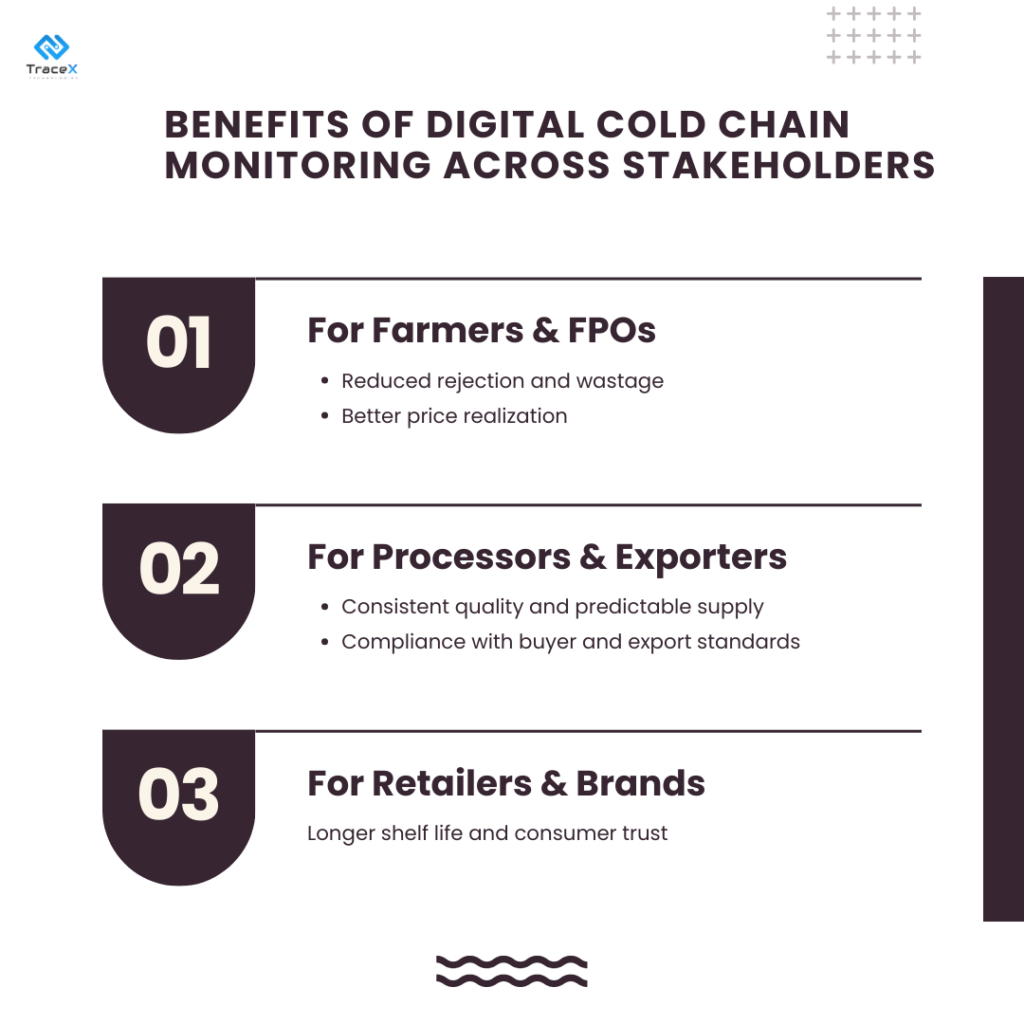
Digital cold chain monitoring uses real-time temperature, humidity, and movement data to prevent spoilage, sprouting, weight loss, and quality degradation. By detecting deviations early, operators can take corrective action before losses occur. Integrated digital systems also link storage conditions to batch-level traceability, improving accountability, audit readiness, and compliance with buyer and export standards. This data-driven approach significantly extends shelf life, reduces wastage, and protects margins across the potato value chain.
Key Takeaways
Post-harvest losses remain one of the most significant inefficiencies in the global potato value chain. Globally, it is estimated that 20–50% of potatoes are lost after harvest, with losses in India often higher due to fragmented storage, transport gaps, and inconsistent cold chain access. These losses occur despite successful cultivation, directly eroding value after costs have already been incurred.
Post-harvest losses in the potato value chain represent a critical challenge, eroding 20-50% of global production (up to 1.3 million tons annually in developing regions like Africa and Asia), equivalent to $15 billion in economic value and exacerbating food insecurity for 800 million people reliant on potatoes as a staple. In East Africa, losses reach 20-25% due to poor storage, rough handling, and high temperatures, while Ethiopia reports 15-70% for horticulturals including potatoes, with seed tubers suffering up to 50% deterioration from inadequate facilities. India faces average losses of 41.39 q/ha (medium-high at 48% incidence), driven by delayed marketing, small farms, and absent cold chains, underscoring the need for ventilation tech and infrastructure to capture 30-40% recoverable value amid rising exports
For farmers, post-harvest losses translate into lower realizations, forced distress sales, and reduced bargaining power. For processors and exporters, quality deterioration leads to rejected consignments, higher sorting costs, supply shortages, and margin compression. At a national level, these losses undermine food security and export competitiveness.
Potatoes are particularly vulnerable because they are biologically active even after harvest. Improper temperature, humidity, or ventilation accelerates sprouting, dehydration, sugar buildup, and rot. Even short exposure to temperature fluctuations during storage or transport can permanently damage processing quality and shelf life.
This is why reducing post-harvest losses in potatoes is not just an operational concern but a strategic priority requiring precise temperature control, real-time visibility, and coordinated cold chain management across storage, transport, and distribution.
Discover proven strategies for addressing post-harvest losses in potato supply chains and boosting efficiency.
Explore how digital procurement is transforming fruit and vegetable supply chains
Many potato-producing regions lack sufficient cold storage facilities, forcing farmers and aggregators to rely on open-air storage or basic warehouses. This exposes potatoes to temperature swings, pests, and mechanical damage, accelerating spoilage. Limited storage capacity also leads to overcrowding, which further compromises airflow and quality.
Potatoes are highly sensitive to environmental conditions. Excessive heat, low humidity, or improper ventilation can cause sprouting, dehydration, and sugar accumulation, reducing both processing quality and shelf life. Without precise temperature and humidity monitoring, even short-term fluctuations can trigger significant losses.
Transportation bottlenecks and rough handling during loading and unloading can cause bruising, cuts, and rot. Delays between harvest and storage amplify these damages, making potatoes unfit for sale or processing. Inefficient coordination across the supply chain further compounds these issues.
Without digital monitoring systems, it is difficult to track conditions during storage and transport. Late detection of temperature spikes, humidity changes, or spoilage events means corrective actions are delayed or impossible. The absence of accountability mechanisms also leads to inconsistent practices among storage and logistics partners.
Together, these factors make potato post-harvest losses a major challenge, highlighting the urgent need for modern cold storage solutions and real-time monitoring technologies to safeguard quality, minimize wastage, and ensure profitability across the value chain.
Different potato varieties have unique storage requirements. Some require lower temperatures to prevent sprouting, while others are sensitive to cold-induced sweetening. Maintaining the correct temperature and humidity tailored to each variety preserves texture, flavor, and processing quality. Without these controls, potatoes can lose market value quickly, affecting both farmer income and processor profitability.
A cold chain is only effective if it remains continuous from harvest to storage, transport, and processing. Even brief temperature fluctuations during transit or handling can trigger spoilage, sprouting, or disease proliferation. End-to-end cold chain management ensures that potatoes arrive at their destination in optimal condition, reducing losses, safeguarding quality, and improving market readiness.
Traditional cold storage systems often rely on periodic manual checks of temperature and humidity. This approach is slow, prone to human error, and reactive rather than preventive. By the time a problem is detected, damage may already have occurred, leading to significant wastage and financial losses.
Effective potato cold chain management is critical to reducing post-harvest losses in potatoes. By maintaining ideal storage conditions, ensuring uninterrupted cold chain continuity, and leveraging proactive monitoring systems, supply chain stakeholders can significantly improve shelf life, product quality, and profitability.
Digital cold chain systems use IoT sensors to continuously monitor environmental conditions in storage units, trucks, and warehouses. These sensors capture precise temperature and humidity data tailored to specific potato varieties, ensuring optimal storage conditions that prevent spoilage, sprouting, or quality degradation.
When temperature or humidity drifts outside pre-set thresholds, the system instantly sends alerts to responsible personnel. This proactive approach allows immediate corrective actions, preventing losses before they occur, rather than discovering them only after spoilage has taken place.
Digital cold chain platforms track the physical location of potato batches in real time. This ensures accountability during transit and storage, minimizes misplacement or theft, and maintains full visibility of where produce is at any given moment.
All sensor readings, alerts, and interventions are recorded automatically in digital logs. These records support traceability, audit readiness, and regulatory compliance. Stakeholders, including exporters and quality inspectors, can access tamper-proof data to verify that potatoes have been maintained under optimal conditions throughout the supply chain.
Digital cold chain monitoring integrates real-time environmental tracking, automated alerts, and audit-ready data, providing a robust solution for cold chain traceability and significantly reducing post-harvest losses in potatoes.
See Cold Chain Digitalization in Action
Discover how digital cold chain monitoring transformed potato procurement efficiency, reduced losses, and improved quality outcomes.
Read the case study: Optimizing Potato Procurement Through Cold Chain Digitalization
Real-time monitoring allows stakeholders to identify temperature deviations instantly. If storage or transit conditions exceed safe thresholds, alerts trigger corrective actions, preventing damage that could compromise potato quality.
Consistent oversight of temperature and humidity ensures potatoes remain within ideal conditions. This minimizes sprouting, rot, and dehydration common causes of post-harvest losses preserving both quality and weight.
By maintaining optimal storage, processors and distributors face fewer complaints or disputes over inferior produce. Real-time data provides proof of handling conditions, reducing liability and unnecessary financial losses.
Controlled conditions throughout storage and transit extend potato shelf life and maintain uniformity for processing. Higher quality input reduces waste during grading, slicing, or frying, improving yields and profitability.
Leveraging real-time visibility in cold chains is a critical strategy for reducing post-harvest losses in potatoes, enhancing operational efficiency, quality assurance, and financial returns.
By connecting IoT-enabled cold chain sensors with farm and batch-level records, stakeholders can track exactly which batch of potatoes experienced specific storage conditions. This integration ensures every lot’s temperature, humidity, and handling history is associated with its origin, enabling precise accountability.
Integrated systems provide full visibility across the potato value chain from seed and field to storage, transport, processing, and export. This ensures that quality and compliance data follow the batch at every stage, supporting efficient supply chain management.
In case of spoilage, contamination, or regulatory non-compliance, integrated cold chain and traceability systems allow rapid identification of affected batches. This minimizes losses, ensures targeted recalls, and maintains trust with buyers and consumers.
Combining cold chain monitoring with potato traceability strengthens batch-level traceability, enhances quality assurance, and reduces post-harvest losses across the value chain.
TraceX provides end-to-end visibility of potatoes in storage and transit. Each batch is monitored for temperature, humidity, and movement, ensuring optimal conditions are maintained throughout the supply chain. This reduces spoilage, sprouting, and moisture loss.
All cold chain data is securely recorded on blockchain, creating tamper-proof logs. This ensures full transparency and traceability, allowing stakeholders to verify storage conditions, compliance, and batch history for audits and regulatory purposes.
TraceX dashboards display live storage metrics, highlighting deviations immediately. Automated alerts notify operators of temperature or humidity breaches, enabling proactive interventions to prevent losses.
Cold chain monitoring is connected to procurement, inventory, and farm-level traceability. This ensures every potato batch is linked to its origin and movement history, facilitating batch-level accountability, improved supply planning, and compliance with quality standards.
By combining cold chain monitoring with real-time dashboards, blockchain audit trails, and integrated procurement, potato producers, processors, and exporters can significantly reduce post-harvest losses, maintain quality, and ensure traceable, compliant supply chains with TraceX Farm Management Platform.
Implementing digital cold chain monitoring transforms potato supply chains by providing real-time visibility, proactive alerts, and batch-level traceability. By linking storage and transport conditions to farm and batch data, producers, processors, and exporters can significantly reduce post-harvest losses, maintain quality, and enhance compliance with regulatory and buyer standards. Integrating these insights with procurement and inventory systems ensures efficient operations, better yields, and higher profitability, while building trust across the value chain.
Read our blog on modern procurement in agriculture and how digital systems improve pricing, planning, and farmer trust.
Explore why seed potato traceability is critical for disease control, yield consistency, and export compliance.
See how digital traceability is transforming food processing, quality assurance, and market access end to end.
Digital cold chain monitoring uses IoT sensors, real-time alerts, and traceability systems to ensure optimal storage and transport conditions, preventing spoilage and quality loss.
By continuously tracking temperature, humidity, and location, deviations are detected early, enabling proactive interventions that prevent sprouting, rot, and moisture loss.
Yes, platforms like TraceX link cold storage data with farm and batch-level traceability, enabling end-to-end supply chain transparency and audit-ready reporting.