
Quick summary: Leather supply chains from raw hide to finished product explained covering traceability, EUDR compliance, ESG risks, and how transparency supports sustainable leather sourcing.

Leather supply chains sit at the intersection of agriculture, manufacturing, and global trade and that’s exactly what makes them so complex. A single finished leather product can pass through multiple countries, dozens of intermediaries, and several high-risk stages, starting with raw hide sourcing and ending at the brand or retailer. Along the way, original data is often lost, suppliers are fragmented, and visibility beyond tier-one partners is limited.
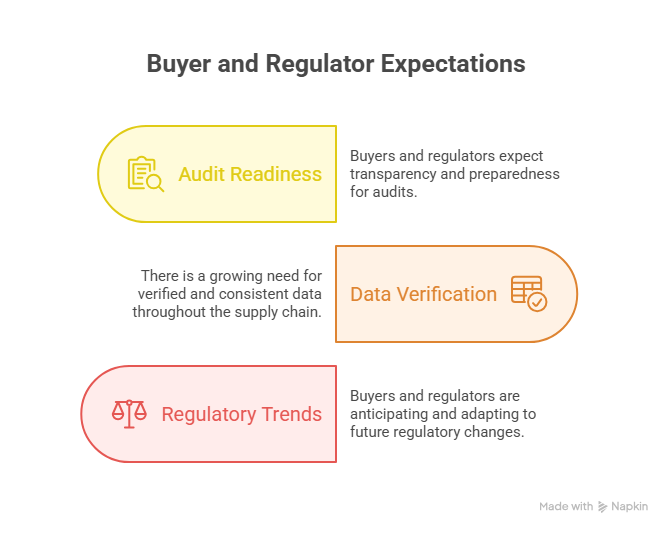
Today, that lack of transparency is no longer sustainable. Growing regulatory pressure, stricter buyer expectations, and rising ESG scrutiny mean brands, manufacturers, and exporters must prove where their leather comes from, how it was produced, and whether it meets environmental and social standards. Traceability and compliance are no longer operational add-ons they are critical requirements for maintaining market access, managing risk, and protecting brand value across modern leather supply chains.
Key Takeaways
A leather supply chain is the end-to-end network of activities, actors, and processes involved in transforming raw animal hides into finished leather products sold in domestic and international markets. It connects agricultural production with industrial processing and global trade, making it one of the most complex material supply chains in the world.
Leather supply chains typically move through several distinct stages, often across different regions and countries:
The global leather supply chain spans raw hides (tanneries process 11M tons/year), wet-blue/semi-processed, finished leather, and goods like footwear/apparel, valued at $201-531B (2025) growing to $311-982B by 2032-34 (CAGR 6-7%). Key hubs: Asia (India/China 80% production), Europe (Italy luxury), US (goods).
Luxury demand (LVMH/Gucci), EVs (synthetic leather), e-commerce drive growth; traceability/EUDR-like rules for hides boost African exporters (Ethiopia/Kenya). Challenges: Bans (CA leather import), circular economy
Learn how illegal logging enters global supply chains—and what traceability can do to stop it.
Learn what leather brands and importers must do to prove deforestation-free sourcing under EUDR.
Leather supply chains span multiple countries because each stage tends to specialize geographically. Livestock may be raised in one region, hides collected in another, tanning performed where industrial capacity exists, and manufacturing carried out where labour and logistics are favourable.
They are also highly multi-actor, involving farmers, slaughterhouses, traders, aggregators, tanneries, processors, manufacturers, exporters, importers, and retailers. This fragmentation makes leather supply chains difficult to monitor, increases ESG and compliance risks, and explains why traceability and data integration are now critical for regulatory compliance, buyer trust, and long-term sustainability.
Leather supply chains are increasingly classified as high-risk from an ESG and regulatory perspective because they intersect with some of the most sensitive environmental, social, and governance issues in global trade. Risk is not concentrated in a single stage it accumulates across the value chain, from cattle production to tanning and manufacturing.
Leather is a by-product of the cattle industry, which in several sourcing regions is closely associated with deforestation and land-use change. In countries where pasture expansion drives forest clearing, hides can be indirectly linked to illegal deforestation even when meat is the primary output. This has placed leather firmly within the scope of deforestation-related regulations and due-diligence requirements, increasing scrutiny on origin data and farm-level traceability.
Slaughterhouses and tanneries often operate in labour-intensive and hazardous environments, where risks include unsafe working conditions, excessive working hours, informal employment, and, in some regions, child or forced labour. Weak oversight and subcontracting practices make it difficult to verify labour standards, exposing brands and importers to human-rights, ESG, and reputational risk.
The tanning process relies on chemicals such as chromium salts, acids, and dyes, generating toxic wastewater and solid waste. Poorly regulated or under-resourced tanneries can discharge untreated effluent, contaminating water sources and surrounding communities. As environmental regulations tighten, failure to manage chemical use and wastewater properly creates significant environmental and compliance exposure.
Leather supply chains are often highly fragmented, with hides passing through multiple traders and aggregators before reaching tanneries. Informal sourcing, cash-based transactions, and limited recordkeeping make it difficult to maintain visibility into origin and handling practices. This opacity increases the risk of non-compliant hides entering formal supply chains and complicates audits, recalls, and regulatory reporting.
Together, these factors make leather supply chains vulnerable to regulatory enforcement, buyer scrutiny, and ESG-related market exclusion. As regulations, due-diligence laws, and buyer expectations converge, companies can no longer rely on tier-one visibility alone. End-to-end traceability, continuous data capture, and controlled transparency are becoming essential to managing ESG and compliance risk across modern leather supply chains.
Leather supply chains are increasingly in scope for EUDR (EU Deforestation Regulation) compliance because of their direct link to cattle, one of the EU’s designated forest-risk commodities. While leather is often treated as a by-product, the regulation focuses on origin and land use, not product intent bringing leather and leather-derived products firmly into regulatory scrutiny.
Under EUDR, cattle are explicitly listed as a forest-risk commodity. Since leather is derived from cattle hides, leather products inherit the deforestation risk associated with cattle production. This means that if cattle were raised on land subject to deforestation after the regulatory cut-off date, any leather produced from those hides may be deemed non-compliant regardless of where tanning or manufacturing occurs.
As a result, traceability must extend beyond tanneries and manufacturers back to farms and ranches where animals were raised.
For leather and leather-containing products placed on the EU market, EUDR requires operators to:
This applies to finished leather goods (such as footwear, bags, or upholstery) as well as intermediate leather materials when they fall within the regulation’s product scope.
A core requirement of EUDR is precise geolocation data. For cattle-linked products, this means:
In practice, this requires leather supply chains to capture first-mile data often the most fragmented and least digitized part of the value chain.
EUDR places the legal obligation on EU importers and operators who place products on the EU market. They are responsible for submitting due-diligence statements and ensuring compliance.
However, exporters and upstream suppliers play a critical enabling role. Without reliable farm-level traceability, geolocation data, and chain-of-custody records from origin countries, EU importers cannot meet their obligations. As a result, compliance pressure is effectively pushed upstream, requiring exporters, tanneries, and processors to adopt EUDR-ready traceability systems.
EUDR shifts leather supply chains from tier-one supplier checks to end-to-end due diligence. Companies can no longer rely on certificates or declarations alone; they must demonstrate verifiable, geospatially linked evidence of deforestation-free sourcing. This makes digital traceability, satellite verification, and controlled data sharing essential components of EUDR-compliant leather supply chains.
Traceability is the critical control mechanism that connects raw hide sourcing to finished leather products, enabling compliance, risk management, and buyer trust. In leather supply chains, traceability is especially challenging because origin data can be lost early and value is added across multiple, disconnected stages.
Leather supply chains begin with high-volume, low-value raw hides that are often handled manually and aggregated quickly after slaughter. Unlike packaged agricultural commodities, hides are rarely tagged individually at origin. Once hides are salted, transported, and stored in bulk, maintaining a consistent batch identity becomes difficult. Without early digital capture, traceability gaps form long before leather reaches tanneries or manufacturers.
Aggregation is unavoidable in leather supply chains. Hides from multiple farms and slaughterhouses are combined during collection, grading, storage, and transport. If aggregation is unmanaged, mixing obscures origin, making it impossible to isolate non-compliant hides later.
Effective traceability does not eliminate aggregation it controls it. This requires:
This allows downstream actors to trace compliance risks back to defined origin groups rather than losing visibility entirely.
As hides move through tanning, processing, and manufacturing, they are transformed physically and divided into smaller units. Traceability systems must maintain a chain of custody, linking each transformation step back to the original hide batches.
This linkage is essential for:
Without this connection, finished leather products cannot be credibly tied to deforestation-free or responsible sourcing claims.
Leather supply chains rely heavily on intermediaries, traders, collectors, and aggregators whose relationships are commercially sensitive. Traceability systems must balance regulatory transparency with commercial confidentiality.
This is achieved through:
By separating compliance data from commercial intelligence, traceability enables leather supply chains to meet regulatory requirements without exposing supplier networks or competitive relationships.
Effective traceability in leather supply chains depends on consistent, verifiable data captured at every critical control point, starting at the first mile and continuing through processing and export. Each data category plays a specific role in proving origin, managing risk, and meeting regulatory and buyer requirements.
This is the foundation of traceability, especially for deforestation and land-use compliance. Required data typically includes GPS coordinates or polygons of farms and grazing areas where cattle were raised, along with land-use history and production timelines. Geolocation enables deforestation screening, legal land-use verification, and alignment with EUDR due-diligence requirements. Without accurate farm-level geospatial data, downstream compliance claims cannot be substantiated.
At slaughter, hides are separated from animals and often aggregated quickly. Capturing batch-level data at this stage is critical to preserving origin. This includes slaughterhouse identification, slaughter dates, batch IDs, volumes, and links to upstream farms or supplier groups. Proper batch creation at slaughter allows traceability systems to manage aggregation and prevent uncontrolled mixing that would otherwise erase origin data.
Tanneries represent a major transformation point in the leather supply chain. Traceability requires detailed records of incoming hide batches, processing steps, chemical treatments, batch splits or merges, and output volumes. These records link raw hides to semi-finished or finished leather, enabling continuity of traceability despite physical transformation and value addition.
Chain-of-custody data documents how ownership, custody, and responsibility change as hides and leather move through the supply chain. This includes transport records, storage logs, transfer documents, and transaction references. A documented chain of custody ensures that traceability is auditable and that claims about origin and handling can be verified during inspections or buyer audits.
Beyond physical movement, traceability systems must capture non-financial compliance data. This includes evidence related to labour standards, environmental management, animal welfare, chemical handling, wastewater treatment, and regulatory permits. ESG and compliance records strengthen risk assessments, support sustainability claims, and are increasingly required by buyers and regulators alongside origin data.
Despite growing pressure for transparency, leather supply chains frequently struggle with systemic traceability gaps that undermine compliance and credibility.
Origin data is most often lost at the earliest stages of the supply chain. When hides from multiple farms are aggregated at slaughterhouses or collection centers without digital batch controls, it becomes impossible to trace finished leather back to compliant production areas. This early loss of visibility is one of the biggest barriers to EUDR compliance.
Many leather supply chains still rely on paper forms, manual logs, and spreadsheets. These systems are slow, error-prone, and difficult to audit. Missing, illegible, or inconsistent documents weaken traceability, delay inspections, and increase the risk of non-compliance during regulatory or buyer reviews.
Brands and importers often have good visibility into direct suppliers such as tanneries or manufacturers but little insight into upstream actors like slaughterhouses, collectors, and farms. This tier-one focus is no longer sufficient under modern due-diligence regulations, which require end-to-end transparency.
Data collected from different suppliers is often incomplete, unstandardized, or outdated. Variations in formats, definitions, and reporting practices make it difficult to aggregate data, run risk assessments, or generate audit-ready reports. Poor data quality undermines even well-designed traceability systems.
Closing these data gaps is essential for building credible, compliant, and resilient leather supply chains. Robust traceability depends not just on collecting data, but on ensuring it is standardized, digital, verifiable, and connected across stages from farm and slaughterhouse to tannery and finished product.
Modern leather supply chains need continuous, verifiable transparency from raw hide to finished product. TraceX addresses this by combining digital traceability, satellite intelligence, blockchain, and AI into a single, compliance-ready system purpose-built for high-risk, multi-actor supply chains like leather.
TraceX provides end-to-end, batch-level traceability that links farms and ranches to slaughterhouses, hide batches, tanneries, processors, and finished products. Digital IDs are created at critical control points (e.g., slaughter and hide collection), allowing controlled aggregation while preserving origin. This enables brands and importers to trace finished leather back to defined origin groups essential for EUDR, audits, and recalls without exposing sensitive commercial relationships.
Because leather is derived from cattle, deforestation risk must be assessed at the farm and plot level. TraceX integrates satellite imagery and land-use datasets to screen geolocated ranches against deforestation cut-off dates. This automates risk checks, supports due-diligence statements, and flags high-risk sourcing early before hides enter downstream processing.
TraceX uses blockchain selectively to immutably record critical traceability events batch creation, transfers, splits/merges, and compliance attestations. This creates a tamper-resistant chain of custody across transformations (hide → leather → product), strengthening trust with regulators and buyers while maintaining role-based access so intermediaries remain confidential.
Agentic AI workflows within TraceX continuously assess deforestation, ESG, and compliance risk across suppliers and batches. AI automates document validation, anomaly detection (e.g., inconsistent volumes or locations), and risk scoring aligned to EUDR requirements. This shifts compliance from periodic audits to continuous verification, reducing manual effort and accelerating decision-making.
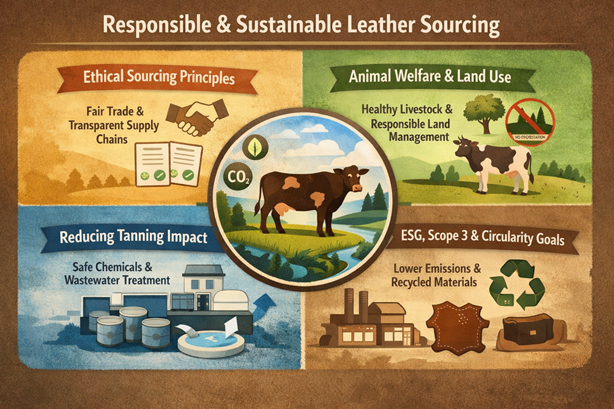
Circularity in leather supply chains focuses on maximizing material value, minimizing waste, and extending product lifecycles while maintaining transparency and compliance. Because leather originates as a by-product of the meat industry and passes through multiple transformation stages, circular outcomes depend heavily on data continuity and traceability.
Leather itself is a form of by-product utilization: hides that would otherwise become waste are converted into durable materials. Circular supply chains go further by:
Reducing waste requires precise tracking of inputs, outputs, and losses across stages data that manual systems struggle to provide.
Recycling leather is complex due to:
Without reliable data on what the leather contains and how it was processed, recycling and reuse at end of life are constrained. This is why circular leather models increasingly depend on product-level information, not just brand claims.
Digital Product Passports are emerging as a key enabler of circularity under EU sustainability frameworks. For leather products, DPPs can store and share:
By making standardized product data accessible to brands, consumers, recyclers, and regulators, DPPs support longer product lifecycles and better end-of-life outcomes.
Traceability connects circularity goals to real-world execution. End-to-end traceability allows companies to:
In circular leather supply chains, traceability is not just about compliance it is the data infrastructure that makes circular business models viable at scale. Without it, reuse, recycling, and responsible disposal remain aspirational rather than operational.
Leather supply chains from raw hide to finished product are among the most complex and risk-exposed in global trade. Rising regulatory pressure, particularly around deforestation, ESG, and due diligence, means brands, manufacturers, and exporters can no longer rely on limited tier-one visibility or periodic audits. End-to-end traceability, supported by digital systems and verified first-mile data, is now essential to prove origin, manage risk, enable circularity, and protect long-term market access. The future of leather depends on turning transparency into standard practice, not an exception.
Understand how EUDR traceability works—and what regulators actually expect
Read how geolocation data is collected, verified, and assessed under EUDR.
Read why ethical sourcing is becoming a commercial and regulatory requirement.
A leather supply chain is the network of activities that transforms raw animal hides into finished leather products, including livestock production, slaughter, hide collection, tanning, processing, manufacturing, and export or retail.
Leather supply chains face high ESG and compliance risk due to links with deforestation-driven cattle production, labour and human-rights issues, chemical-intensive tanning processes, and fragmented, opaque sourcing networks.
Leather is linked to cattle, which is a designated forest-risk commodity under EUDR. As a result, leather and leather-derived products must demonstrate deforestation-free origin and meet strict due-diligence requirements when placed on the EU market.
Traceability is challenging because hides are aggregated and mixed early in the supply chain, records are often manual, and multiple intermediaries are involved—making it easy for origin data to be lost without digital batch controls.
Traceability links raw hides to finished products, enabling verified sustainability claims, regulatory compliance, and Digital Product Passports. This data continuity supports waste reduction, reuse, recycling, and more circular leather business models.