
Quick summary: DPP use cases explained across industries: how Digital Product Passports apply to electronics, textiles, batteries, construction, and chemicals to support compliance, transparency, and circular economy goals.

Digital Product Passports (DPPs) are moving from regulation to real-world implementation across multiple industries. While the concept is uniform, DPP use cases differ significantly by sector, product complexity, and lifecycle requirements. From electronics and batteries to textiles and construction materials, DPPs are reshaping how product data is shared, verified, and reused. This guide explores the most important DPP use cases, what data is required in each sector, and how businesses can prepare for compliance and value creation.
DPP Use Cases explain how Digital Product Passports are applied across industries to meet regulatory, sustainability, and transparency requirements. DPPs enable standardized, product-level data sharing for sectors such as electronics, textiles, batteries, construction products, and chemicals, covering material composition, sourcing, environmental impact, and end-of-life information. While requirements vary by industry, all DPP use cases rely on traceability, verified supplier data, and lifecycle transparency. As EU regulations expand, DPP use cases are becoming essential for compliance, circular economy reporting, and trusted product transparency across global value chains.
Key Takeaways
DPP use cases describe the specific ways Digital Product Passports are applied to meet regulatory, operational, and commercial needs across different products and industries. A use case defines who uses the DPP, what data is required, and how that data supports compliance, transparency, or value creation throughout the product lifecycle.
In a regulatory context, DPP use cases focus on meeting legal requirements under frameworks such as the EU Ecodesign Regulation, including disclosure of material composition, sourcing, environmental impact, and end-of-life information. In commercial contexts, DPP use cases support buyer transparency, sustainability reporting, repairability, resale, recycling, and circular economy initiatives. Together, these use cases determine how DPP data is structured, maintained, and shared across the value chain.
New to Digital Product Passports or need a clear starting point?
Read our complete guide to DPPs—what they are, why they matter, and how regulations are shaping product transparency.
Not sure if your products fall under DPP requirements?
Explore our breakdown of DPP product scope to see which industries and product categories are covered—and what comes next.
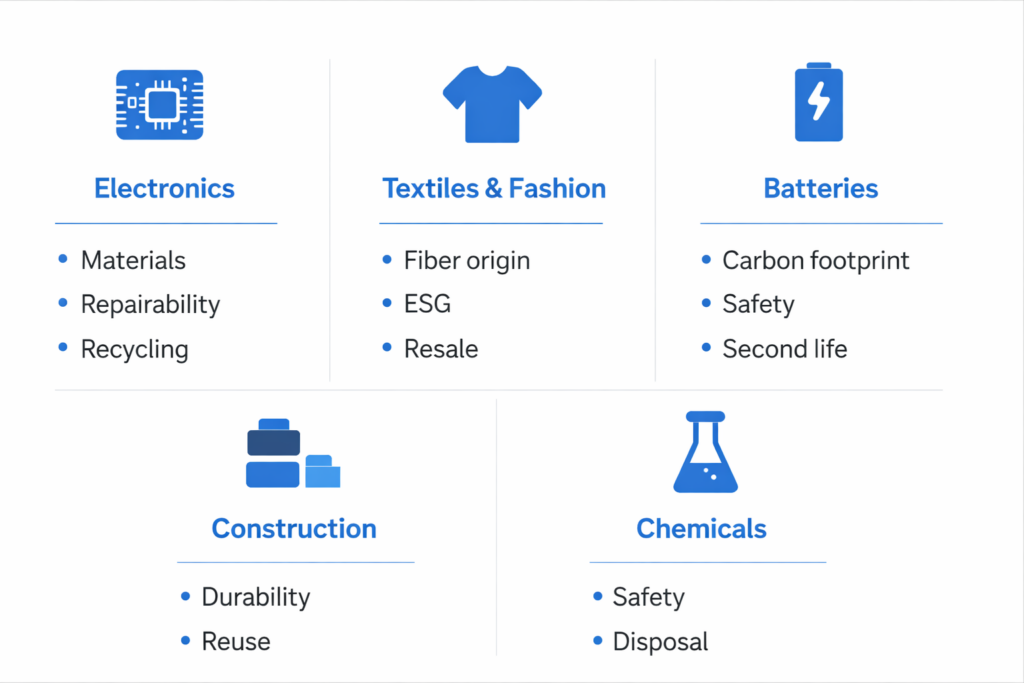
DPP use cases vary by industry because products differ significantly in complexity, risk, and regulatory exposure, which directly shapes the data required in a Digital Product Passport.
Industries such as electronics, batteries, and construction products involve complex assemblies, long lifespans, and multiple lifecycle stages including repair, reuse, and recycling. Their DPP use cases must support detailed component data, version control, and long-term data availability. In contrast, fast-moving sectors like textiles focus more on material composition, sourcing, and end-of-life pathways.
Different industries face different environmental and safety concerns. Batteries and chemicals require DPPs to address hazardous substances, safety instructions, and disposal requirements, while textiles emphasize fiber origin, chemical treatments, and social compliance. These risk profiles determine what information must be disclosed and verified.
The EU Ecodesign framework applies DPP obligations by product category, with sector-specific delegated acts defining mandatory data fields. As a result, DPP use cases are tailored to meet the precise regulatory expectations of each industry, rather than following a one-size-fits-all model.
Batteries represent one of the most regulation-driven DPP use cases, particularly under the EU Battery Regulation, where Digital Product Passports are mandatory. DPPs for batteries are designed to provide transparency across the full lifecycle, from raw material sourcing to end-of-life management.
DPPs capture detailed information on battery chemistry, capacity, durability, and performance characteristics. This enables regulators, manufacturers, and downstream users to assess safety, quality, and suitability for reuse or repurposing.
Battery DPPs require disclosure of carbon footprint data and sourcing information for critical raw materials such as lithium, cobalt, and nickel. This supports due-diligence obligations, responsible sourcing, and climate reporting requirements.
DPPs provide guidance on safe handling, repair, reuse, and second-life potential, particularly for electric vehicle and industrial batteries. By preserving lifecycle and performance data, DPPs enable safer recycling, extended product lifespans, and circular economy outcomes.
In textiles and fashion, DPP use cases are strongly driven by ESG transparency and consumer-facing disclosure, reflecting growing regulatory, brand, and buyer expectations. Digital Product Passports enable visibility across complex, global supply chains that are often difficult to verify.
DPPs capture detailed information on fiber types, blends, and sourcing origins, including upstream suppliers and production regions. This supports regulatory compliance, substantiates sustainability claims, and helps prevent greenwashing.
Textile DPPs increasingly include data on environmental footprint, chemical use, labor conditions, and certifications. This information supports due-diligence obligations, ESG reporting, and brand accountability across multi-tier supply chains.
DPPs provide guidance on product care, durability, repair, resale, and recycling, extending product lifecycles. For consumers, this improves transparency and trust; for brands, it supports circular economy initiatives and resale business models.
Electronics represent a high-impact DPP use case due to complex product composition, safety risks, and strict regulatory requirements. Digital Product Passports help consolidate technical, compliance, and lifecycle data that is often fragmented across systems and suppliers.
DPPs document detailed material and component composition, including the presence of hazardous substances regulated under frameworks such as RoHS and REACH. This enables compliance verification, safer handling, and informed recycling decisions.
Electronics DPPs provide data on repairability, spare parts, disassembly instructions, and firmware or software dependencies. This supports right-to-repair initiatives, product longevity, and more sustainable use.
At end of life, DPPs supply recyclers with accurate information on materials, components, and recovery pathways. This improves recycling efficiency, reduces waste, and supports circular economy targets for electronic products.
Construction products have long lifecycles and complex regulatory requirements, making them a critical lifecycle- and compliance-driven DPP use case. Digital Product Passports support transparency from material sourcing through decades of use and eventual deconstruction.
DPPs capture detailed information on raw material sources, compositions, and environmental declarations. This supports regulatory compliance, green building standards, and procurement decisions based on verified material data.
Construction DPPs provide information on expected lifespan, maintenance requirements, and performance over time. This enables safer use, more efficient asset management, and reduced lifecycle emissions.
At end of life, DPPs document disassembly instructions, reuse potential, and recycling pathways. This supports circular construction practices, material recovery, and waste reduction in the built environment.
Chemicals represent a high-risk, safety-focused DPP use case, where accurate and accessible information is essential for regulatory compliance and environmental protection.
DPPs record chemical identities, classifications, and regulatory status under frameworks such as REACH and CLP. This ensures downstream users can verify compliance and manage restricted or hazardous substances.
Chemical DPPs provide guidance on storage, handling, exposure limits, and emergency response. Making this information accessible improves workplace safety and reduces health risks across the value chain.
DPPs include data on environmental hazards, emissions, and approved disposal or treatment methods. This supports responsible use, minimizes environmental harm, and ensures compliance with waste and environmental regulations.
Circular economy use cases represent some of the highest long-term value applications of Digital Product Passports. By preserving reliable product and material data throughout the lifecycle, DPPs enable products to remain in use longer and materials to be recovered more efficiently.
DPPs provide detailed information on product condition, components, and repair history, enabling safe reuse and refurbishment. This supports secondary markets, extends product lifespans, and reduces demand for new raw materials.
At end of life, DPPs give recyclers precise data on material composition, hazardous substances, and disassembly instructions. This improves recycling efficiency, increases recovery rates, and lowers environmental impact.
By making lifecycle data accessible and verifiable, DPPs reduce unnecessary disposal and improve accountability across value chains. Transparent product information supports better waste management decisions and accelerates the transition to a circular economy.
While DPP use cases vary by industry, they are built on a shared foundation of core data elements that enable consistency, verification, and regulatory compliance across product categories.
Every Digital Product Passport requires a clear and persistent product identity. This includes unique product identifiers, product models, versions, and Bills of Materials (BOMs) that define how a product is composed and how it evolves over time. This structural data ensures DPPs remain accurate throughout the product lifecycle.
DPPs must link products to their supply chains. This includes supplier and sub-supplier information, origin and geolocation data, batch or lot tracking, and transformation events. Traceability data provides the evidence needed to verify sourcing claims, manage risk, and support due-diligence obligations.
Across all industries, DPPs require data related to environmental impact, regulatory compliance, and where applicable social responsibility. This may include carbon footprint, chemical compliance, certifications, repairability, and end-of-life information. Together, these data elements turn DPPs into trusted, compliance-ready product records rather than static disclosures.
Despite growing regulatory clarity, many organizations struggle to implement DPP use cases at scale due to structural and data-related challenges.
Product information is often spread across PLM systems, ERP platforms, supplier portals, and spreadsheets. This fragmentation makes it difficult to assemble a complete, consistent Digital Product Passport without manual effort and repeated data reconciliation.
DPP use cases frequently require transparency beyond tier-1 suppliers, including origin, processing, and sustainability data from upstream actors. Many companies lack the tools and processes to collect, validate, and maintain this information across multi-tier supply chains.
Different industries and even different buyers apply varying data standards and formats. Without standardized data models, companies face interoperability issues, inconsistent disclosures, and increased compliance risk when scaling DPPs across product portfolios.
Digital traceability provides the operational backbone needed to turn fragmented data into scalable, repeatable DPP use cases.
Traceability assigns persistent digital identities to products, linking product structure, batches, and lifecycle events. This ensures every product can be uniquely identified and consistently referenced across systems.
Traceability systems capture supplier, origin, batch, and transformation data directly from the value chain. This creates verifiable, audit-ready inputs that support regulatory compliance and trustworthy DPP disclosures.
With traceability in place, DPPs can aggregate and structure validated data into accessible, regulation-aligned product passports that remain current over time and can be shared with regulators, buyers, and downstream partners.
TraceX solutions enable companies to connect product identities with multi-tier supply-chain traceability, ensuring DPP data is accurate, auditable, and scalable across industries. By automating data capture and validation, TraceX helps organizations move from pilot DPP use cases to enterprise-wide implementation with confidence.
Digital Product Passports are often introduced through the lens of regulation, but their real value goes far beyond compliance. When implemented effectively, DPP use cases become a foundation for trusted transparency, stronger supply-chain control, and measurable circularity. By connecting product identity, traceability, and lifecycle data, DPPs help companies reduce risk, improve decision-making, and respond faster to regulatory and buyer demands. Organizations that treat DPPs as a strategic capability rather than a reporting obligation are better positioned to unlock long-term value through improved product stewardship, resilience, and sustainable growth.
Digital Product Passports are becoming mandatory under the EU Ecodesign framework.
Read our guide to the ESPR DPP regulation and understand what’s required, when it applies, and how to prepare.
Batteries are the first product category with mandatory DPPs.
Explore how Battery DPPs work, what data is required, and how companies are implementing them in practice.
Digital Product Passports are key to making circularity work.
Read how DPPs enable the circular economy through transparency, reuse, and material recovery.
The main DPP use cases include regulatory compliance, product transparency, supply-chain traceability, sustainability reporting, repair and reuse support, recycling and material recovery, and buyer or consumer information across the product lifecycle.
Industries prioritized for early DPP requirements include batteries, electronics, textiles and fashion, construction products, and chemicals, based on their environmental impact, safety risks, and regulatory scope under the EU Ecodesign framework.
DPP use cases are mandatory where required by regulation, such as under EU Ecodesign or the EU Battery Regulation. In other contexts, they may be voluntary but increasingly driven by buyer expectations and sustainability commitments.
DPPs support circularity by preserving product and material data needed for repair, reuse, refurbishment, and recycling, enabling longer product lifecycles and more efficient material recovery.
Supporting DPP use cases typically requires PLM systems for product structure, traceability platforms for supply-chain and lifecycle data, and a dedicated DPP layer to aggregate, validate, and publish compliance-ready product information.