
Quick summary: TraceX helps rubber companies in Portugal meet EUDR requirements with automated Due Diligence Statement (DDS) generation, farm-level traceability, and deforestation risk verification.
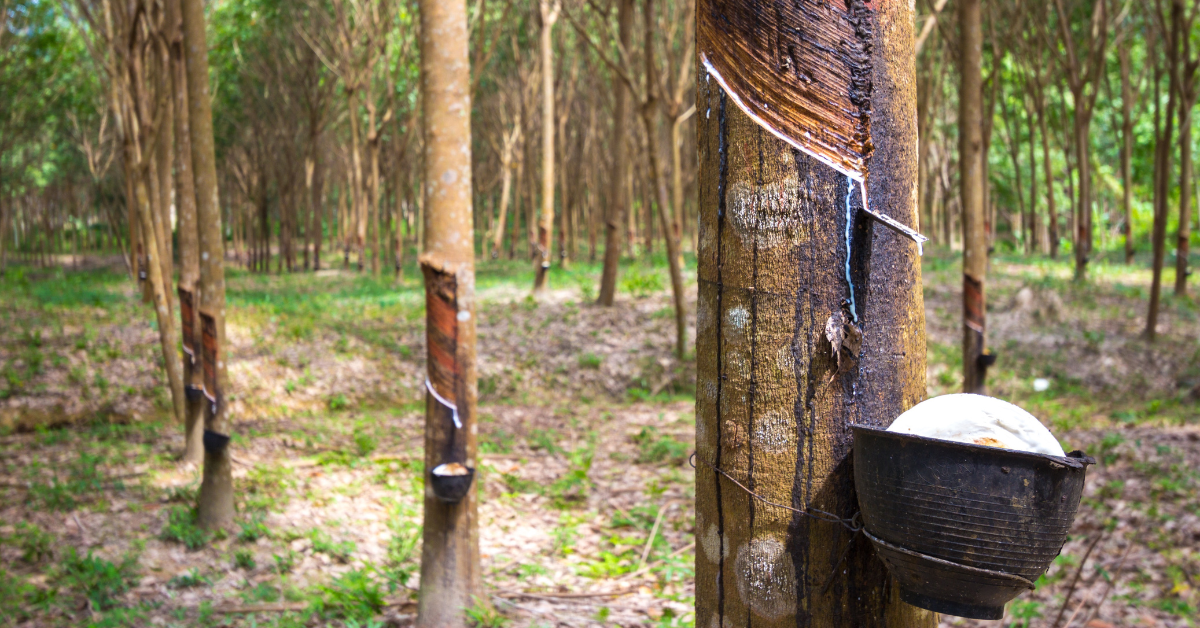
EUDR DDS for Rubber Supply Chain in Portugal requires exporters, processors, and importers to prove that all natural rubber and rubber-derived products are deforestation-free, legally sourced, and fully traceable to plantation level. Companies must collect geolocation coordinates of rubber plots, verify land-use legality, assess deforestation risk, and submit a Due Diligence Statement (DDS) for every EU-bound consignment. With enforcement starting in 2025/2026, Portugal’s rubber operators must adopt digital traceability, legality documentation, and risk-assessment systems to maintain EU market access and ensure compliance with the EUDR’s strict environmental and supply-chain transparency standards.
The EU Deforestation Regulation (EUDR) is transforming how Portugal’s natural rubber import, processing, automotive, and manufacturing industries operate within the European market. As a growing hub for automotive components, tires, footwear, industrial rubber goods, and maritime equipment, Portugal must now ensure that all natural rubber entering its supply chain is deforestation-free, legally sourced, and fully traceable from plantation to finished product.
The EUDR targets commodities linked to global forest loss including rubber, timber, soy, palm oil, coffee, cocoa, and cattle requiring Portuguese importers, manufacturers, and traders to implement a robust Due Diligence System (DDS). This system must validate plantation-level geolocation, legality, and deforestation-free status for all rubber and rubber-derived materials entering the EU market.
Natural rubber (Hevea brasiliensis), now explicitly regulated under the EUDR, is associated with deforestation in major producing countries such as Thailand, Indonesia, Vietnam, Malaysia, Côte d’Ivoire, Nigeria, and Liberia. With global supply chains often opaque and multi-tiered, the regulation aims to curb forest conversion linked to rubber plantation expansion.
For Portugal home to strong automotive parts manufacturers, a rapidly expanding footwear industry, and multiple tire and industrial rubber processors EUDR compliance is essential. All raw natural rubber and rubber-based products must now demonstrate legal origin and freedom from post-2020 deforestation before entering the EU market.
Portugal’s strategic location and industrial base make it an important entry point for rubber flows into Southern and Western Europe. Major seaports such as Porto de Sines, Leixões, and Lisbon import substantial volumes of natural rubber for the automotive, footwear, machinery, and maritime manufacturing sectors.
To comply with EUDR, Portuguese operators must build end-to-end traceability systems capable of tracking rubber back to the original plantation. This includes collecting accurate geolocation data, land-use legality documents, supplier risk profiles, and deforestation assessments requirements that demand strong supplier mapping, digital documentation, and continuous monitoring.
Portugal follows the same EUDR deadlines as other EU Member States:
Portuguese companies must therefore begin early adoption of traceability systems, supplier verification, and digital compliance workflows to avoid supply chain disruptions, penalties, or blocked shipments.
The regulation applies to raw and processed natural rubber, including:
Any product containing natural rubber, even in small proportions, must comply with EUDR requirements.
Ultimately, EUDR enforcement positions Portugal’s rubber sector to lead in sustainable, transparent, and responsible sourcing. By aligning with EU biodiversity and climate goals, Portuguese importers and manufacturers can safeguard market access, strengthen supplier credibility, and reinforce Portugal’s role as a trusted producer of compliant, deforestation-free rubber goods across Europe.
Master the step-by-step process of submitting Due Diligence Statements under the new EUDR rules.
Read the blog on filing DDS for EUDR compliance
Explore how rubber importers can achieve traceability, transparency, and compliance under EUDR.
Read the full blog on EUDR Rubber Compliance
Portugal’s rubber importers, manufacturers, and processors face significant structural, operational, and documentation challenges as they work toward EUDR compliance. Because Portugal relies heavily on imported natural rubber primarily from Southeast Asia and West Africa the complexity and opacity of upstream supply chains pose major risks.
Most Portuguese rubber buyers depend on multi-tier international supply chains with intermediaries, traders, and processors. Collecting geolocation coordinates of plantations, land-use documents, and legality certificates from smallholder-dominated regions (Thailand, Indonesia, Côte d’Ivoire, Liberia, etc.) is extremely difficult. This lack of upstream transparency creates immediate DDS compliance risks.
Over 85% of global natural rubber is produced by millions of smallholders. Portuguese companies must now trace rubber back to each plantation plot an enormous challenge given inconsistent record-keeping, varied land tenure systems, and limited digital capacity among growers.
Natural rubber is often mixed, aggregated, and reprocessed multiple times before export. By the time it reaches Portugal, tracing a specific batch back to a specific plantation is nearly impossible without digital tools. EUDR requires traceability at each mixing point, which many suppliers currently cannot provide.
Rubber suppliers across Asia and Africa use non-standard paperwork, unclear land rights documentation, or outdated certificates. Portuguese companies now need:
Many countries supplying Portugal are expected to fall under the EUDR’s high-risk classification, triggering stricter due diligence requirements, deeper risk assessments, and more frequent auditing. This increases cost, workload, and operational pressure for Portuguese companies.
Traditional manual documentation and spreadsheet-based tracking systems cannot meet EUDR’s rigorous data and traceability requirements. Portuguese manufacturers must rapidly transition to digital traceability platforms capable of managing:
International suppliers may hesitate to share sensitive geolocation or land ownership data due to confidentiality, political concerns, or fear of being flagged as non-compliant. Getting suppliers aligned and digitally onboarded is often slow and resource intensive.
Non-compliance can lead to:
These risks pressure Portuguese companies to achieve compliance quickly even while suppliers abroad struggle to meet requirements.
By understanding these challenges early, Portuguese rubber companies can proactively invest in digital traceability, supplier engagement, and risk monitoring tools to ensure smooth EUDR compliance and uninterrupted participation in the EU rubber value chain.
The EU Deforestation Regulation (EUDR) requires all-natural rubber imported, processed, or traded in the EU to be fully traceable, legally sourced, and verified deforestation-free. For Portugal an emerging hub for tire manufacturing, automotive components, industrial rubber goods, and maritime equipment manual compliance is time-consuming, complex, and vulnerable to documentation gaps. The TraceX EUDR Compliance Platform provides a unified digital ecosystem that enables Portuguese importers, processors, and manufacturers to automate Due Diligence Statement (DDS) creation, validate supplier data, and maintain transparent, audit-ready supply chains.
TraceX automates the generation and submission of EUDR-compliant DDS records for every natural rubber consignment entering Portugal through ports such as Leixões, Lisbon, and Sines. The platform aggregates plantation geolocation (GeoJSON), legality paperwork, and supplier declarations into a single structured DDS report integrated with the EU’s reporting framework. Portuguese companies reduce manual workload, eliminate documentation errors, and accelerate regulatory approvals for tire, automotive, and industrial rubber exports within the EU.
Each rubber batch receives a unique blockchain-secured identity, creating an immutable chain of custody from plantations in Asia or West Africa to Portuguese factories. Manufacturers of tires, conveyor belts, footwear components, and maritime parts gain full visibility over sourcing origins ensuring transparent, verifiable compliance with EUDR’s deforestation-free and legality standards.
Since most natural rubber originates from fragmented smallholder landscapes, TraceX enables upstream onboarding of farmers, cooperatives, and processors using mobile-friendly tools. Suppliers can upload plantation GPS coordinates, land legality documents, and sustainability certificates directly into the system. This digital inclusion ensures Portuguese companies maintain compliant sourcing channels even when sourcing from regions with limited digital infrastructure.
TraceX’s AI-driven dashboards give Portuguese operators real-time insights into sourcing risks, including deforestation alerts, land-use change indicators, and supplier risk scoring. Using satellite imagery and geospatial analytics, the platform identifies high-risk suppliers early and enables proactive corrective action helping rubber processors and manufacturers maintain uninterrupted EU market access.
A tire and automotive component manufacturer in Braga or Setúbal, sourcing natural rubber from Thailand and Côte d’Ivoire, can use TraceX to geo-map plantations, verify legality documents, and automate DDS submissions for each incoming batch. Within weeks, the company gains full end-to-end traceability, reduces documentation time by up to 70%, and achieves EUDR compliance across its product lines strengthening competitiveness in European automotive and industrial markets.
By integrating blockchain transparency, automated DDS workflows, and AI-driven risk intelligence, TraceX empowers Portugal’s rubber industry to convert regulatory obligations into operational excellence. Companies strengthen supply chain visibility, improve documentation accuracy, and build a reputation for deforestation-free, legally compliant rubber products aligned with EU expectations.

The EUDR represents a structural shift for Portugal’s rubber and automotive component industries sectors that rely heavily on imported natural rubber from Asia and West Africa. As a country with a growing footprint in tire manufacturing, automotive components, footwear, industrial rubber goods, and maritime equipment, Portugal must now demonstrate full traceability and legality for every kilogram of natural rubber entering its factories.
Portugal’s rubber-dependent industries supply major EU markets such as Spain, France, Germany, and Italy. Non-compliance with the EUDR could lead to:
Portugal imports nearly all of its natural rubber inputs from high-risk deforestation regions (Thailand, Indonesia, Côte d’Ivoire, Nigeria).
EUDR raises the bar by requiring:
Manufacturers must now maintain verifiable digital records for:
Automotive OEMs (Volkswagen, Stellantis, Renault, Volvo) increasingly require suppliers to meet strict sustainability and EUDR-aligned traceability standards.
Portuguese component manufacturers that cannot prove compliant sourcing risk losing long-term supplier contracts.
Companies that achieve early EUDR compliance can:
As a key player in Europe’s automotive and industrial supply chain, Portugal’s alignment with EUDR strengthens national competitiveness. Compliant manufacturers enhance the credibility of the entire Portuguese rubber and components sector and contribute to the EU’s broader climate and biodiversity goals.
EUDR DDS for Rubber Supply Chain in Portugal sets a new benchmark for transparency, legality, and sustainability across the country’s rubber-dependent industries. As Portugal strengthens its role in Europe’s automotive, footwear, and industrial component manufacturing, adopting robust due diligence, geolocation-based traceability, and digital documentation is essential. Companies that modernize early will secure uninterrupted EU market access, reduce compliance risks, and gain a competitive edge as trusted suppliers of deforestation-free rubber products. By embracing digital EUDR readiness today, Portugal’s rubber sector can build a resilient, future-proof, and globally credible supply chain.
Understand the key components of EUDR compliance and how to streamline your DDS process efficiently.
Read the blog on EUDR Due Diligence
Learn how AI-driven automation and intelligent workflows simplify data collection, verification, and reporting.
Explore the blog on Agentic AI for EUDR
Unpack the biggest hurdles faced by importers under EUDR and how technology can turn compliance into a competitive edge.
Read blog on Challenges for EU Importers
The EUDR is a regulation by the European Union aimed at preventing deforestation-linked commodities like rubber from entering the EU market. It requires full supply chain traceability and submission of Due Diligence Statements (DDS) proving compliance.
A DDS is a formal declaration confirming that rubber imported or sold in Portugal is deforestation-free and legally sourced. It must include farm-level geolocation data and risk assessment documentation.
All Portuguese importers, traders, processors and retailers handling rubber are required to comply. Both large corporations and small operators must provide DDS documentation for their supply chains.
Common difficulties include gathering farm-level data, verifying deforestation-free claims, managing multiple smallholders, and preparing DDS documents manually.
TraceX digitizes the entire process mapping rubber farms, verifying deforestation risks via satellite data, and auto-generating compliant DDS reports ready for submission.
Yes. TraceX is built for scalability and ease of use. It supports both large enterprises and smallholder networks, enabling simple data collection via mobile apps