Quick summary: TraceX helps soy companies in France meet EUDR requirements with automated Due Diligence Statement (DDS) generation, farm-level traceability, and deforestation risk verification.
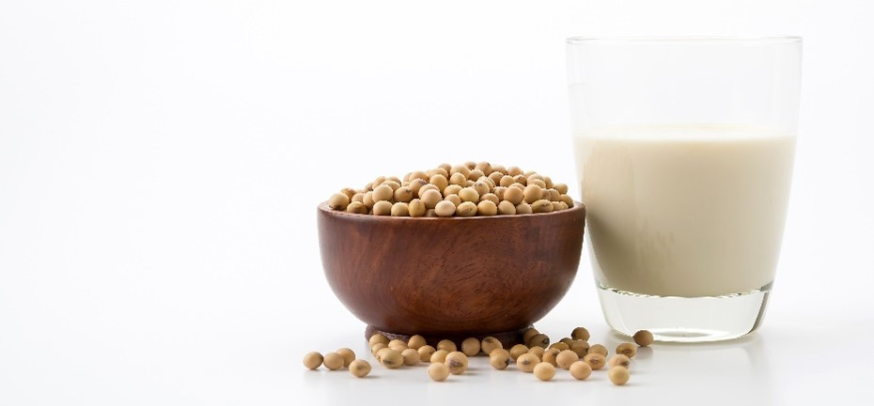
EUDR DDS for Soy Supply Chain in France requires French importers, crushers, feed manufacturers, and traders to verify that all soybeans and soy-derived products are legally sourced, deforestation-free, and fully traceable to their farm or plot of origin. France must collect geolocation data, assess deforestation risk, validate legality, and submit a compliant Due Diligence Statement (DDS) before placing any soy product on the EU market. This includes soybeans, soymeal, soy oil, and feed blends containing soy. Robust digital traceability and risk-monitoring systems are essential for ensuring full compliance with EUDR DDS for Soy Supply Chain in France.
The EU Deforestation Regulation (EUDR) is reshaping how France’s soy supply chain must function. As a major EU importer and processor of soybeans for animal feed, food ingredients, biodiesel, and industrial applications, France must now ensure that all soy entering or circulating within its market is legally produced, deforestation-free (no land cleared after 31 December 2020), and fully traceable to the precise farm or plot of origin.
Soy is one of the commodities most strongly linked to global deforestation, especially in Brazil’s Cerrado and Amazon regions, as well as Argentina and Paraguay. Because the EUDR explicitly includes soybeans and all soy-derived products, French operators must verify legality, conduct deforestation-risk assessments, and collect plot-level geolocation for every shipment. This is particularly critical for France’s livestock, dairy, poultry, and aquaculture sectors, which rely heavily on imported soymeal and soy oil.
France is a strategic hub in Europe’s soy value chain, importing large volumes through ports such as Le Havre, Dunkirk, and La Rochelle. These flows supply major feed mills, crushers, and food manufacturers across regions like Normandy, Brittany, Hauts-de-France, and Nouvelle-Aquitaine. Under the EUDR, any French operator placing soy or soy-derived products on the EU market must map their upstream suppliers, verify farm-level coordinates, confirm legality, evaluate deforestation risk, and submit a compliant Due Diligence Statement (DDS).
For France, EUDR deadlines mirror those for all Member States:
• By 30 December 2025: Large and medium operators must implement full DDS and submit verified Due Diligence Statements for all soy consignments.
• By 30 June 2026: Micro and small enterprises must comply.
To avoid supply chain disruptions, French soy importers, feed manufacturers, and traders must begin integrating digital traceability, geolocation systems, and supplier documentation well before the enforcement dates.
The EUDR applies to:
France’s extensive meat, dairy, egg, and aquaculture sectors all indirectly fall under EUDR scope due to their reliance on soy-based feed inputs.
For France’s soy value chain, the EUDR accelerates digital transformation, pushing companies toward traceability, supplier engagement, and verifiable sustainability. Meeting these requirements will reduce regulatory risk, strengthen retailer and consumer confidence, and position French operators as leaders in responsible, deforestation-free sourcing across the EU and global markets.
Master the step-by-step process of submitting Due Diligence Statements under the new EUDR rules.
Read the blog on filing DDS for EUDR compliance
Explore how soy importers can achieve traceability, transparency, and compliance under EUDR.
Read the full blog on EUDR Soy Compliance
France’s soy industry from importers and feed manufacturers to crushers, traders, and food producers faces significant operational and structural challenges as it adapts to the EU Deforestation Regulation (EUDR). Because France relies heavily on imported soy from high-risk regions, compliance demands far greater visibility, documentation, and digital capability than ever before.
France imports large volumes of soy from Brazil, Argentina, and Paraguay countries where deforestation risks are high and supply chains remain opaque. Ensuring that every batch is deforestation-free and backed by farm-level geolocation is a major compliance challenge.
Most soy suppliers, especially cooperatives and aggregators in Latin America, do not currently provide:
Soy passes through multiple intermediaries, brokers, cooperatives, traders, crushers before reaching France. Each tier adds risk and complexity, making it difficult to:
French companies must ensure compliance with foreign forest, land-use, and environmental laws—often written in different languages and enforced inconsistently.
This makes legality verification time-consuming, legally complex, and prone to documentation gaps.
EUDR requires documentation such as:
France must assess deforestation exposure based on:
Every soy consignment must have a complete DDS with precise geolocation, legality proof, and risk classification.
French operators often struggle with:
EUDR requires centralizing data across ERP systems, procurement platforms, supplier databases, and logistics records.
Many French companies still operate partially manual workflows, making system integration a major barrier.
France’s feed and food sectors include many SMEs that lack:
French soy operators must transform their supply chain visibility, documentation processes, and risk assessment capabilities to meet EUDR requirements. Without robust digital systems and supplier collaboration, maintaining compliant, uninterrupted soy flows into the French market will become increasingly difficult.
As France continues to be one of the EU’s largest importers and processors of soybeans, soymeal, and soy oil for its livestock, dairy, poultry, and food industries, meeting the EU Deforestation Regulation (EUDR) requirements has become essential. French soy importers, feed mills, crushers, and food manufacturers must now ensure every batch of soy entering the market is deforestation-free, legally sourced, and fully traceable to the exact farm or plot of origin. The TraceX EUDR Compliance Platform provides an AI- and blockchain-enabled solution that helps French operators automate Due Diligence Statement (DDS) generation, digitize supplier engagement, and achieve seamless compliance ahead of the 2025–2026 deadlines.
TraceX solution auto-generates EUDR-compliant DDS by consolidating plantation geolocation polygons, legality documents, supplier declarations, and traceability records into a single digital file. Integrated with the EU’s reporting portal, French soy importers and processors can submit DDS reports within minutes—reducing manual workload, minimizing errors, and ensuring efficient audit preparation for soy consignments arriving at ports like Le Havre, Dunkirk, Fos-sur-Mer, and Nantes.
Each soy batch whether raw beans, meal, or oil is assigned a blockchain-secured ID, enabling tamper-proof traceability from farms in Brazil, Argentina, or Paraguay through global traders and crushing networks to French feed mills and food processors. This immutable chain of custody strengthens compliance transparency and builds trust with EU regulators and downstream buyers demanding deforestation-free soy.
TraceX’s mobile-first tools allow international suppliers, cooperatives, and aggregators to upload documents, register plantations, and capture precise GPS coordinates. For French companies sourcing from multiple intermediaries in high-risk regions, this ensures complete upstream visibility and inclusion of smallholders within a geo-verified, compliant traceability system critical for France’s livestock-intensive regions such as Brittany, Pays de la Loire, Grand Est, and Nouvelle-Aquitaine.
TraceX platform provides French soy operators with real-time monitoring of deforestation exposure, land-use alerts, supplier risk ratings, and compliance gaps. The platform’s AI-driven analytics help companies identify high-risk suppliers early, take corrective action, and ensure only verified, low-risk soy enters French and EU supply chains. Predictive insights also support continuous adaptation to evolving risk classifications and EUDR updates.
A French feed manufacturer sourcing soymeal from Brazil and Argentina can use TraceX to:
• Digitally onboard suppliers
• Validate legality and land-use permits
• Capture plantation geolocation polygons
• Generate compliant DDS for each shipment
Within weeks, the company can achieve full end-to-end traceability, reduce manual compliance work by up to 70%, and maintain deforestation-free assurance across all EU-dependent operations.
By combining blockchain transparency, AI-led risk assessment, and automated DDS workflows, TraceX turns EUDR compliance into a strategic asset for France’s soy sector. Importers, processors, and feed manufacturers can secure uninterrupted EU market access, enhance sustainability credentials, and position France as a leader in responsible, deforestation-free agri-trade.

The EUDR introduces transformative implications for France’s soy, food, and feed industries—sectors that rely heavily on imported soymeal, soybeans, and lecithin for livestock feed, food processing, and value-added production. France is one of Europe’s largest consumers of soy protein, particularly for poultry, dairy, pork, and aquaculture systems, making compliance with the EUDR not just a regulatory requirement but a strategic necessity.
French livestock systems depend on millions of tonnes of soymeal imported primarily from Brazil, Argentina, and Paraguay. Under EUDR, only deforestation-free, legally produced soy can enter the French market, meaning non-compliant suppliers risk being completely phased out. This could impact feed prices, supply stability, and long-term protein security unless French operators strengthen traceability and risk mitigation.
French food producers from dairy and meat exporters to soy-based product manufacturers must demonstrate deforestation-free supply chains when selling to EU and global buyers. EUDR compliance becomes a competitive advantage, enabling French companies to maintain premium market access and meet tightening sustainability expectations from retailers and international customers.
Since soy production is strongly linked to deforestation in Latin America, EUDR compliance helps France reduce its imported deforestation footprint in line with national low-carbon policies and EU Green Deal objectives. This shift improves France’s sustainability profile and aligns with consumer demand for ethically sourced food and feed.
Non-compliance will result in significant penalties, shipment rejections, and reputational risks. Improving due diligence systems helps French traders, feed mills, and processors avoid disruptions at major import hubs such as Le Havre, Dunkirk, and Fos–sur-Mer.
EUDR is accelerating the adoption of digital traceability, geolocation mapping, and legality verification across the French soy industry. This modernization creates more resilient, transparent, and future-ready supply networks capable of meeting evolving regulatory standards.
Understand the key components of EUDR compliance and how to streamline your DDS process efficiently.
Read the blog on EUDR Due Diligence
Learn how AI-driven automation and intelligent workflows simplify data collection, verification, and reporting.
Explore the blog on Agentic AI for EUDR
Unpack the biggest hurdles faced by importers under EUDR and how technology can turn compliance into a competitive edge.
Read blog on Challenges for EU Importers
The EUDR is a regulation by the European Union aimed at preventing deforestation-linked commodities like soy from entering the EU market. It requires full supply chain traceability and submission of Due Diligence Statements (DDS) proving compliance.
A DDS is a formal declaration confirming that soy imported or sold in France is deforestation-free and legally sourced. It must include farm-level geolocation data and risk assessment documentation.
All French importers, traders, processors and retailers handling soy are required to comply. Both large corporations and small operators must provide DDS documentation for their supply chains.
Common difficulties include gathering farm-level data, verifying deforestation-free claims, managing multiple smallholders, and preparing DDS documents manually.
TraceX digitizes the entire process mapping soy farms, verifying deforestation risks via satellite data, and auto-generating compliant DDS reports ready for submission.
Yes. TraceX is built for scalability and ease of use. It supports both large enterprises and smallholder networks, enabling simple data collection via mobile apps