
Quick summary: TraceX helps rubber companies in France meet EUDR requirements with automated Due Diligence Statement (DDS) generation, farm-level traceability, and deforestation risk verification.
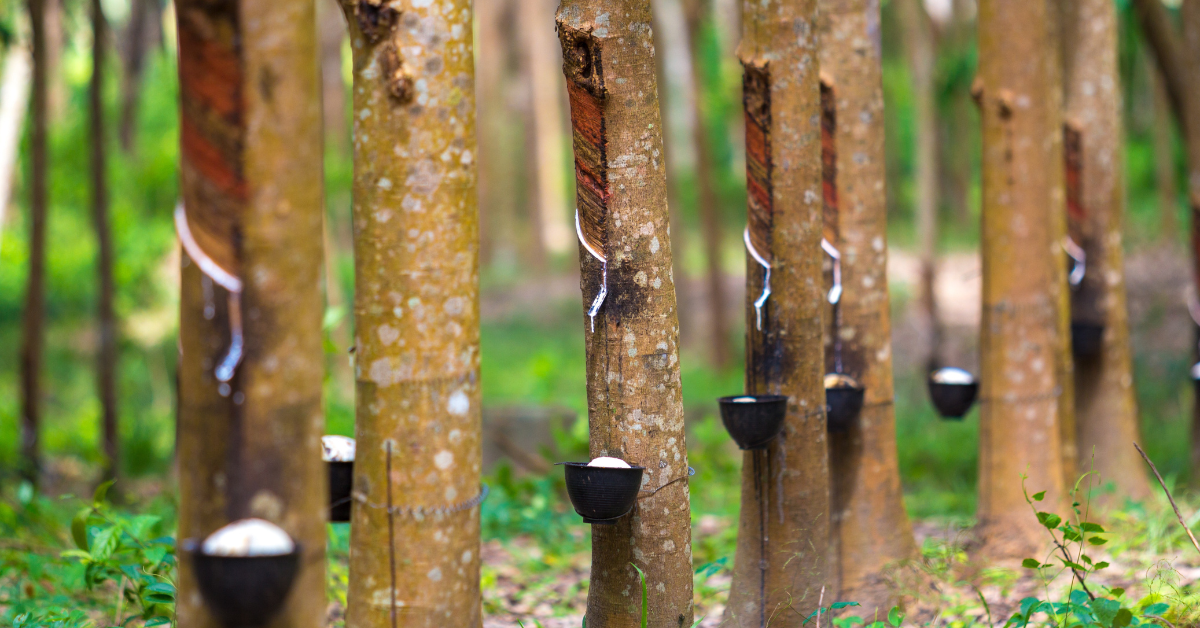
EUDR DDS for Rubber Supply Chain in France requires French importers, manufacturers, and processors to prove that all natural rubber entering the EU market is deforestation-free, legally sourced, and fully traceable to its plantation of origin. Under EUDR, French companies in the automotive, aerospace, industrial goods, and tire sectors must collect geolocation data, verify land-use legality, assess deforestation risk, and submit a compliant Due Diligence Statement (DDS) for every shipment. Robust digital traceability and supplier documentation are now essential to maintain EU market access and ensure full compliance with EUDR DDS for Rubber Supply Chain in France.
The EU Deforestation Regulation (EUDR) is transforming how France’s natural rubber import, processing, and manufacturing sectors operate. As a major European hub for automotive, aerospace, mobility, and industrial rubber components, France must now ensure that all natural rubber entering its supply chain is deforestation-free, legally sourced, and fully traceable back to its plantation of origin.
The EUDR targets commodities linked to global forest loss including rubber, timber, soy, palm oil, cocoa, coffee, and cattle requiring French importers, manufacturers, and traders to implement a rigorous Due Diligence System (DDS) covering legality verification, geolocation mapping, and deforestation-risk assessment.
Natural rubber (Hevea brasiliensis) is directly associated with deforestation in key producing regions such as Thailand, Indonesia, Vietnam, Côte d’Ivoire, Liberia, and Malaysia. As France hosts major tire manufacturers (Michelin leading globally), mobility component producers, and growing industrial rubber applications, EUDR compliance is vital. All natural rubber and rubber-based products must be proven legal and free from post-31 December 2020 deforestation before they can enter the French or wider EU market.
France plays a central role in Europe’s rubber value chain, importing significant volumes of natural rubber through ports such as Le Havre, Marseille-Fos, and Dunkirk. These imports supply France’s tire factories, automotive production lines, aerospace suppliers, railway systems, and industrial manufacturers.
To meet EUDR standards, French companies must establish end-to-end traceability networks capable of tracking rubber to the plantation, collecting plot geolocation data, verifying land-use legality, and conducting deforestation-risk assessments across all suppliers.
The EUDR deadlines for France align with all EU Member States:
This requires immediate investment in supplier mapping, digital documentation systems, and risk assessment tools to prevent supply disruptions or non-compliance penalties.
EUDR applies to both raw and processed natural rubber. Key HS codes include:
Products containing even small amounts of natural rubber must undergo full due diligence.
Ultimately, EUDR enforcement positions France’s rubber sector to lead in sustainable sourcing, transparency, and carbon-conscious manufacturing. Companies aligning early with the regulation will secure uninterrupted EU market access, strengthen OEM trust, and reinforce France’s global leadership in sustainable rubber-based innovation.
Master the step-by-step process of submitting Due Diligence Statements under the new EUDR rules.
Read the blog on filing DDS for EUDR compliance
Explore how rubber importers can achieve traceability, transparency, and compliance under EUDR.
Read the full blog on EUDR Rubber Compliance
France’s rubber industry from tire giants like Michelin to automotive suppliers, rail infrastructure manufacturers, aerospace component producers, and industrial rubber goods manufacturers faces significant operational, documentation, and traceability hurdles under the EUDR. The regulation’s requirement for plantation-level origin data and proof of deforestation-free sourcing introduces complexities across global sourcing networks that French companies must now urgently navigate.
French manufacturers rely heavily on natural rubber sourced from Southeast Asia and West Africa, where smallholder farming dominates.
Under EUDR, they must capture exact GPS polygons of rubber plantations, which is difficult because:
This makes farm-level geolocation verification one of the biggest compliance barriers.
To comply, French companies must prove that rubber was harvested legally according to local land-use laws, tenure rights, and environmental permits in countries such as Indonesia, Thailand, Malaysia, Côte d’Ivoire, and Liberia.
Challenges include:
For French importers, validating legality across diverse legal systems is time-consuming and high-risk.
Over 85% of global natural rubber comes from smallholders, many of whom:
This increases the complexity for French buyers needing to prove traceability for every batch of rubber entering their manufacturing facilities.
Rubber often moves through several intermediaries before reaching export hubs. France must now track:
EUDR requires French companies to map every node, exposing hidden risks that were previously unmonitored.
French operators must conduct risk assessments that include:
Manual processes cannot manage this at scale. Without digital tools, companies face compliance bottlenecks, shipment delays, or risk category failures.
In many producing regions, French firms face:
This creates major risk in compiling a complete, audit-ready DDS.
France’s automotive and industrial sectors depend on uninterrupted access to natural rubber.
Under EUDR, companies risk:
For industries operating on tight production schedules tires, aerospace, rail, machinery these disruptions can be costly.
French rubber suppliers face growing demands from:
All requiring guaranteed deforestation-free certification.
French companies must ensure compliance not only for regulation but also to maintain competitive positioning.
The EU Deforestation Regulation (EUDR) requires that all-natural rubber imported, processed, or placed on the EU market be deforestation-free, legally sourced, and traceable back to its plantation of origin. For France home to global tire manufacturers, advanced automotive suppliers, aerospace rubber component producers, and industrial goods manufacturers manual EUDR compliance is increasingly complex and operationally demanding. The TraceX EUDR Compliance Platform delivers an integrated digital solution that enables French importers, processors, and manufacturers to automate, validate, and audit every element of the Due Diligence Statement (DDS) with precision and efficiency.
TraceX automates the creation, verification, and submission of EUDR-compliant DDS reports for every natural rubber shipment entering France through major logistics hubs such as Le Havre, Marseille, Dunkirk, and Fos-sur-Mer. The platform consolidates plantation geolocation data, legality records, and supplier declarations into a single, audit-ready digital file. This automation reduces administrative workload, eliminates manual errors, and accelerates full compliance for France’s rubber operators serving the EU market.
Each rubber batch is assigned a blockchain-secured digital identity, creating an immutable chain of custody from plantation to French tire factories, aerospace suppliers, and industrial manufacturing sites. This enables complete visibility into origin, strengthens proof of legality, and ensures alignment with EUDR’s strict no-deforestation requirements supporting French companies in delivering transparent, risk-free sourcing to EU buyers and OEMs.
Given that natural rubber is largely smallholder-produced, TraceX provides mobile onboarding tools for cooperatives and exporters across Southeast Asia and West Africa. Suppliers can upload GPS coordinates, legality documents, and sustainability certificates directly into the platform. This inclusive digital onboarding ensures French rubber processors and manufacturers maintain resilient, EUDR-compliant sourcing networks even when operating across fragmented smallholder landscapes.
TraceX’s AI-driven compliance dashboards give French operators real-time insights into deforestation risks, supplier reliability, and land-use change alerts. By integrating satellite imagery, geospatial analytics, and historical sourcing patterns, the platform identifies risk hotspots early, enabling companies to implement mitigation measures and maintain uninterrupted EU market access.
A French tire manufacturer sourcing rubber from Thailand and Côte d’Ivoire can use TraceX to map plantation polygons, verify legality documentation, and auto-generate DDS files for each incoming shipment. In weeks, the company achieves complete traceability, reduces documentation time by up to 70%, and ensures seamless alignment with EUDR’s 2025/2026 requirements strengthening compliance confidence for EU regulators and automotive OEM partners.
With blockchain-backed traceability, AI-driven risk intelligence, and automated DDS workflows, TraceX converts EUDR compliance from a regulatory burden into a strategic advantage. French rubber companies can streamline operations, enhance supply chain transparency, and reinforce their position as trusted providers of deforestation-free, legally compliant rubber materials to global industries.

The EU Deforestation Regulation (EUDR) is more than a compliance mandate it is a structural shift that directly influences France’s position as one of Europe’s leading hubs for tire manufacturing, automotive components, aerospace systems, industrial rubber goods, and high-performance elastomers. Because France imports significant volumes of natural rubber from high-risk regions in Southeast Asia and West Africa, the sector is now under heightened scrutiny to prove that every natural rubber input is deforestation-free, legally sourced, and traceable to plantation level.
For France’s flagship industries including Michelin, automotive OEM suppliers, rail and aerospace component manufacturers, medical device producers, and industrial equipment makers EUDR alignment is critical for maintaining continuity of operations, supplier reliability, and global trade competitiveness. Any non-compliant shipment risks customs detentions, shipment rejections, fines, or reputational damage across EU markets.
The regulation also compels French manufacturers to modernize their procurement strategy by migrating from paper-based, opaque sourcing systems toward digital traceability, geolocation-based verification, and real-time risk assessment. This transformation enhances supply chain resilience, supports corporate ESG commitments, and strengthens France’s role in Europe’s transition toward ethical and environmentally responsible industrial production.
Ultimately, EUDR compliance presents both a challenge and an opportunity: while it demands deeper supplier visibility and more rigorous documentation, it positions French rubber and component manufacturers as leaders in sustainable sourcing boosting trust with OEM partners, international buyers, and environmentally conscious consumers. The companies that digitize early will not only mitigate regulatory risk but will redefine the competitive landscape in Europe’s next-generation rubber economy.
EUDR DDS for Rubber Supply Chain in France marks a pivotal shift toward stricter transparency, plantation-level traceability, and legally verified sourcing. As France’s tire manufacturers, automotive suppliers, aerospace component makers, and industrial rubber processors prepare for full enforcement, the companies that invest early in digital due diligence systems will secure uninterrupted market access, reduce compliance risks, and strengthen customer confidence. By adopting geolocation-backed traceability, supplier onboarding frameworks, and automated DDS workflows, France can lead Europe in building a resilient, deforestation-free rubber supply chain that supports sustainability, competitiveness, and long-term regulatory readiness.
Understand the key components of EUDR compliance and how to streamline your DDS process efficiently.
Read the blog on EUDR Due Diligence
Learn how AI-driven automation and intelligent workflows simplify data collection, verification, and reporting.
Explore the blog on Agentic AI for EUDR
Unpack the biggest hurdles faced by importers under EUDR and how technology can turn compliance into a competitive edge.
Read blog on Challenges for EU Importers
The EUDR is a regulation by the European Union aimed at preventing deforestation-linked commodities like rubber from entering the EU market. It requires full supply chain traceability and submission of Due Diligence Statements (DDS) proving compliance.
A DDS is a formal declaration confirming that rubber imported or sold in France is deforestation-free and legally sourced. It must include farm-level geolocation data and risk assessment documentation.
All French importers, traders, processors and retailers handling rubber are required to comply. Both large corporations and small operators must provide DDS documentation for their supply chains.
Common difficulties include gathering farm-level data, verifying deforestation-free claims, managing multiple smallholders, and preparing DDS documents manually.
TraceX digitizes the entire process mapping rubber farms, verifying deforestation risks via satellite data, and auto-generating compliant DDS reports ready for submission.
Yes. TraceX is built for scalability and ease of use. It supports both large enterprises and smallholder networks, enabling simple data collection via mobile apps