
Quick summary: Illegal logging in the timber industry explained—key risks, global regulations, and how traceability and due diligence enable compliant, deforestation-free timber supply chains.
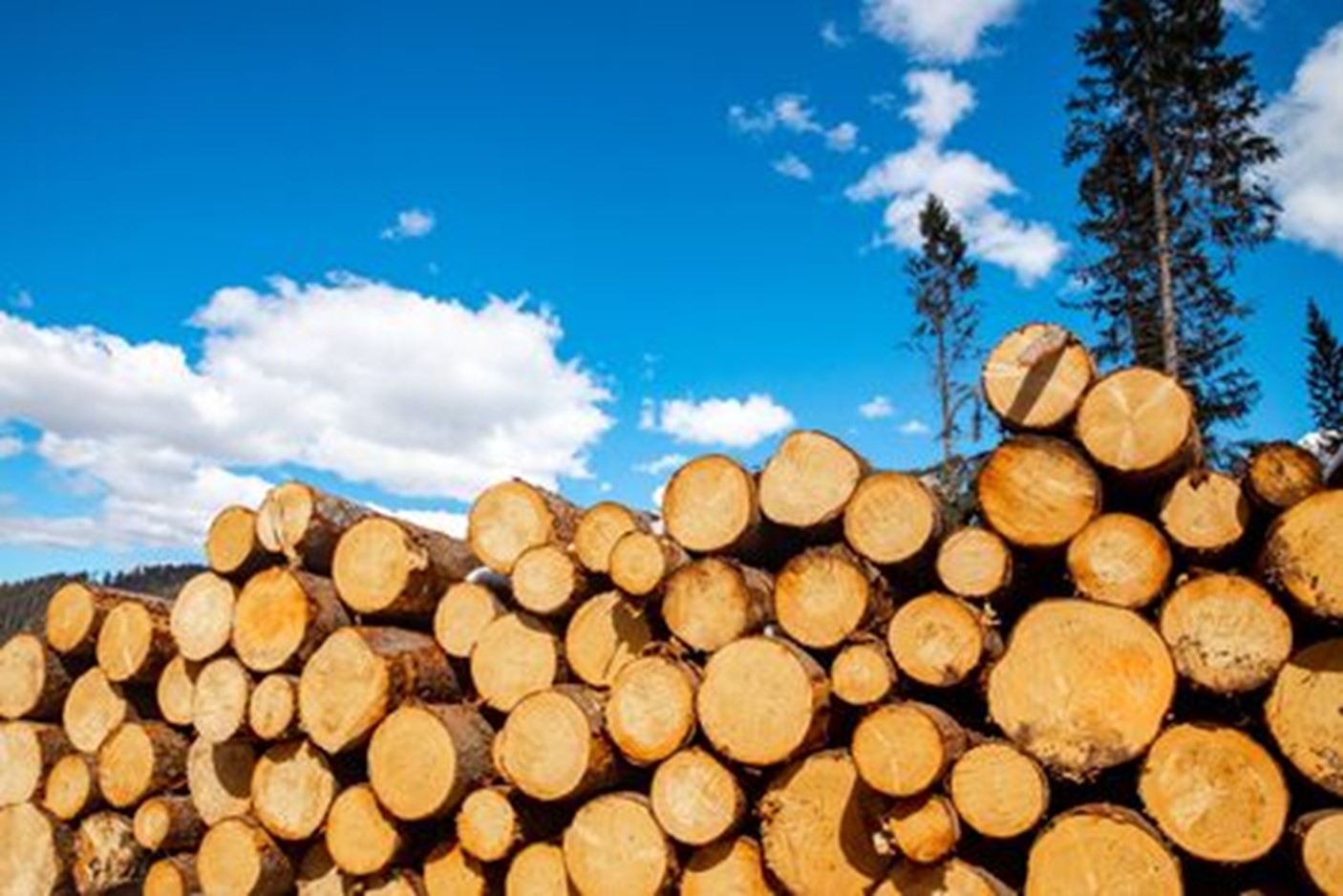
Illegal logging in the timber industry remains one of the most persistent and high-risk challenges in global supply chains. Despite decades of regulation and certification, illegally harvested timber continues to enter international markets, often disguised by complex sourcing, forged documents, and fragmented supply chains. For importers, manufacturers, and brands, this creates a growing pain point: rising regulatory pressure, tougher due-diligence laws, and zero tolerance from buyers for non-compliance. Today, addressing illegal logging is no longer just an environmental responsibility it is a critical compliance requirement that directly affects market access, legal exposure, and brand reputation.
Key Takeaways
Illegal logging in the timber industry refers to the harvesting, transport, processing, or trade of timber in violation of applicable national or international laws. This includes any activity where wood is sourced, handled, or sold without the required legal rights, permits, or compliance with land-use, environmental, and trade regulations in the country of origin.
Illegal logging can take many forms across the timber value chain, including:
These practices often exploit weak governance, complex supply chains, and reliance on paper-based systems.
Learn what it takes to build deforestation-free supply chains and how companies are meeting new regulatory expectations.
Understand the timber value chain from forest to finished product and where compliance risks arise.
Illegal logging is not the same as unsustainable logging, though the two can overlap. Illegal logging is defined strictly by non-compliance with the law, regardless of environmental impact. Unsustainable logging, on the other hand, may occur legally but leads to long-term forest degradation due to poor management practices.
In practice, illegal logging often results in severe environmental and social harm, but the key distinction is that legality is a regulatory requirement, while sustainability is typically assessed through voluntary standards or certifications. Modern compliance frameworks focus on eliminating illegal logging as a baseline before addressing broader sustainability goals.
The timber industry is consistently identified as high risk for illegal activity because of a combination of economic incentives, governance gaps, and structural weaknesses across global supply chains. These factors make it easier for illegally harvested wood to enter legitimate markets undetected.
Timber is a high-value natural resource, especially for premium hardwoods and rare species used in construction, furniture, and flooring. Strong global demand creates powerful incentives for illegal harvesting, particularly where enforcement is weak. The profitability of timber combined with relatively low barriers to entry makes forests an attractive target for illegal operators seeking quick returns.
In several timber-producing countries, governance challenges such as limited enforcement capacity, unclear land tenure, corruption, or overlapping legal frameworks increase the risk of illegal logging. Where forest management authorities are under-resourced or records are poorly digitized, illegal harvesting can occur with little immediate consequence, allowing non-compliant timber to move into formal trade channels.
Timber supply chains often span multiple countries and numerous intermediaries, from forest concessions and small-scale loggers to traders, processors, manufacturers, and exporters. As timber is cut, transported, processed, and aggregated, origin information can be diluted or lost, especially when visibility is limited beyond tier-one suppliers. Each handoff creates an opportunity for illegal timber to be mixed with legal material.
Reliance on paper-based permits and manual documentation makes the timber industry vulnerable to fraud and laundering schemes. Common practices include falsified harvesting permits, reused transport documents, misdeclared species, and false country-of-origin claims. Once illegal timber is “laundered” into the legal system through fraudulent paperwork, it becomes extremely difficult to detect without robust traceability and verification mechanisms.
These structural risks explain why regulators and buyers increasingly view timber as a forest-risk commodity requiring strict due diligence. Addressing illegal logging in the timber industry requires more than supplier declarations—it demands end-to-end traceability, geolocation data, and auditable proof of legality to close the gaps that illegal actors exploit.
To curb illegal logging and prevent unlawfully harvested timber from entering global markets, major importing regions have established binding regulatory frameworks. While the scope and enforcement mechanisms differ, all of these regulations place responsibility on companies to know their supply chains, assess risk, and prove legality.
The EU Deforestation Regulation (EUDR) represents the most far-reaching and stringent framework to date, significantly raising the compliance bar for timber and timber-derived products placed on the EU market.
EUDR explicitly covers timber and a wide range of timber products, including logs, sawn wood, panels, furniture, pulp, and paper. Any operator or trader placing these products on the EU market or exporting them from the EU must comply, regardless of whether the timber is imported or domestically sourced.
Under EUDR, timber must meet two core conditions:
This dual requirement goes beyond earlier legality-only frameworks by explicitly linking timber sourcing to land-use change.
Before placing timber on the EU market, operators must submit a due-diligence statement containing:
Enforcement authorities have expanded powers to conduct inspections, request data, impose fines, and restrict market access for non-compliant operators.
The EU Timber Regulation (EUTR) was the EU’s original legal instrument to address illegal logging and remains relevant, particularly for understanding the evolution of compliance expectations.
EUTR prohibits the placing of illegally harvested timber and timber products on the EU market. Unlike EUDR, it focuses strictly on legality rather than deforestation.
EUTR distinguishes between:
While EUDR will ultimately replace EUTR for covered products, EUTR set the foundation for today’s risk-based, traceability-driven compliance model.
Beyond the EU, several major markets enforce their own laws to prevent illegal timber from entering supply chains, creating a globally converging compliance landscape.
Following Brexit, the UK implemented the UK Timber Regulation, which closely mirrors EUTR. It prohibits the placing of illegally harvested timber on the UK market and requires operators to carry out due diligence, including risk assessment and mitigation. UKTR applies to both imported and domestically harvested timber and is enforced through inspections and penalties.
The Lacey Act is one of the world’s strongest anti–illegal logging laws. It makes it unlawful to import, export, transport, sell, or acquire timber harvested in violation of any applicable foreign or domestic law. Importers must submit declarations detailing species, origin, and quantity. Penalties can include fines, forfeiture, and criminal charges, making accurate traceability and documentation critical for US market access.
The EU’s Forest Law Enforcement, Governance and Trade (FLEGT) initiative operates through Voluntary Partnership Agreements (VPAs) with timber-producing countries. VPAs establish national timber legality assurance systems and governance reforms. Timber exported under a valid FLEGT license is considered legally harvested for EU market entry, although companies still need internal controls to manage broader compliance and buyer expectations.
Australia’s Illegal Logging Prohibition Act makes it an offence to import or process illegally logged timber. Importers and domestic processors are required to conduct due diligence, including gathering information on species, country of harvest, and legality risks, and applying risk mitigation where necessary. Like EUDR and the Lacey Act, ILPA shifts responsibility onto companies to demonstrate legal sourcing rather than relying solely on supplier assurances.
Taken together, these frameworks signal a global shift: illegal logging is now a trade and compliance issue, not just an environmental concern. Companies operating across multiple markets must meet overlapping but increasingly aligned expectations around traceability, geolocation, risk assessment, and auditable proof of legality. As enforcement tightens, robust digital traceability systems are becoming essential infrastructure for operating in the global timber industry.
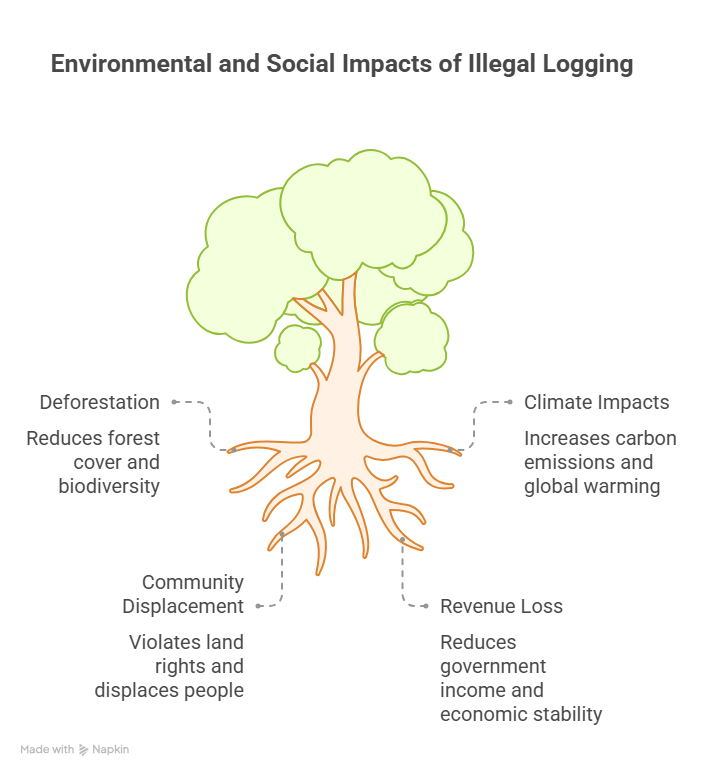
Compliance in timber supply chains goes beyond paperwork or supplier declarations. Under modern regulations addressing illegal logging, companies must be able to demonstrate legality, manage risk, and provide verifiable evidence on demand. This requires structured data, traceability, and ongoing due diligence across the entire value chain.
At the core of timber compliance is the ability to prove that wood was legally harvested in the country of origin. This includes evidence of valid harvesting permits, land tenure rights, concession boundaries, species authorization, and compliance with environmental and labor laws. Proof must be specific to the harvesting location and time period, not generic or aggregated statements from suppliers.
Compliance requires traceability that links forest-level origin to processed timber and finished products. As timber is transported, processed, and transformed, chain-of-custody records must preserve the connection to the original harvest area. Without this continuity, companies cannot isolate non-compliant material or credibly demonstrate legality during audits or inspections.
Most illegal-logging regulations are risk-based, requiring companies to assess the likelihood that timber may be illegally sourced. This involves evaluating factors such as country risk, governance quality, species risk, supply-chain complexity, and supplier history. Where risks are identified, companies must implement mitigation measures such as enhanced verification, third-party checks, or sourcing changes before placing timber on the market.
Regulators have the authority to conduct inspections, request documentation, and verify due-diligence systems. Compliance therefore requires audit-ready data that can be produced quickly and consistently. Companies must maintain organized records, clear procedures, and evidence of ongoing risk management. Poor documentation or delayed responses can trigger penalties, shipment holds, or loss of market access.
Together, these requirements shift timber compliance from a reactive, document-based exercise to a continuous, system-driven process. Companies that invest in traceability, digital recordkeeping, and proactive risk management are better positioned to meet regulatory expectations, reduce exposure to illegal logging, and maintain access to global markets.
Traceability is one of the most effective tools for preventing illegal logging in the timber industry because it creates a verifiable link between forest origin and the timber products placed on the market. By maintaining data continuity across complex, multi-actor supply chains, traceability helps close the gaps that illegal timber exploits.
Effective traceability begins at the forest or plot level, where trees are harvested. This requires precise geolocation data such as GPS coordinates or mapped concession boundaries linked to legal harvesting permits and land-use rights. Forest-level traceability enables regulators and companies to verify that timber was harvested from authorized areas and not from protected or illegally deforested land, forming the foundation of deforestation-free and legality claims.
Timber is often aggregated early in the supply chain, with logs from multiple harvest areas combined during transport, storage, and processing. Without controls, this mixing allows illegal timber to be laundered into legal supply chains. Traceability systems manage this risk by creating and tracking batches, recording splits and merges, and enforcing rules around which materials can be combined. This preserves origin integrity while still allowing operational efficiency.
Chain-of-custody documentation records every transfer of ownership, handling, and processing as timber moves through the supply chain. These records provide an auditable trail showing how timber travelled from forest to finished product. Robust chain-of-custody data ensures that legality claims remain intact through processing and manufacturing and can be verified during inspections or investigations.
Preventing illegal logging requires transparency, but not at the expense of commercial relationships. Effective traceability systems balance these needs through role-based access and controlled data sharing. Regulators can access full compliance evidence, while buyers and partners see only what is necessary to verify legality. This approach protects sensitive supplier networks while still meeting regulatory and due-diligence requirements.
By linking legal harvest data, managing aggregation risk, and maintaining auditable records, traceability transforms timber supply chains from opaque and vulnerable systems into accountable, inspection-ready networks. In an environment of tightening regulations and enforcement, traceability is no longer optional it is a critical defense against illegal logging and the loss of market access.
Despite growing regulation, illegal timber continues to enter legitimate markets because of structural and data-related gaps across timber supply chains. These weaknesses are often exploited early and amplified as timber moves downstream.
Many timber-producing regions still rely on paper permits, transport notes, and manual declarations. These documents are easy to falsify, reuse, or alter, making it difficult to verify legality at scale. Once fraudulent paperwork enters the system, illegal timber can appear compliant unless digital verification is in place.
Timber from multiple forests or concessions is frequently aggregated during transport, storage, and processing. When logs are mixed without batch controls, forest-level origin is lost, allowing illegal timber to be laundered alongside legal material. This early loss of visibility is one of the most common failure points in timber compliance.
Many buyers and importers only have insight into direct suppliers such as mills or exporters. However, illegal logging typically occurs upstream at the forest or harvesting stage. Without visibility beyond tier one, companies cannot assess real legality or deforestation risk, leaving them exposed during inspections.
Supplier data is often incomplete, outdated, or reported in inconsistent formats. Differences in species names, location references, volumes, and dates undermine risk assessments and make audits difficult. Poor data quality weakens even well-intentioned due-diligence systems.
To close these gaps, timber supply chains are increasingly adopting digital, integrated compliance systems. TraceX EUDR Compliance Solutions provides a unified approach that combines traceability, satellite intelligence, blockchain, and AI to prevent illegal timber from entering supply chains.
By digitizing permits, preserving origin through aggregation, extending visibility beyond tier one, and automating risk detection, TraceX transforms timber compliance from a reactive process into a proactive defense against illegal logging. These digital solutions provide the audit-ready evidence regulators expect while enabling companies to protect market access and operate responsibly in high-risk timber supply chains.
Effective timber compliance relies on accurate, verifiable data captured at every critical stage of the supply chain. Regulators expect this data to clearly demonstrate legality, origin, and risk management.
Together, these data points form the backbone of legal, deforestation-free, and inspection-ready timber supply chains.
Illegal logging in the timber industry is no longer a distant environmental issue it is a direct legal, commercial, and reputational risk for companies operating in global markets. As regulations such as EUDR, UKTR, the Lacey Act, and Australia’s Illegal Logging Prohibition Act converge, timber supply chains must move beyond paper-based due diligence to verifiable, end-to-end traceability. Companies that invest in digital data, forest-level visibility, and continuous risk management will not only meet compliance obligations but also protect market access, strengthen buyer trust, and future-proof their operations against tightening enforcement.
Understand how EUDR traceability works and what data regulators expect from timber and commodity supply chains.
Explore the key challenges timber and wood companies face under EUDR and how to address them.
Learn how timber traceability enables EUDR compliance from forest to finished product.
Illegal logging in the timber industry refers to harvesting, transporting, processing, or trading timber in violation of applicable laws, including unauthorized logging, use of false permits, or harvesting in protected areas.
The timber industry is high risk due to valuable forest resources, weak governance in some sourcing regions, long and fragmented supply chains, and reliance on paper-based documentation that enables fraud and laundering.
Regulations such as EUDR require companies to prove timber is deforestation-free and legally harvested through geolocation data, risk assessments, and due-diligence statements before placing products on the market.
Key data includes forest geolocation, harvesting permits, land tenure documentation, transport and processing records, chain-of-custody evidence, and legality or ESG declarations
Traceability links timber from forest to finished product, manages aggregation risks, preserves chain-of-custody records, and provides audit-ready evidence—making it far harder for illegal timber to enter compliant markets.