Quick summary: Ethical sourcing in supply chains requires more than policies. Learn how companies can prove compliance with traceability, verifiable data, and end-to-end supply chain visibility.
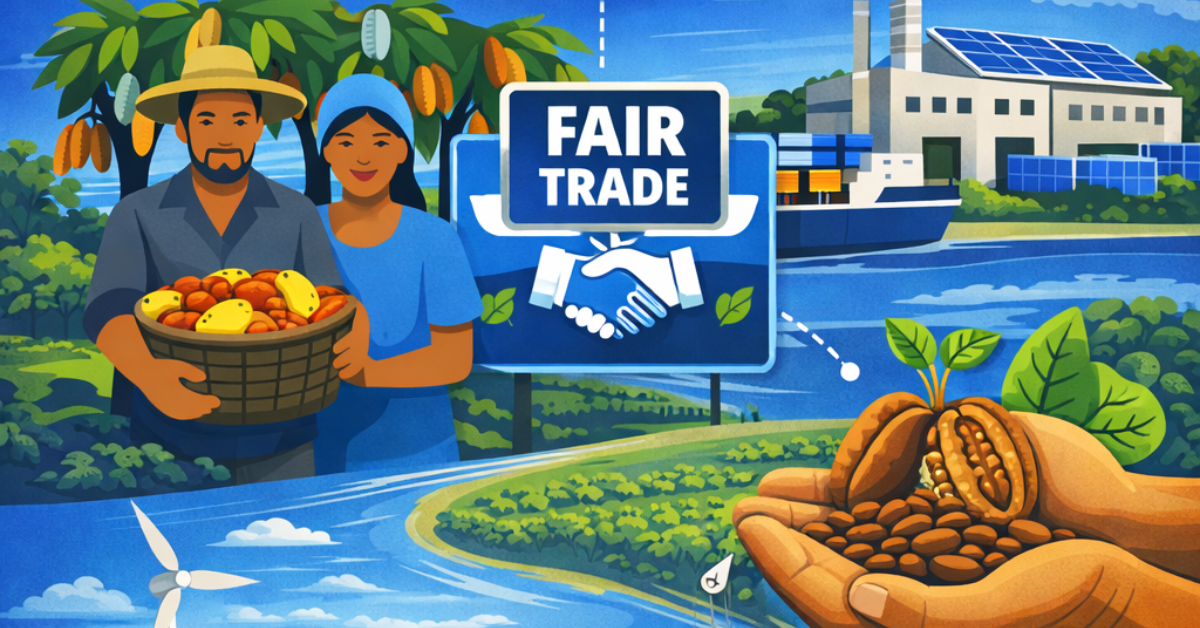
Every brand says its supply chain is ethical. Barely any can prove it. Buyers, regulators, and consumers are no longer accepting policy documents and supplier promises. They want verifiable, real-time data from the farm plot to the final product. True ethical sourcing in supply chains now depends on traceable, verifiable data, not just claims or certifications.
And new regulations like EUDR, CSRD, and CS3D have turned that expectation into a legal obligation. The result? Companies that built their ESG narrative on audits and certifications alone are suddenly exposed. Hidden labour violations surface. Deforestation risk goes undetected two tiers deep. Market access gets blocked overnight.
This guide covers what ethical sourcing actually requires in 2026, the challenges, the regulatory stakes, the technology that bridges the gap, and real-world examples of what good looks like.
Who This Guide Is For: Sustainability leads, procurement managers, compliance officers, and supply chain directors at food, agri, textile, and manufacturing companies facing EUDR, CSRD, or CS3D pressure and needing a defensible, digital trail for ethical sourcing claims.
Consumers increasingly expect ethical sourcing and sustainability, while child labour remains concentrated in agriculture, which accounts for 61% of global child labour.
Ethical sourcing is the practice of procuring goods and services in a way that respects human rights, fair labour standards, and environmental responsibility across all tiers of the supply chain, not just Tier 1 suppliers.
It is not a policy. It is not a statement on your website. It is a set of verifiable, ongoing practices backed by data.
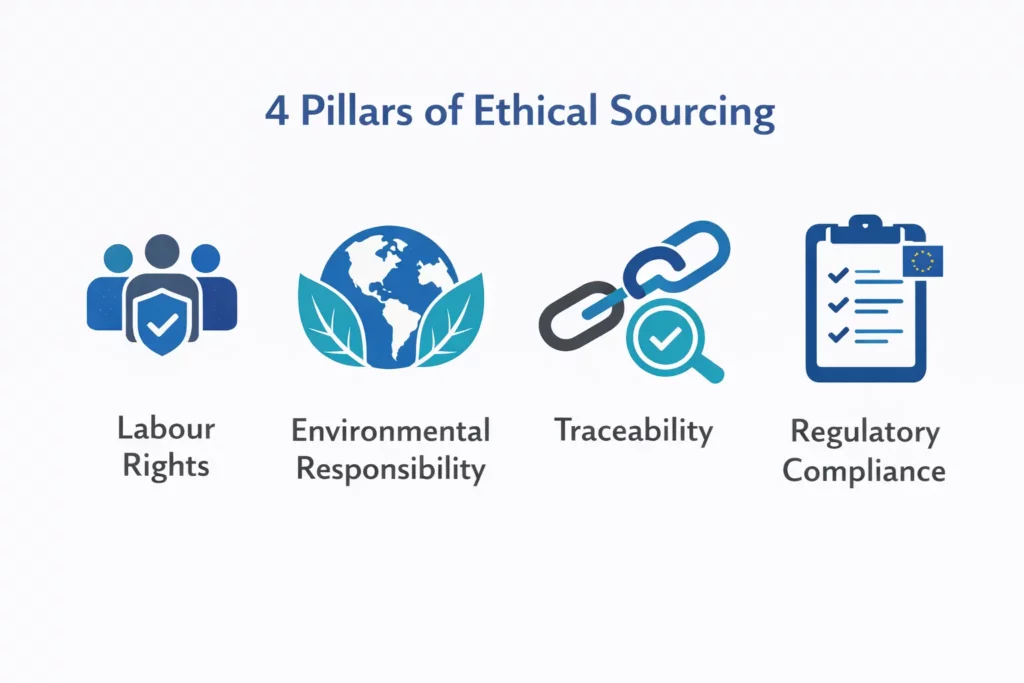
| Pillar | What It Means in Practice |
|---|---|
| Fair Labour Standards | Fair wages, safe conditions, zero tolerance for child or forced labour, verified at every supplier tier |
| Environmental Responsibility | Deforestation-free sourcing, reduced emissions, biodiversity protection with satellite and GPS evidence |
| Traceability and Transparency | Digital chain-of-custody from farm/plot to finished product, tamper-proof and audit-ready |
| Regulatory Compliance | Alignment with EUDR, CSRD, CS3D, OECD Guidelines, and national human rights due diligence laws |
Explore how sustainable sourcing is transforming agribusiness supply chains. Learn how to build transparency, resilience, and long-term value.
The gap between intent and evidence is not a values problem. It is a systems problem. Here are the five challenges most sourcing and sustainability teams face and why they persist.
Most companies can name their direct suppliers. Almost none can map what happens two or three tiers deeper, at the farm, the smallholder cooperative, or the raw material processor.
Ethical sourcing unravels at Tier 2 and Tier 3. Undetected deforestation, undisclosed subcontracting, and uninspected labour conditions all happen below the radar of traditional supplier audits.
Real-World Example: Cocoa in West Africa
A European chocolate brand sources from a certified cooperative in Ghana. Unknown to their compliance team, the cooperative subcontracts harvesting to farms on the boundary of a protected forest. Without GPS plot mapping and satellite deforestation monitoring, the brand’s EUDR due diligence statement is indefensible despite best intentions.
Go beyond surface-level visibility. Discover how multi-tier transparency supports compliance and risk management.
Annual supplier audits are expensive, slow, and retrospective. By the time non-compliance is discovered, the brand may already have shipped product to the EU or UK.
Paper-based certifications (Rainforest Alliance, Fairtrade, Organic) are necessary but insufficient. They verify a moment in time. They do not provide continuous, real-time evidence of compliance between audit cycles.
Procurement holds supplier contracts. Sustainability holds ESG reports. Quality holds audit findings. Logistics holds shipment data. None of these systems talk to each other, which means there is no single source of truth for ethical sourcing claims.
EUDR, CSRD, CS3D, OECD Guidelines, UK Modern Slavery Act, German Supply Chain Act, the regulatory landscape is changing faster than most compliance teams can track.
| Regulation | Key Requirement |
|---|---|
| EUDR (EU Deforestation Regulation) | Geo-referenced plot data, deforestation-free evidence, annual due diligence statements for commodities like coffee, cocoa, soy, timber, rubber, beef, palm |
| CSRD (Corporate Sustainability Reporting) | Mandatory ESG disclosure for companies above thresholds: supply chain Scope 3 emissions, social impact data |
| CS3D (Corporate Sustainability Due Diligence) | Mandatory human rights and environmental due diligence across value chains; operational and financial penalties for non-compliance |
| German Supply Chain Act (LkSG) | Annual risk analysis and documentation for German companies with 1,000+ employees; supply chain human rights obligations |
Buyers and retailers are increasingly requiring their suppliers to submit digital compliance evidence, not PDFs. If you cannot produce a machine-readable due diligence statement or audit trail, you risk losing market access regardless of your intent.
Navigate evolving global supply chain regulations with confidence. Explore how to align with standards like EUDR, AILPA, and ESG frameworks.
For agri-commodity supply chains, the complexity starts at origin. Millions of smallholder farmers, many without smartphones, formal addresses, or land titles, form the base of supply chains for coffee, cocoa, cotton, spices, and more.
Traditional verification fails here. Paper field records get lost. GPS coordinates are never captured. Certifications cover some farms but not others in the same cooperative.
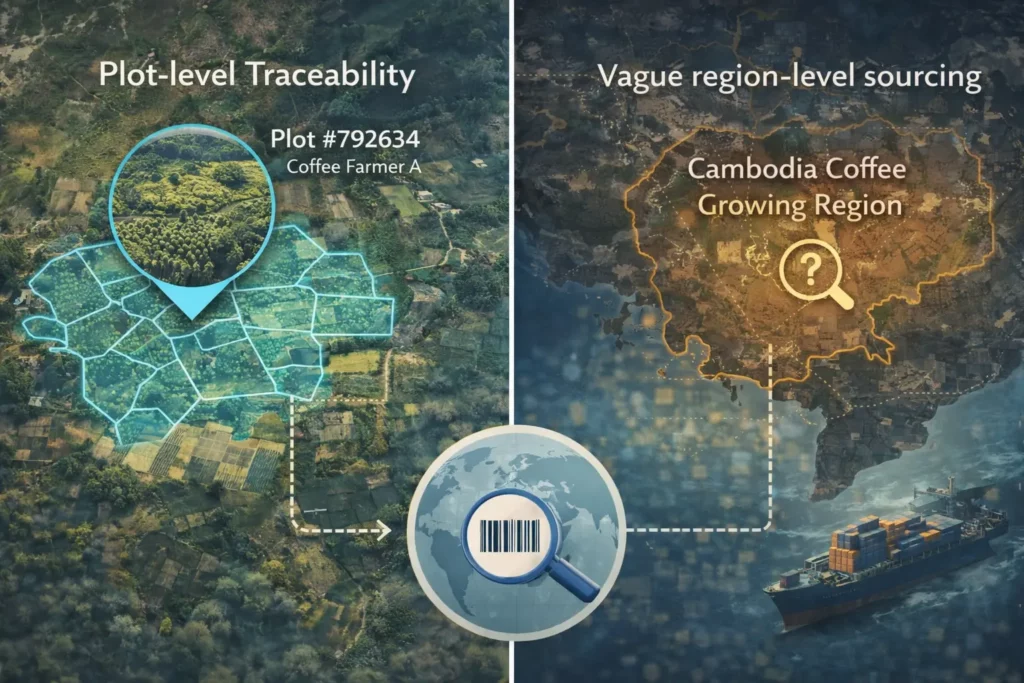
In today’s regulatory and buyer-driven environment, transparency does not mean publishing a supplier code of conduct. It means providing verifiable, auditable data that proves your claims hold up at every tier.
The shift is clear: from declarations of intent to chains of evidence. From periodic audits to real-time monitoring. From supplier promises to verified outcomes.
PwC’s 2024 survey found consumers were willing to pay an average 9.7% premium for sustainably produced or sourced goods, underscoring the commercial value of verified ethical sourcing.
A global tobacco exporter operating in highly regulated markets sought to strengthen compliance with international sustainability standards while improving transparency across its supply chain. Faced with fragmented, manual processes and increasing scrutiny around labor practices, environmental compliance, and product origin, the company needed a scalable, digital solution to modernize its operations.
By partnering with Tracex Technologies, the exporter implemented a pilot end-to-end traceability and compliance platform in a village in Gujarat, onboarding 1,000 farmers. The solution enabled digitized farmer data capture, improved supply chain visibility, and structured compliance workflows, laying the foundation for scalable deployment across multiple sourcing regions.
Discover how digital traceability can transform sourcing, improve compliance, and drive sustainable growth. Read the Case Study
True supply chain transparency operates at three levels:
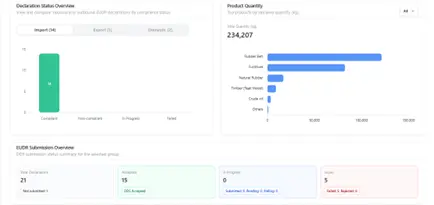
Digital traceability converts scattered supplier data, PDFs, verbal assurances, and spreadsheet audits into a single, tamper-proof ledger. It links suppliers, sites, batches, and products into a transparent audit trail that regulators, buyers, and consumers can verify.
| Capability | What It Enables |
|---|---|
| Farm/plot onboarding with GPS mapping | Deforestation-free sourcing evidence at plot level, required for EUDR due diligence statements |
| Chain-of-custody record keeping | Batch-level traceability from origin through processing, export, and import, audit-ready at any point |
| Supplier certification management | Real-time view of certification status, no more expired documents slipping through |
| Real-time risk monitoring | Satellite alerts for deforestation events, weather risk, and land-use change near registered plots |
| Automated compliance reporting | One-click generation of due diligence statements, ESG data exports, and buyer audit packs |
| Mobile data collection offline | Field agents and cooperative managers can capture data without internet, critical for rural smallholder contexts |
TraceX in Action: Bio-Nutraceutical Partner
TraceX implemented end-to-end blockchain traceability for a bio-nutraceutical company’s rose value chain. The result: verified ethical sourcing evidence for buyers, fair compensation documentation for farmers, and full chain-of-custody from farm to processing, converting what was a verbal claim into a defensible digital record.
Discover what it takes to build a responsible supply chain. Learn how to align sourcing, compliance, and sustainability across your operations.
H&M built an online transparency layer showing each product’s origin, material composition, and environmental impact. Their Conscious Collection targets 100% recycled or sustainably sourced materials by 2030. The key differentiator: this information is verifiable at the product level, not just stated as a brand commitment.
The lesson for supply chain teams: transparency at the SKU level, not just the brand level, is becoming the new buyer expectation.
A cocoa buyer sourcing from smallholder farms in Ghana implemented a Child Labour Monitoring and Remediation System (CLMRS). Using mobile apps for field reporting, geo-mapping of high-risk areas, and supplier due diligence workflows, the team could flag violations, trigger remediation actions (school support, financial aid to families), and produce documented proof of intervention, all in one system.
The outcome: EUDR-ready origin verification, a defensible human rights due diligence record, and continued access to European premium buyers who had tightened sourcing standards.
Understand how CLMRS helps eliminate child labor in supply chains. Explore how monitoring and remediation systems drive ethical sourcing.
Ethiopian coffee exporters supplying the EU now need to demonstrate deforestation-free sourcing with plot-level GPS data, legal land-use documentation, and digital due diligence statements filed through the EUDR system. Exporters using digital traceability platforms can generate this evidence in minutes. Those relying on paper-based records face weeks of remediation or risk shipment rejection.
Here is the step-by-step framework TraceX uses with clients to move from policy to proof:
| Step | Action |
|---|---|
| Step 1: Map Your Supply Chain | Identify all Tier 1, Tier 2, and Tier 3 suppliers. For agri-commodities, map to farm/plot level using GPS. You cannot manage what you cannot see. |
| Step 2: Assess Risk by Tier and Commodity | Use regulatory risk maps (EUDR country classification, ILO child labour indices) to prioritise where due diligence effort should concentrate first. |
| Step 3: Onboard Suppliers Digitally | Replace paper supplier questionnaires with digital onboarding capturing certification documents, geo-coordinates, and compliance attestations in a central system. |
| Step 4: Implement Continuous Monitoring | Set up satellite monitoring for deforestation risk, automated alerts for certification expiry, and mobile field reporting for ongoing supplier compliance. |
| Step 5: Build Chain-of-Custody Records | Track every batch or lot from origin through processing, trading, and import with tamper-proof timestamps and documentation at each handover point. |
| Step 6: Generate Audit-Ready Reports | Automate the production of EUDR due diligence statements, CSRD supply chain disclosures, and buyer audit packs, eliminating the manual scramble at reporting time. |
TraceX helps food, agri, textile, and manufacturing companies build audit-ready ethical sourcing programs with plot-level GPS mapping, chain-of-custody records, and one-click EUDR and CSRD reporting.
Ethical sourcing in supply chains is no longer defined by intent; it is defined by evidence. As regulations tighten and stakeholder expectations rise, companies must move beyond policies and certifications toward verifiable, data-driven proof of origin, legality, and sustainability. Organizations that invest in traceability, supplier data validation, and transparent reporting will not only reduce risk but also build lasting trust with buyers, regulators, and consumers. In the new landscape, the question is no longer ‘Do you have an ethical sourcing policy?’ but ‘Can you prove it, end to end?’
Ethical sourcing is the practice of procuring goods and services in a way that respects human rights, fair labour standards, and environmental responsibility across all tiers of the supply chain. It requires verifiable traceability, not just supplier promises, to substantiate claims about labour conditions, deforestation-free sourcing, and regulatory compliance.
Ethical sourcing focuses primarily on social and human rights standards, fair wages, safe working conditions, and the elimination of child and forced labour. Sustainable sourcing adds the environmental dimension: deforestation-free, low-carbon, biodiversity-positive. In practice, the two overlap significantly, and most regulatory frameworks (EUDR, CSRD) require both.
Digital traceability platforms link suppliers, sites, batches, and products into a transparent, auditable chain of custody. They enable plot-level GPS mapping for deforestation evidence, real-time risk monitoring, automated compliance reporting, and tamper-proof records that regulators, auditors, and buyers can verify, converting ethical sourcing from a claim into evidence.
Key regulations include: EUDR (requiring deforestation-free sourcing evidence for coffee, cocoa, soy, timber, rubber, palm, beef entering the EU); CSRD (mandatory ESG supply chain disclosure for companies above reporting thresholds); CS3D (mandatory human rights and environmental due diligence); the German Supply Chain Act (LkSG); and the UK Modern Slavery Act. Country-specific human rights due diligence laws are also expanding across Europe.
Smallholder traceability requires mobile-first, offline-capable data collection tools that field agents can use in remote areas without reliable internet. GPS farm mapping, cooperative-level onboarding workflows, and digital farmer IDs enable traceability at scale even across tens of thousands of smallholder plots. Platforms like TraceX are built specifically for this context.
No. Certifications like Rainforest Alliance, Fairtrade, and Organic verify compliance at a point in time against specific standards. They do not provide continuous, batch-level evidence of where a specific product came from or whether it met compliance standards on the day it was produced and shipped. Digital traceability complements certifications by providing the continuous, verifiable data layer that regulations and buyers increasingly require.